Nilekani Panel's Interim Report Deadline Tests Centre's Appetite For Structural NEET Reform
Centre tells the Supreme Court the Nandan Nilekani-led panel on NEET reforms will submit its first interim report by month-end, as the bench presses for a permanent institutional structure at the NTA rather than deputation-based staffing.
 Verdicto News Desk
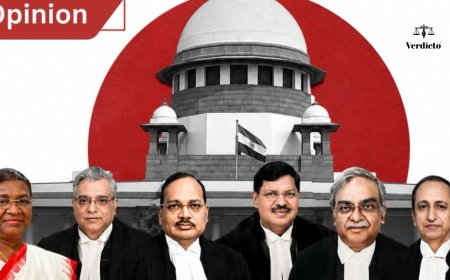
The bench of Justices P S Narasimha and Alok Aradhe is no longer content to let "reform" remain a word the government uses to describe itself. That much was evident in Friday's exchange with Solicitor General Tushar Mehta, which read at first glance like routine case management, a status update, a deadline, a request for an affidavit, but on closer reading revealed a court intent on converting assurance into obligation.
The headline fact is procedural. The Nandan Nilekani-led high-powered panel, tasked with recommending structural changes to how NEET is conducted, will submit its first interim report by the end of September. Mehta told the court the panel has held exhaustive consultations, including with members of the earlier committee chaired by former ISRO chief K Radhakrishnan, meaning the Nilekani panel is not starting from a blank slate but is meant to operationalise recommendations that already exist on paper.
That distinction matters because it is precisely what the bench pressed on. Justice Narasimha and Justice Aradhe did not ask for more consultation; they asked for permanency. The court's language, a permanent setup, permanent staff, permanent verticals, minimal reliance on deputation, is a direct response to a structural weakness that has dogged the National Testing Agency for years: an examination body run substantially on officers deputed from elsewhere, without institutional memory or accountability that survives a transfer order. The bench's insistence that "very less deputation should be there" is not a stray remark. It is the court identifying the mechanism by which past reform recommendations have historically been absorbed and diluted — through staffing structures that never outlast the crisis that produced them.
Mehta's response is worth reading carefully for what it concedes and what it defers. He told the court that "permanency of the structure has been ensured" but that "human resources are partially ensured at the moment." That is an admission that the architecture of reform may be in place while the people required to run it are not, a gap the court appears unwilling to treat as a formality, given Justice Narasimha's stated intention, along with Justice Aradhe, to personally visit the NTA's upgraded facility to examine the system.
This judicial insistence on verification rather than assurance tracks the procedural history. On August 19, the same bench had already flagged the need to institutionalise reforms at the NTA and directed the Centre to report on implementation of both the Radhakrishnan and Nilekani recommendations. Friday's hearing is the follow-through on that direction, and the order for a fresh affidavit from the joint secretary to the Department of Personnel and Training, who is assisting the Nilekani panel, extends the paper trail the court is building. Each hearing adds a sworn document to a record the bench can measure future compliance against.
The underlying petitions, including the one filed by advocate Tanvi Dubey on behalf of the Federation of All India Medical Association, originate in grievances over the conduct and integrity of the examination process itself. What the court has since done is widen the frame from individual examination failures to the institutional design that produces them, treating NEET's administration as a governance question rather than a series of isolated lapses to be litigated one at a time.
The month-end deadline is therefore not merely a scheduling detail. It sets the first point at which the Nilekani panel's actual recommendations, as opposed to the fact of its consultations, will be tested against the court's stated benchmark of permanence. Whether that report proposes the kind of durable staffing and institutional structure the bench has explicitly demanded, or defers it again to a later phase, will determine whether this hearing is remembered as the moment structural reform became enforceable, or as one more instance of a deadline that produced a report without producing a system.