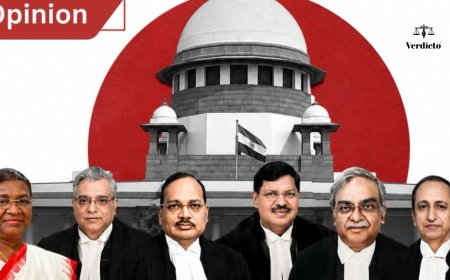
Why the Supreme Court Accepted the CBI's Findings in the Decade-Long Coalgate Case Against Manmohan Singh
Why did the Supreme Court accept the CBI's closure report in the Coalgate case against Manmohan Singh? A legal analysis of the decade-long proceedings.
 Verdicto News Desk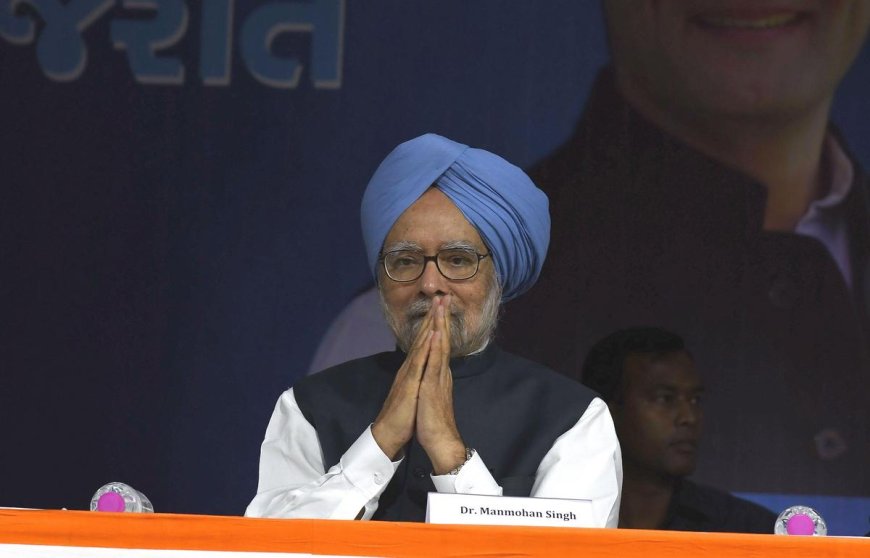
New Delhi, July 29: More than a decade after the coal block allocation controversy came to symbolise one of India's biggest governance scandals, the Supreme Court has accepted the Central Bureau of Investigation's (CBI) closure report against former Prime Minister Dr. Manmohan Singh, bringing to an end the criminal allegations that had once reached the highest political office in the country.
The order marks the conclusion of a legal chapter that began in the wake of the Comptroller and Auditor General's (CAG) 2012 report on coal block allocations and eventually transformed into one of the most closely watched corruption investigations in independent India. While the political fallout of the so-called "Coalgate" reshaped public discourse on transparency and executive accountability, the criminal proceedings followed a far more exacting legal standard, one that ultimately required proof of criminal intent rather than administrative error.
The Supreme Court's acceptance of the closure report signifies that the investigating agency found insufficient material to prosecute the former Prime Minister and that the Court saw no reason to direct further investigation. Though procedural in form, such an order effectively closes the criminal proceedings unless fresh evidence of a substantial nature emerges in the future.
From Policy Decisions to Criminal Investigation
The controversy stemmed from the allocation of coal blocks to private companies without competitive bidding between 1993 and 2010. The issue assumed national prominence after the CAG estimated that the allocation process may have resulted in a substantial notional loss to the public exchequer owing to the absence of transparent auctions.
The findings triggered political uproar, parliamentary disruption and demands for criminal investigation. In 2014, the Supreme Court delivered its landmark judgment cancelling 214 coal block allocations, holding that the allocation process was arbitrary and contrary to constitutional principles of fairness and equality.
The cancellation judgment, however, did not by itself establish criminal liability. Instead, it paved the way for multiple investigations by the CBI into individual allocations, examining whether public officials and private beneficiaries had entered into criminal conspiracies, committed cheating, or abused public office.
Why Manmohan Singh Came Under Scrutiny
Dr. Manmohan Singh came under investigation because, during a crucial period, he simultaneously held the Coal Ministry portfolio in addition to serving as Prime Minister. Certain decisions relating to specific coal block allocations therefore came under scrutiny during the wider investigation.
The question before investigators was not whether the allocation policy itself had flaws—a matter already addressed by the Supreme Court in its 2014 judgment—but whether there existed sufficient evidence to establish criminal misconduct or conspiracy attributable to the then Prime Minister.
That distinction proved legally significant.
Criminal law demands evidence capable of establishing guilt beyond mere suspicion. Administrative decisions that may later be found to be flawed, irregular or even legally unsustainable do not automatically amount to criminal offences unless accompanied by evidence of dishonest intention, abuse of official position or unlawful gain.
After completing its investigation, the CBI concluded that no prosecutable evidence existed against Dr. Singh and filed a closure report before the Supreme Court.
What Acceptance of a Closure Report Means
Under India's criminal procedure, a closure report is submitted when the investigating agency concludes that the available evidence is insufficient to proceed with prosecution.
A court is not bound to accept such a report automatically. It may reject the report, order further investigation, or even take cognisance of the alleged offence if the material on record justifies such a course.
By accepting the CBI's closure report, the Supreme Court effectively endorsed the investigating agency's conclusion that the available evidence did not warrant continuation of criminal proceedings against the former Prime Minister.
The order therefore represents judicial closure of the investigation rather than a finding after a criminal trial.
The Larger Legal Significance
The development also illustrates the distinction between political accountability and criminal liability.
The coal allocation controversy had profound constitutional consequences. It prompted judicial intervention, led to sweeping reforms in the allocation of natural resources and accelerated the shift towards auction-based allocation of coal blocks. It also contributed to wider debates on executive discretion, transparency and institutional accountability.
Yet criminal courts operate on a different footing.
Investigative agencies must establish specific ingredients of offences such as criminal conspiracy, cheating or corruption through admissible evidence. Public criticism, audit observations or policy failures cannot substitute the evidentiary threshold required for criminal prosecution.
The closure of proceedings against Dr. Singh reflects that distinction.
The Long Shadow of Coalgate
Even as proceedings against the former Prime Minister have now come to an end, the coal allocation litigation occupies a significant place in India's legal history.
The Supreme Court's cancellation of coal block allocations remains one of the most consequential exercises of judicial review over executive allocation of natural resources. The litigation also reshaped legislative and policy frameworks governing the mining sector, culminating in auction-based allocation mechanisms intended to enhance transparency and reduce administrative discretion.
Several individual criminal prosecutions arising from coal block allocations have proceeded independently over the years, with varying outcomes depending upon the evidence available in each case.
The acceptance of the closure report against Dr. Manmohan Singh, however, brings finality to one of the most politically sensitive aspects of the broader controversy.
Conclusion
More than ten years after allegations surrounding coal block allocations dominated national headlines, the legal proceedings against the late former Prime Minister have reached their conclusion.
For the criminal justice system, the order serves as a reminder that investigations must ultimately rest on evidence capable of sustaining prosecution in a court of law. For constitutional governance, the coal allocation cases continue to stand as a defining moment in the evolution of transparency, accountability and judicial oversight over the allocation of public resources.
With the Supreme Court accepting the CBI's closure report, one of the last remaining legal questions concerning Dr. Manmohan Singh's role in the coal allocation controversy has now been formally laid to rest.