India's 100% Tariff Threat Is a Bargaining Chip Dressed as a Law
The Graham Act fixes the constitutional flaw that sank Trump's IEEPA tariffs on India but June's record Russian oil imports and Rand Paul's dissent both suggest the strategy behind it hasn't been tested, let alone proven.
 Verdicto News Desk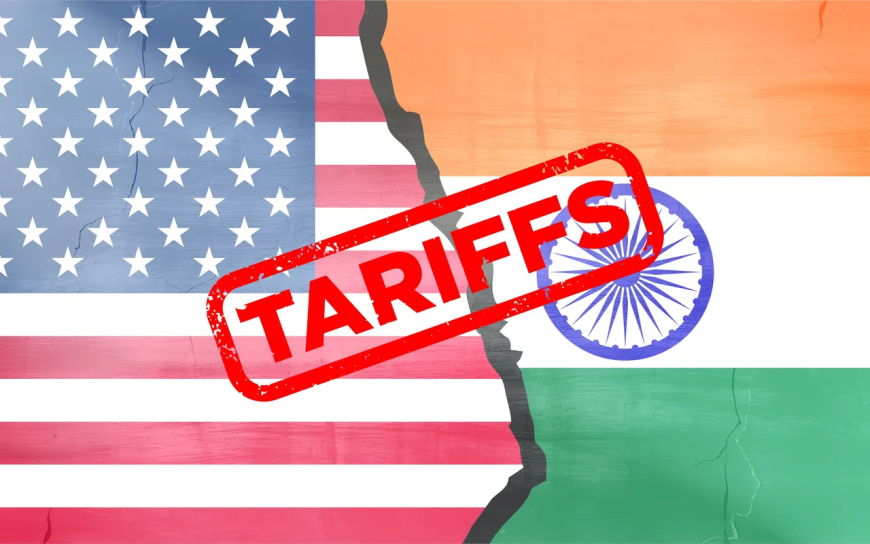
New Delhi, Aug 8: The Senate's 86-11 passage of the Lindsey O. Graham Sanctioning Russia and Iran Act of 2026 authorises tariffs of up to 100 percent on India for its Russian oil purchases, and on the constitutional question, it is a materially stronger instrument than what preceded it. On the strategic question of whether imposing it would actually achieve anything, the bill's own recent history argues against it, and the Senate's most direct internal critic said so on the floor before the vote was even final.
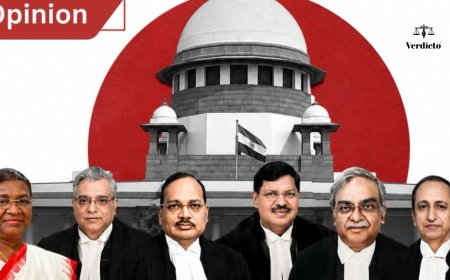
The constitutional upgrade is real. Trump's original tariff on India over Russian oil ran on IEEPA, an emergency-powers statute, and the Supreme Court struck it down on February 20 in Learning Resources v. Trump, ruling 6-3 that tariff authority is a taxing power the Constitution reserves to Congress, not something a President can claim for himself through an emergency declaration. India's 25 percent additional IEEPA tariff lapsed with that ruling on February 24. The Graham Act does not repeat that error. It is an ordinary statute, passed through the regular legislative process, that grants tariff authority the way Article I actually contemplates it being granted, with Congress setting the outer bound at 100 percent, defining the affected buyers, writing in a natural-gas exemption threshold, and vesting execution in USTR Jamieson Greer rather than the President personally. Whatever happens to this bill next, it will not fail on the same constitutional ground the last one did.
That is where the strength of the case ends. The bill does not impose a 100 percent tariff on India; it authorises Greer to impose up to that figure, entirely at his discretion, and nothing in the text compels him toward the ceiling. The one comparable precedent available cuts against assuming he will go there. When the administration regained a choice after February's ruling, it opted for Section 122's capped 10 percent rather than anything near the 50 percent rate IEEPA had just lost in court. A White House that stepped back from its own maximum when it had unilateral authority is not an obvious candidate to authorise a subordinate toward 100 percent now that doing so requires an affirmative decision rather than default momentum.
The deterrence logic underneath the bill has already failed once, on the record. India's Russian crude imports hit an all-time high in June 2026, reaching 2.7 million barrels a day and accounting for more than half the country's total crude intake that month, according to CREA's tracking, months into a live 50 percent IEEPA tariff. If enforced tariff pressure at that level did not shift Indian import behaviour, the argument that a discretionary, not-yet-enacted 100 percent ceiling will succeed where the enforced version failed needs to explain what has changed. Nothing in the bill's text does.
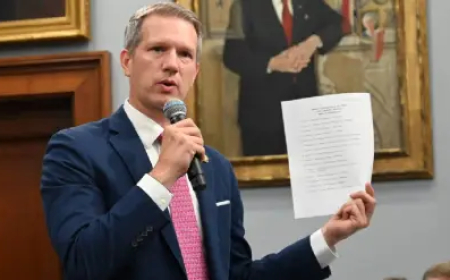
Kentucky Senator Rand Paul, the lone Republican to vote against the bill, made close to this same argument from the Senate floor. "America imposing 100 percent tariffs on India and China is the economic equivalent of shooting ourselves in the foot," Paul said, warning that tariffs at that scale would not isolate Moscow but push New Delhi and Beijing toward closer alignment with Russia and each other, strengthening the bloc the sanctions are ostensibly designed to weaken. Paul's dissent is significant less for its vote count, eleven against eighty-six is not close, than for where it sits: a bill Congress treated as an appropriate constitutional fix drew almost no argument on the Senate floor about whether using it against India was strategically sound. Paul made that argument nearly alone.
Asked whether the bill would affect the parallel India-US trade negotiations, a senior White House official declined to say either way. "That is up to the negotiators. I can't give you insight into ongoing negotiations." An administration confident the bill carried no bearing on the trade track had every reason to say so plainly. It didn't, and that studied ambiguity is functionally consistent with treating the bill as leverage rather than a settled intention, preserving India's uncertainty about how the tariff threat and the trade deal interact for as long as that uncertainty is useful at the negotiating table.
Read together, the constitutional mechanism, the discretionary ceiling, the deterrence record, Paul's floor dissent and the administration's non-answer point toward the same conclusion: a bill built to survive judicial review far better than its predecessor, deployed for a purpose its own recent precedent gives little reason to expect will work, authorised by a chamber that spent almost no floor time debating whether it should. Whether it becomes real tariff exposure for India now depends less on the 86-11 vote than on a House still five weeks from returning, a USTR who has not indicated where within the range he intends to land, and a trade negotiation whose connection to this bill the administration is, for now, declining to define.