Iran's Toll Booth at Hormuz: Why International Law Has No Easy Answer
Iran keeps charging fees at the Strait of Hormuz even after the US-Iran ceasefire. A look at whether this holds up under UNCLOS and international law.
 Verdicto News Desk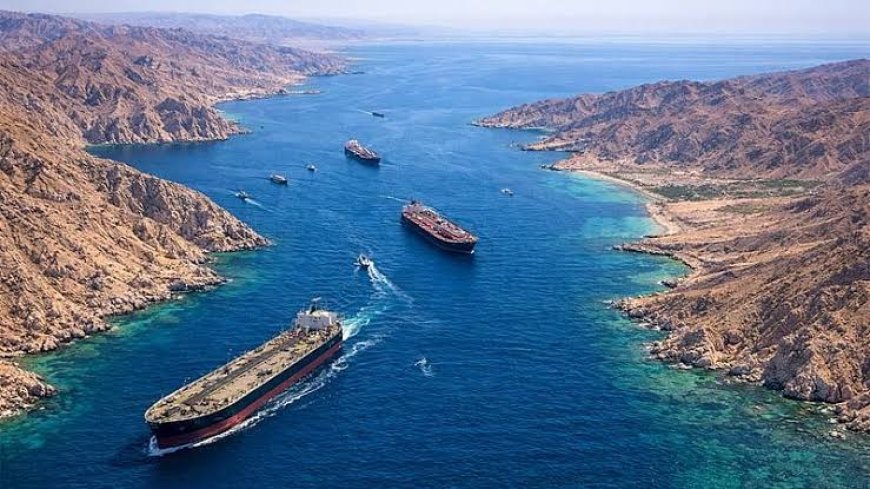
There's a particular kind of irony in watching a ceasefire produce a new legal headache. The June 15 framework agreement between the US and Iran reopened the Strait of Hormuz and lifted the American blockade on Iranian vessels — by any measure, good news. But Iran didn't simply step back to the pre-war status quo. It dropped the wartime toll it had been charging ships to offset damages, then quietly kept two other charges in place: a navigation fee and an environmental protection levy.
That small substitution is worth pausing on, because it's not just an administrative footnote. It's a test of whether one of the most heavily trafficked chokepoints in the global economy can be quietly monetized by the state that happens to sit beside it.
The Strait Was Never Just Water
It's easy to forget, amid the diplomacy, why Hormuz matters so much. A narrow channel carries an outsized share of the world's oil trade — and that concentration is exactly what hands Iran its leverage. The entire architecture of international maritime law exists, in part, to prevent precisely this kind of leverage from being exercised.
UNCLOS is unambiguous about the principle: ships transiting an international strait have a right to pass through, continuously and without obstruction. The treaty text says transit "shall not be impeded" and that there "shall be no suspension." It's about as close to a categorical rule as international law gets. The International Court of Justice said much the same thing back in 1949 in the Corfu Channel case — peacetime passage through an international strait shouldn't be interfered with, so long as it doesn't threaten the coastal state.
Seen through that lens, Iran's new fee structure looks less like a toll and more like an attempt to rebrand a stretch of open water as a managed gateway — one Iran and Oman jointly administer, and from which Iran now quietly profits.
But the Law Isn't as Clean as the Treaty Text Suggests
Here's where it gets interesting, and where I think a lot of commentary on this story oversimplifies things. Iran actually has a defensible set of legal arguments, even if none of them is airtight.
The first is geographic. Hormuz sits within the combined territorial waters of Iran and Oman — this isn't open ocean. That matters, because the expansive transit-passage freedoms of UNCLOS apply differently in territorial seas, where the more limited concept of "innocent passage" governs instead. And innocent passage comes with built-in exceptions: a coastal state can restrict it if passage threatens "peace, good order, or security." Those are vague enough words that Iran has real room to maneuver, especially in a region that's spent the better part of a year at war.
Then there's the analogy Iran will likely lean on publicly: the Suez and Panama canals both charge transit fees, and nobody calls that illegal. It's a tempting comparison, but it doesn't really hold. Those are engineered waterways, built and maintained by sovereign effort, operating under their own specific treaty regimes. Hormuz is a natural strait, governed by a completely different legal framework. The analogy sounds persuasive until you look closely.
The more interesting argument is the one buried in Iran's own treaty history. Iran signed UNCLOS but never ratified it — and at the moment of signing, explicitly said it didn't regard the transit-passage regime as binding customary law, treating it instead as a benefit owed only to states that actually ratified the convention. That's a textbook setup for what international lawyers call the "persistent objector" doctrine: if a state objects clearly and consistently to an emerging rule while it's still forming, it may not be bound by it later, even as custom solidifies around everyone else.
Iran has been building on that foundation for over three decades. Its 1993 domestic law on marine areas in the Persian Gulf already gave it authority to suspend foreign passage and demand prior authorization for vessels carrying hazardous materials — a category broad enough to sweep in ordinary oil tankers. Layer the new navigation and environmental fees on top of that history, and you get a coherent (if self-serving) legal posture: Iran has been saying "we don't accept this rule" for thirty years, and the fee is just the latest data point.
The Real Story Isn't Legal — It's Strategic
What strikes me most about this episode isn't the UNCLOS technicalities, interesting as they are. It's how comfortably Iran has learned to operate in the gray zone between war and commerce. The conflict with the US and Israel has oscillated rapidly between actual fighting and economic pressure, and Iran — despite being stretched thin militarily and economically — has shown it doesn't need a blockade to make global shipping nervous. A toll, a fee, a permit requirement: these are quieter tools, but they work.
There's also a regional thread worth watching. Iran appears to treat the parallel conflict in Lebanon as part of the same strategic contest, and the strait may be functioning as leverage there too — a way of signaling that further Israeli action could have costs that ripple well beyond Lebanon's borders.
Why This Should Matter Beyond the Gulf
For a country like India, heavily dependent on energy imports that move through exactly this kind of corridor, the lesson here isn't really about the fine print of UNCLOS Article 19. It's a reminder that the smooth functioning of global shipping lanes has always rested less on treaty language and more on the political will — and economic restraint — of whoever happens to control the water. Iran just demonstrated, again, how much that matters.