Brij Bhushan Acquittal: How Two Years of Charge-Framing Narrowed the Wrestlers' Case
Delhi's Rouse Avenue Court acquits Brij Bhushan Sharan Singh and Vinod Tomar in the wrestlers' sexual harassment case. A look at how charge-framing, discharges, and a closed POCSO complaint shaped the trial's outcome.
 Verdicto News Desk
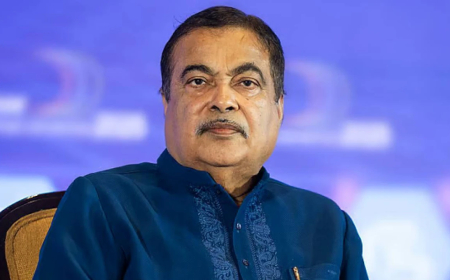
New Delhi: A Delhi trial court's acquittal of Brij Bhushan Sharan Singh on Monday closes, at least at the trial stage, a case that began not with a police complaint but with a sit-in at Jantar Mantar. Additional Chief Judicial Magistrate Ashwini Panwar of the Rouse Avenue Courts acquitted the former Wrestling Federation of India chief and six-time BJP MP of all charges, along with co-accused Vinod Tomar, the federation's former assistant secretary, after in-camera proceedings that ran through testimony from the prosecution, the complainants, and the defence. What the order underscores, more than the outcome itself, is how far the case's evidentiary architecture had already narrowed by the time it reached final arguments.
The chargesheet, filed by Delhi Police in June 2023 after the Supreme Court had disposed of the wrestlers' petitions seeking an FIR, invoked Sections 354, 354A, 354D and 506(1) of the IPC against Singh, with Section 109 additionally applied to Tomar for abetment. Charges were framed only in May 2024, nearly a year after the chargesheet, and even then unevenly: Singh was discharged of the allegations levelled by the sixth complainant, while Tomar's framed charge was confined to Section 506(1) in relation to the first complainant alone, with the remaining offences against him discharged at that stage. A separate POCSO case, arising from a minor wrestler's complaint, had already been closed via a cancellation report before trial, after the complainant and her father sought withdrawal — a development the wrestlers' side had at the time called procedurally troubling, given that Delhi Police itself had initially resisted, then reversed course on, characterisations of the strength of its own evidence. Singh's attempt to reopen the investigation and revisit the charge-framing, built partly on a claim that he was outside India on the relevant date, was rejected by the court prior to trial.
Senior Advocate Rebecca John represented the complainants; Advocate Rajiv Mohan appeared for Singh. Both sides were heard at length before the verdict was reserved, and the order itself was delivered amid restricted access, with media kept out of the courtroom — consistent with the case having been conducted in camera since framing of charges, a standard protective measure in sexual harassment trials but one that has limited independent scrutiny of the evidentiary record as the case moved forward.
The trial's arc, from a January 2023 protest that briefly paused on an assurance of an oversight committee, to a Supreme Court-directed FIR in April, to a chargesheet in June, to charges framed nearly a year later, and now an acquittal roughly two years after that — maps a familiar pattern in complaints against sitting political figures: institutional response outpaces neither political calendar nor federation elections, both of which had already moved on well before trial concluded. Singh's parliamentary term from Kaiserganj ended with the 2024 general election, in which he was not renominated; the WFI itself has since seen a change in leadership. Whether the acquittal forecloses appellate recourse for the complainants, and what if any bearing the discharge of individual counts had on the trial court's final assessment of the surviving charges, will depend on the reasoned order, which has not yet been made public in full.