Is The SHANTI Act's Liability Cap A Ceiling On Operators, Or On The Courts Too: Centre To Clarify
The SHANTI Act caps what operators owe. It doesn't say what courts can award. That gap is now before the Supreme Court.
 Verdicto News Desk
New Delhi, August 17: The Supreme Court on Monday examined a fundamental question arising from the SHANTI Act, 2025: whether Parliament’s decision to cap the liability of nuclear plant operators prevents courts from awarding victims fair and just compensation in the event of a nuclear accident.
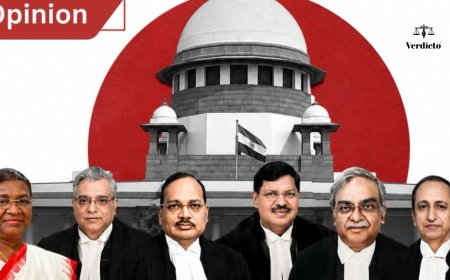
A Bench comprising Chief Justice of India Surya Kant and Justices Joymalya Bagchi and V. Mohana issued limited notice to the Centre on the issue while also seeking clarification on the independence of the proposed regulatory framework under the new law.
The challenge to the Sustainable Harnessing and Advancement of Nuclear Energy for Transforming India (SHANTI) Act has brought into focus the difficult balance between encouraging private investment in nuclear power and ensuring accountability when an accident causes widespread harm.
The petition has been filed by a group of petitioners, including professors and scientists, led by former bureaucrat E.A.S. Sarma. The petitioners have argued that several provisions of the 2025 legislation violate fundamental rights guaranteed under Articles 14, 19 and 21 of the Constitution.
The ₹3,000-crore question
One of the principal concerns raised before the Court relates to the statutory limit on the liability of nuclear operators.
The SHANTI Act, which replaced the Civil Liability for Nuclear Damage Act, 2010, allows private companies to participate in the establishment of civil nuclear power plants. At the same time, it places a ceiling of ₹3,000 crore on the operator's liability in the event of a nuclear accident.
The petitioners contend that such a ceiling could become problematic where the actual damage caused by a nuclear accident is substantially higher.
Advocates Prashant Bhushan and Neha Rathi, appearing for the petitioners, argued that limiting liability could have the effect of reducing the incentive for operators to maintain the highest standards of safety.
The concern is not merely financial. A major nuclear accident could potentially result in loss of life, long-term health consequences, displacement and environmental damage extending far beyond the immediate vicinity of a plant.
The legal question, therefore, is whether a statutory cap designed to provide certainty to operators can coexist with the constitutional requirement of providing an effective remedy to those who suffer harm.
Can courts go beyond the statutory ceiling?
The Supreme Court appeared to focus on precisely this distinction.
Chief Justice Surya Kant observed that even if Parliament has capped the liability of operators, that does not necessarily mean that courts are precluded from granting fair and just compensation.
That observation raises an important question about the operation of the Act.
If the ₹3,000-crore limit is treated as the maximum liability of the operator, who bears the remaining financial burden when the damage exceeds that amount? And, more importantly, can a court independently determine what constitutes fair compensation for victims despite the statutory framework?
The Centre has been asked to clarify its position.
This distinction could ultimately prove significant. A cap on an operator's statutory liability does not automatically answer the broader question of how victims are to be compensated for losses that exceed the prescribed limit.
The case therefore puts two competing policy objectives alongside each other: certainty for investors and adequate protection for victims.
Investment versus safety
The Centre's justification for the legislation is linked to the expansion of India's nuclear energy sector and the need to attract private investment.
The CJI noted that Parliament had enacted the law to incentivise project proponents and bring investment into the nuclear sector.
That policy objective is not insignificant. India is seeking to expand nuclear power as part of its long-term energy strategy, and greater private participation could provide additional capital and technological capacity.
But the petitioners' argument raises the other side of that equation: whether making liability more predictable for operators could inadvertently transfer a greater portion of the risk to the public.
Bhushan argued that such a framework could effectively permit operators to cut corners on safety.
The deeper issue is therefore not simply whether private companies should be permitted to enter the nuclear sector. It is whether the legal framework governing their entry creates sufficient incentives for them to maintain stringent safety standards.
In an industry where an accident can have consequences extending far beyond the balance sheet of a single company, the question of who ultimately bears the risk becomes central.
Who regulates the regulator?
The Court has also sought clarification on another significant aspect of the SHANTI Act — the composition and independence of the Atomic Energy Regulatory Body.
Section 17(4) of the Act provides for appointments to the regulatory body on the recommendation of a search and selection panel constituted by the Atomic Energy Commission.
The petitioners allege that this arrangement raises a potential conflict of interest.
Their argument is straightforward: if the Atomic Energy Commission is involved in the operation and development of nuclear power stations, allowing it to play a role in recommending members of the body responsible for regulating the sector could raise questions about regulatory independence.
The concern goes to the heart of institutional accountability.
A regulator is expected to independently scrutinise the entities and activities it regulates. If the institutional structure places the regulator too close to the bodies responsible for promoting or operating nuclear projects, questions may arise about whether the regulator can act without institutional pressure or conflicting interests.
The Supreme Court has therefore asked the Centre to clarify its position on the appointment mechanism.
The constitutional question
The challenge also invokes Articles 14, 19 and 21 of the Constitution.
Article 21 assumes particular significance in any discussion concerning nuclear accidents because the right to life has been interpreted by the Supreme Court to encompass more than mere physical survival. Questions of health, safety and a clean environment can become relevant when State policy permits activities carrying potentially catastrophic risks.
The petitioners' case, in essence, is that a regulatory framework for nuclear energy cannot be assessed only through the lens of economic policy.
The Supreme Court had earlier observed that the issues raised in the challenge touch upon "economic policy". That does not necessarily end the constitutional inquiry, however. Economic policy remains subject to constitutional limitations where fundamental rights and institutional safeguards are implicated.
The Court will therefore have to consider whether the SHANTI Act strikes a constitutionally permissible balance between economic objectives and the protection of individuals who may bear the consequences of a nuclear accident.
What remains unresolved
The Supreme Court has not, at this stage, struck down any provision of the SHANTI Act. Its Monday order is limited to seeking the Centre's response on specific questions.
But the issues identified by the Bench are significant.
The first is whether a statutory ceiling on operator liability can coexist with a victim's right to receive fair and just compensation.
The second concerns who ultimately bears the financial burden when damage exceeds the operator's liability.
The third concerns whether the institutional design of the Atomic Energy Regulatory Body provides adequate independence from the entities involved in India's nuclear programme.
At its core, the case is about risk allocation.
India may want private capital to enter nuclear energy. Operators may want predictable liability before committing billions of rupees to projects. But victims of a nuclear accident have no ability to negotiate the risks imposed upon them.
That is what makes the SHANTI Act challenge larger than a dispute over a liability figure.
The question before the Court is ultimately whether India's pursuit of nuclear investment can be structured in a way that does not make the public the residual bearer of catastrophic risk.
The Centre's response to the Supreme Court's limited notice may therefore determine whether the ₹3,000-crore ceiling is merely a mechanism for providing commercial certainty — or whether it creates a deeper gap between the scale of potential nuclear harm and the legal responsibility imposed on those operating nuclear facilities.