Muslim Personal Law On Puberty Marriage Age Violates POCSO, Child Marriage Act: Allahabad High Court
Allahabad HC holds Muslim personal law permitting marriage at puberty violates the Child Marriage Act & POCSO; upholds FIR against accused who assaulted rescue team
 Verdicto News Desk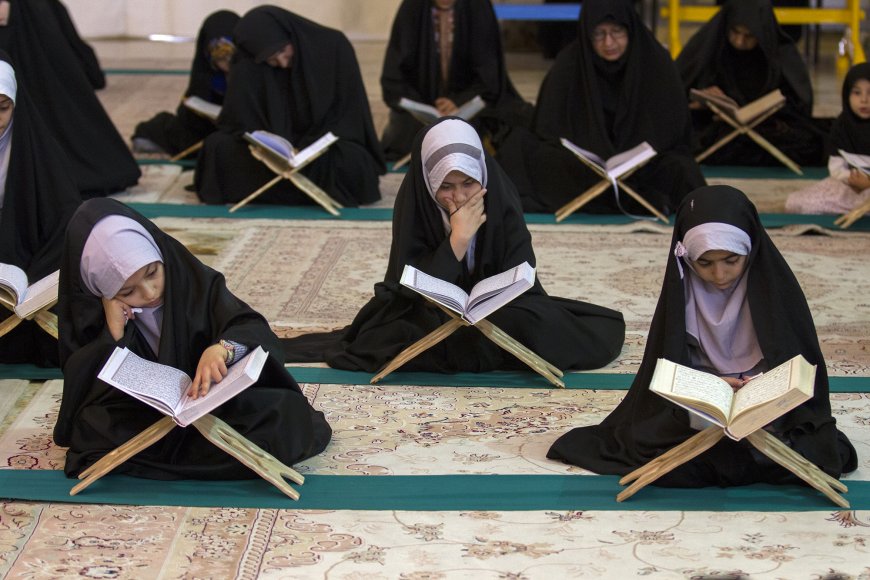
New Delhi: A division bench of the Allahabad High Court comprising Justice J.J. Munir and Justice Achal Sachdev has delivered a significant reaffirmation of a principle that has divided High Courts across the country: personal law cannot override the statutory prohibition on child marriage.
The Court's reasoning was direct. Any interpretation of Muslim personal law that treats attainment of puberty as sufficient qualification for marriage collides head-on with both the Prohibition of Child Marriage Act, 2006 (PCMA) and the Protection of Children from Sexual Offences Act (POCSO). In the Bench's view, the age of marriage is uniform for every Indian citizen regardless of religious affiliation, because that is what the PCMA prescribes.
How the Case Arose
The matter reached the Court not as a marriage dispute but as a criminal one. Nineteen individuals approached the High Court seeking to quash an FIR filed against them after they allegedly assaulted and obstructed a police and Child Line rescue team. The team had intervened to halt the marriage of a 16-year-old Muslim girl in Bulandshahr district — a marriage that was, on the facts, actively being pushed forward by her family and community despite her being a minor.
The petitioners' defence rested squarely on religious personal law: under Shariat, they argued, a girl becomes competent to marry once she reaches puberty, conventionally placed at around 15 years, and the PCMA has no bearing on that religious entitlement.
Why the Argument Failed
The Bench was unpersuaded, and its dismissal of the plea rested on three connected strands of reasoning.
First, it held that no personal law — Muslim or otherwise — can nullify a beneficial, protective statute like the PCMA. The Court framed the PCMA and POCSO as legislation rooted in public health and national policy, carrying a scientific rationale that Parliament has translated into binding prohibitions applicable to all citizens alike.
Second, the Bench drew a direct line between child marriage and the POCSO Act. Since sexual relations are, in the Court's words, "almost inseparable" from marriage, permitting the marriage of anyone under 18 would as good as guarantee a POCSO violation. This linkage is significant — it treats the two statutes as mutually reinforcing rather than operating in separate silos, closing off any argument that a marriage validly solemnised under personal law could somehow sit outside POCSO's reach.
Third, the Court expressly aligned itself with the Kerala High Court's line of reasoning on this question, acknowledging that other High Courts have taken differing views but declaring its own "complete agreement" with the position that personal law cannot dilute the child marriage prohibition.
The Unresolved Legislative Backdrop
Notably, the Bench also engaged with the Supreme Court's 2025 order flagging doubt over whether personal laws could prevail over the PCMA — a doubt expressed while the Prohibition of Child Marriage (Amendment) Bill, 2021 was still pending in Parliament. That Bill, introduced in December 2021, would have made the PCMA's provisions override any conflicting personal law. However, as the Allahabad High Court pointed out, the Bill lapsed with the dissolution of the 17th Lok Sabha, and the Supreme Court has yet to authoritatively settle the question.
This matters beyond the immediate case. It means the Allahabad High Court's ruling is, for now, a persuasive but not final word — one more entry in a body of conflicting High Court opinion that only the Supreme Court, or a re-introduced and passed amendment bill, can definitively resolve.
Facts on the Ground
On the specific facts, the Court found a clear and deliberate attempt by the girl's own parents and community to marry her off in contravention of the PCMA. It praised the police and Child Line team for acting swiftly to rescue her, characterising their intervention as a bona fide discharge of duty aimed at preventing a POCSO violation.
The FIR itself detailed a rescue operation gone hostile — the team was reportedly abused, threatened, and compelled to protect themselves from the petitioners while extracting the minor from her family's custody. Given this, the Bench found that obstruction of public servants in the discharge of duty was prima facie made out, alongside other offences warranting full investigation. The writ petition was accordingly dismissed and the FIR allowed to stand.
Why This Matters
The judgment is a reminder that Indian courts increasingly treat the PCMA and POCSO as a combined statutory shield around minors that personal law exemptions cannot pierce — a position gaining ground even as the Supreme Court has not yet delivered the final word. For law enforcement, it offers reinforcement: rescue teams intervening in underage marriages are acting within the bona fide discharge of duty, and resistance to such intervention can attract independent criminal liability, separate from whatever personal law defence is raised over the marriage itself.
For now, though, the split among High Courts — with Kerala and Allahabad on one side of the debate — means this remains a live legal question, one that will likely stay unsettled until Parliament revives the lapsed amendment bill or the Supreme Court rules definitively.