Ram Temple Donation Row Enters a New Legal Phase as Lawyers Demand FIR Against Trust Officials
Ram Temple donation controversy enters a new legal phase as Faizabad lawyers seek an FIR against senior Trust officials. Verdicto explains the legal issues, possible criminal liability, and what happens next.
 Verdicto News Desk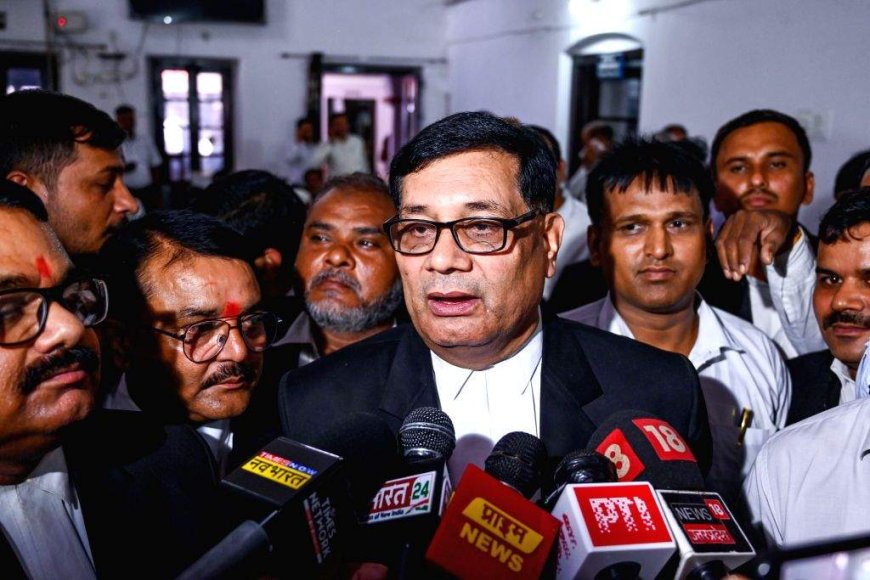
Ayodhya: The controversy surrounding the alleged embezzlement of donations collected at the Ram Temple in Ayodhya has moved beyond allegations of financial irregularities to a significant legal confrontation. On Thursday, lawyers from the Faizabad Bar Association demanded the registration of an FIR against senior office bearers of the Shri Ram Janmabhoomi Teerth Kshetra Trust, signalling an escalation that could have important legal and institutional consequences.
The development comes weeks after an FIR was registered against eight individuals involved in the temple's donation-counting process. However, the lawyers argue that the investigation cannot remain confined to lower-level functionaries if questions regarding supervision, accountability and institutional responsibility remain unanswered.
Why This Development Matters
The demand for an FIR against Trust officials does not establish criminal liability. Under Indian criminal law, an FIR merely sets the criminal investigation in motion where cognizable offences are alleged. Whether an FIR should be registered depends on whether the complaint discloses the commission of a cognizable offence and whether there is sufficient legal basis to investigate the named individuals.
The lawyers' protest therefore raises two legal questions:
- Should the investigation be expanded to include senior Trust officials?
- Has the existing investigation adequately examined the chain of responsibility within the Trust?
If police refuse to register an FIR, the complainants may approach the jurisdictional Magistrate under Section 175(3) of the Bharatiya Nagarik Suraksha Sanhita, 2023 (formerly Section 156(3) of the Code of Criminal Procedure), seeking judicial directions for registration and investigation.
Can Trustees Be Held Criminally Liable?
One of the central legal issues is whether office bearers of a public charitable trust can be held criminally responsible for alleged financial irregularities committed by employees or volunteers.
Indian criminal jurisprudence generally does not recognise vicarious criminal liability unless a statute specifically provides for it. This means trustees cannot automatically be prosecuted merely because they hold senior positions.
Investigators would ordinarily need evidence indicating:
- direct involvement;
- knowledge of the alleged offence;
- criminal conspiracy;
- dishonest intention;
- or active negligence amounting to criminal misconduct under applicable penal provisions.
Without such evidence, mere designation within the Trust may not be sufficient to sustain criminal prosecution.
The Importance of Chain of Accountability
The lawyers' complaint reflects a broader legal principle often invoked in cases involving charitable institutions and public trusts: accountability cannot stop with operational staff if systemic failures are suspected.
Investigators may examine:
- internal financial controls;
- supervision over donation counting;
- audit mechanisms;
- CCTV monitoring;
- cash handling protocols;
- authorisation procedures;
- and compliance with trust governance norms.
Whether these mechanisms failed due to negligence, criminal misconduct, or manipulation is ultimately a matter for investigation.
Role of the SIT
Following allegations raised in early June, the Uttar Pradesh Government constituted a Special Investigation Team (SIT), whose preliminary findings reportedly formed the basis for the existing FIR and the arrest of eight individuals connected with the donation-counting process.
The SIT now faces increasing scrutiny regarding the scope of its investigation.
If allegations continue to emerge against senior office bearers, investigators may have to determine whether:
- existing evidence justifies expanding the probe;
- fresh complaints require separate investigation;
- or the allegations lack sufficient material for criminal proceedings.
Political Dimension
The controversy also carries significant political sensitivity.
The Ram Temple is among India's most symbolically important religious institutions. Consequently, any allegation involving management of temple donations is likely to attract political debate.
The controversy initially intensified after allegations made by Samajwadi Party president Akhilesh Yadav. Since then, opposition parties have demanded greater transparency, while Trust representatives have maintained that the matter is being investigated and that due process should be followed.
Political statements, however, do not determine criminal liability. The investigation must ultimately rest on documentary evidence, financial records, witness statements and forensic examination.
Champat Rai's Offer to Resign
Another notable development is the reported offer by Trust General Secretary Champat Rai to resign while accepting what he described as "moral responsibility."
Legally, an offer to resign does not amount to an admission of guilt.
Indian criminal law distinguishes between:
- moral responsibility, which is ethical or institutional in nature; and
- criminal responsibility, which requires proof beyond reasonable doubt through investigation and trial.
Any criminal prosecution would therefore depend entirely on evidence collected during investigation.
What Happens Next?
Several legal scenarios may now unfold:
- Police may register a fresh FIR if they find the complaint discloses cognizable offences.
- They may decide that the allegations can be examined within the ongoing investigation.
- They may decline to register an FIR, prompting the complainants to seek judicial intervention before a Magistrate.
- The SIT may recommend expanding its investigation if new evidence emerges linking higher officials.
Each of these outcomes carries different procedural consequences under the BNSS.
The latest protest marks a shift in the Ram Temple donation controversy—from allegations of theft involving operational staff to demands for examining institutional accountability at the highest levels of the Trust.
At this stage, no court has found any Trust official guilty, and the allegations against senior functionaries remain unproven. The legal system now faces the challenge of balancing public confidence in a nationally significant religious institution with the fundamental principles of criminal justice: due process, impartial investigation, and the presumption of innocence.
The coming weeks will determine whether the investigation remains limited to the individuals already arrested or expands to examine whether failures of governance, oversight, or criminal misconduct extended further up the administrative hierarchy.