What happens when the world’s largest energy importer faces a supply shock?
An expert analysis by Professor Srikanth Kondapalli on how the US-Iran conflict and West Asia tensions expose China’s energy vulnerabilities and global supply risks.
 Verdicto News Desk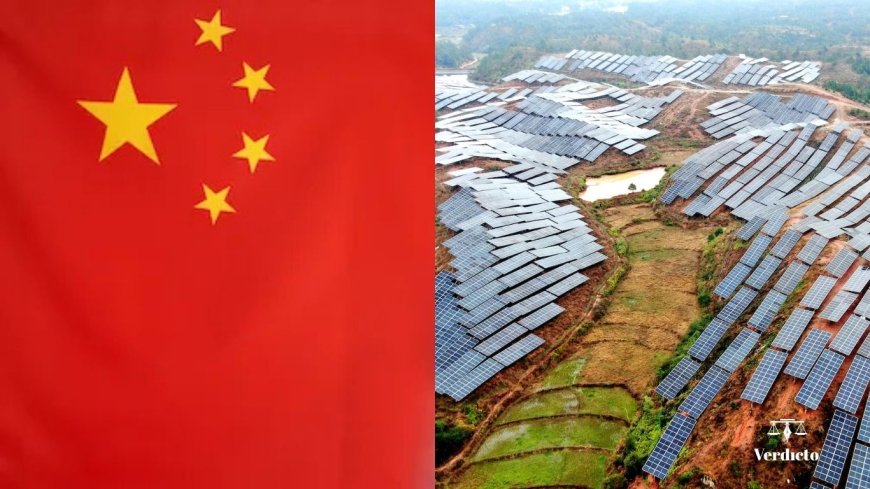
The on-going conflict in West Asia since February 28 has created ripples among many countries, specifically given their dependence on energy imports from this region. China is no exception, given its status as the largest importer of energy in the world. Beijing is determined to reduce vulnerabilities by diversifying its energy mix and supplies.
Traditionally, energy security is mainly concerned with its vulnerabilities in sustainability and affordability, while recent period witnessed concerns about pollution. Sustainability involves predictable and assured supplies through maritime routes, shipping and pipelines, that has become problematic due to geopolitical conflicts and the current closure of the Straits of Hormuz.
To address this issue nations began diversification to other sources, building strategic reserves and other measures were adopted as stop-gap arrangements.
Affordability refers to the pricing mechanism on which the economic growth rates of a country are dependent. For instance, crude oil which was around $63 per barrel last year, has sharply increased to about $115 after the region was bombed. This means countries have to spend more while importing precious and scarce energy resources, thus denting into growth prospects.
To address climate change issues, countries began focusing on shifting towards renewable sources of energy such as wind, solar, nuclear, hydro-electricity and other forms.
As the 2nd largest economy since 2010, China is heavily dependent on energy to fuel its growth rates. Since 1993, it became a net importer of energy resources, that is its domestic production from Daqing, Tarim Basin and other sources were not enough to cope up with the rising demand and its imports increased by leaps and bounds.
In 2025, China produced about 200 million tonnes of crude oil, while importing over 560 million tonnes from abroad – mostly from West Asia and Russia. China also imported about 80 million tonnes of LNG, with Australia exporting 34 percent and Qatar about 24 percent. Cumulatively, China imports more than 70 percent of its crude oil and 40 percent of gas. This is a red herring.
In general, a nation importing more than 50 million tonnes of oil is vulnerable to supply disruptions. In this context, China’s vulnerabilities are increasing. For instance, more than half of China’s imports come from West Asia, with Saudi Arabia, Iraq and Iran constituting major suppliers. Of these, more than half of China’s crude oil imports and a third of its gas has to pass through the Straits of Hormuz, which is shut down now.
China imports about 13 percent of its oil from Iran. For the latter, this constitutes over 80 percent of its exports. Given the imposition of US sanctions on Iranian nuclear programme, China’s imports from Iran are vulnerable. These imports as such have become problematic, despite sanctioned oil making its way to high seas transfers. As West Asia has been periodically under stress, China began diversifying to Russia, Central Asia, Angola, Venezuela and other sources.
China began constructing strategic oil reserves four years after the 2nd Gulf War of 2003. Today, it has an estimated strategic petroleum reserve of about 160 million tonnes located at Dalian, Huangdao, Zhenhai, Zhoushan, Lanzhou, Dushanzi, Jinzhou and other places. This should help China weather off the storm but only for no more than a hundred days. With the conflict in West Asia expanding, China has to explore alternatives.
Substantial progress is achieved by China in renewables. In 2025, nearly 60 percent of China’s total power generation capacity came from solar, wind and other non-fossil fuels. However, China’s total power generation and consumption has almost reached the same proportions – at about 10 trillion watt hours. Any long-term external disruptions, like in West Asia, could upset the energy apple cart of China.
To reduce vulnerabilities, China also constructed energy pipelines through Central Asia, Myanmar, Russia and others. Thus, three energy pipelines in Central Asia carry 33 million tonnes equivalent of natural gas to China from Turkmenistan, with the first pipeline commissioned in 2006. At one time over 80 percent of Kazakh oil was destined to China but now reduced due to environmental concerns of Astana.
Nearly a quarter of China’s crude oil comes from Russia, far way from the choppy waters of Hormuz. Importing as much as $92 billion worth of energy resources from Russia, mainly through Power of Siberia pipeline, aften at discount prices, benefited China. However, Russia had recently announced price hike, triggering inflation fears in China.
Another area that China focused on is investments in the energy sector abroad since the early 2000s. Many of its state-owned companies like CNPC, Sinopec, CNOOC have today fanned out into Iran, Venezuela, Argentina, Central Asia, Angola, Sudan and others. However, these are vulnerable to liquidity risk, high transaction costs, security and competition.
Beijing is also considering to contain the contagion by directly involving in the region. Apart from diplomatic parleys and surreptitious arms transfers, it had conducted a series of naval exercises such as with Iran and Russia in “Maritime Security Belt 2026” operation at Straits of Hormuz just before the conflict escalated. Nearly four weeks into the conflict, China and Pakistan organised from March 25 to April 1 inter-operable “Sea Guardian 4” in northern Arabian Sea with a Daqing frigate and helicopter landings.
However, the United States threat to escalate the Iran conflict is unnerving China and other countries. Some Chinese see this as part of a series of measures to reduce Beijing’s growing footprint in West Asia, South America and Africa.
--------------------------------------------
This is an opinion piece by Srikanth Kondapalli, Professor of Chinese Studies at Jawaharlal Nehru University. The views expressed are personal and do not necessarily represent those of Verdicto.
📌 Follow us on YouTube, Instagram, and Twitter for more updates.