The Rise of ‘Follower Democracy’
A satirical political movement overtook India’s ruling party on Instagram. The real story is what that says about democracy, digital speech and Gen Z politics.
 Verdicto News Desk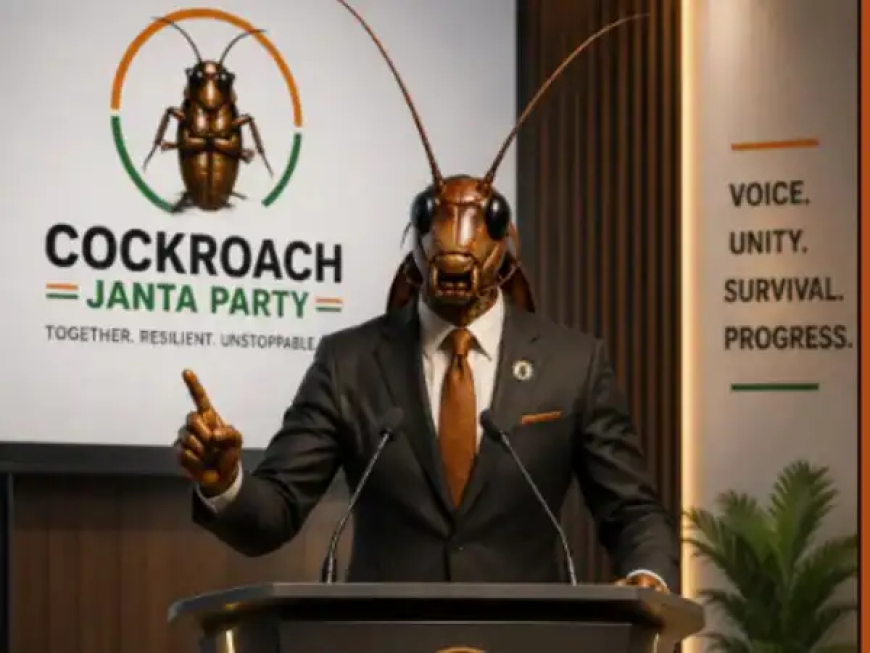
What began as internet satire under the banner of the “Cockroach Janta Party” (CJP) rapidly transformed into one of India’s most striking examples of digital political mobilisation. Within days, the meme-driven account amassed millions of followers, eventually overtaking the official Instagram handle of India’s ruling Bharatiya Janata Party in follower count. Soon after, its X account was withheld in India, further intensifying public attention and online debate.
The rise of the CJP is not electorally significant in the conventional sense. It is unlikely to contest elections, draft policy manifestos or build booth-level structures. Yet its explosive popularity reveals something deeper about modern politics: in the age of algorithms, visibility itself is beginning to resemble legitimacy.
India may be entering an era of what can be called “follower democracy” — a political culture where social media traction increasingly shapes public perception of relevance, influence and resistance.
Politics Beyond Parliament
For decades, political legitimacy was measured through rallies, cadre networks, television visibility and election results. Today, a parallel arena exists entirely online.
Memes, satire pages, influencers and anonymous digital collectives are increasingly functioning as political actors. They shape narratives faster than party spokespersons, mobilise sentiment without organisational structures and create forms of symbolic participation that resonate particularly with younger citizens.
The Cockroach Janta Party appears to have emerged from precisely this environment — one fuelled by political fatigue, humour, irony and distrust of formal institutions. Its growth was not driven by ideology in the traditional sense but by internet-native political expression.
For many Gen Z users, following a satirical political page is not merely entertainment. It is participation.
That participation may not translate into votes immediately, but it influences discourse, identity and collective sentiment.
When Metrics Become Political Capital
Follower counts are not votes. But in digital ecosystems, they can function as social proof.
An account with millions of followers acquires symbolic authority regardless of whether it possesses institutional power. Political parties understand this well. That is why nearly every major party invests heavily in influencer networks, meme pages and digital war rooms.
The CJP phenomenon disrupts this ecosystem because it demonstrates that decentralised satire can outperform organised political communication.
This creates an uncomfortable question for established political actors: if legitimacy online is increasingly measured through engagement, virality and follower accumulation, what happens when unofficial satire commands more attention than official politics?
The answer lies in the changing nature of democratic communication itself.
Politics is no longer confined to speeches and manifestos. It now exists in reels, memes, comment sections and algorithmic amplification.
The Constitutional Dimension
The rise — and partial suppression — of such online movements also raises significant constitutional questions.
Political satire has historically enjoyed protection under Article 19(1)(a) of the Indian Constitution, which guarantees freedom of speech and expression. Indian courts have repeatedly recognised dissent, criticism and even unpopular expression as central to democratic culture.
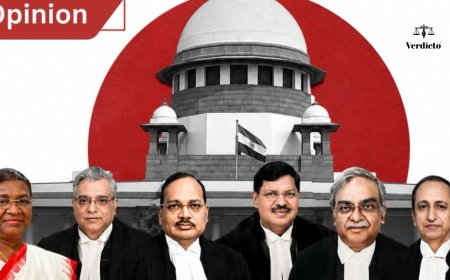
The Supreme Court’s judgment in Shreya Singhal v. Union of India remains particularly relevant. While striking down Section 66A of the Information Technology Act, the Court affirmed that mere annoyance or inconvenience cannot be grounds for suppressing online speech.
At the same time, Article 19(2) permits reasonable restrictions on grounds such as public order, defamation and incitement.
This is where the controversy surrounding the withholding of the CJP’s X account becomes important. If access to a political satire account is restricted, several legal questions emerge:
- Was the action initiated through a government request?
- Was there a judicial or executive order?
- Did the platform act independently under its internal moderation policy?
- What transparency obligations exist in such cases?
These questions go beyond one account. They concern the architecture of digital democracy itself.
Who Governs the Digital Public Square?
Social media platforms increasingly function like political infrastructure.
Unlike traditional public spaces, however, these platforms are privately owned. Companies decide what trends, what gets visibility, what is labelled misleading and what disappears entirely.
This creates a unique democratic tension.
Governments seek regulation in the name of security and accountability. Platforms invoke private moderation powers. Users demand free expression. Courts attempt to balance competing constitutional interests.
But in practice, digital speech often exists within opaque systems where moderation decisions are not fully transparent.
The Cockroach Janta Party episode exposes this tension clearly. A meme movement can gain extraordinary visibility overnight, yet remain vulnerable to sudden restrictions beyond public scrutiny.
Gen Z and the Language of Satire
The movement also reflects a generational shift in political communication.
Young users increasingly communicate political frustration through irony rather than formal activism. Humour has become both shield and weapon. Satire allows criticism while simultaneously distancing users from direct ideological identification.
This ambiguity is powerful.
It enables rapid participation without organisational risk. Users can repost, meme and engage politically while maintaining plausible deniability: “It’s just a joke.”
Yet history shows satire has rarely been politically insignificant. From political cartoons during colonial India to contemporary digital memes, humour has long functioned as a method of resistance.
The difference today is scale.
Algorithms can transform jokes into mass political phenomena within hours.
Beyond the Meme
The Cockroach Janta Party may eventually disappear from public attention, as most viral internet movements do. But the phenomenon it represents is unlikely to fade.
India’s political future will not be shaped only by parties, rallies and television debates. It will also be shaped by anonymous creators, meme collectives, influencer ecosystems and algorithmic publics.
The central democratic question is no longer merely who people vote for.
It is also who people follow, amplify and believe online.
And as digital platforms become the primary arena of political communication, follower counts may increasingly function as a new — if unstable — form of political legitimacy.
In the age of follower democracy, visibility itself is power.
📌 Follow us on YouTube, Instagram, and Twitter for more updates.