Big Electoral Reset: Centre Moves to Expand Lok Sabha, Implement Women’s Quota Through Delimitation
The Centre introduces the Constitution (131st Amendment) Bill and Delimitation Bill 2026, proposing 850 Lok Sabha seats, removal of delimitation freeze, and implementation of women’s reservation.
 Verdicto News Desk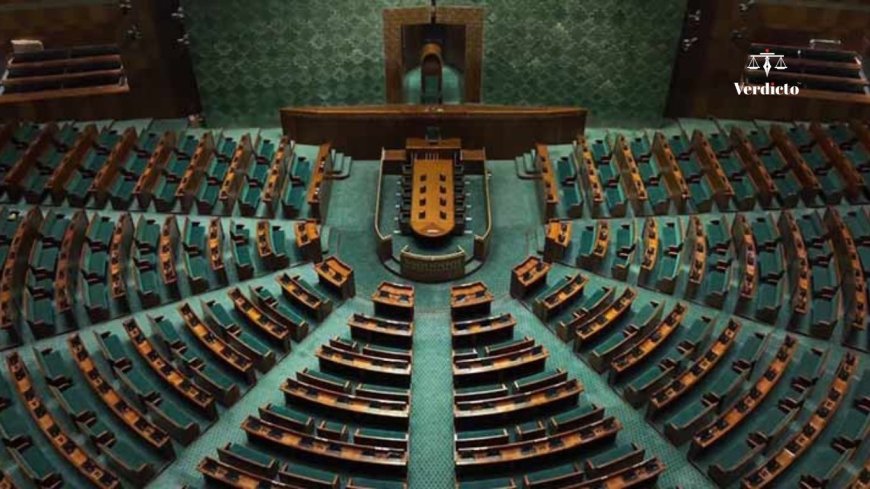
In a significant move that could reshape India’s electoral landscape, the Centre has introduced a set of legislative proposals aimed at implementing women’s reservation and redrawing constituency boundaries.
The package includes the Constitution (131st Amendment) Bill, 2026, the Union Territories Laws (Amendment) Bill, 2026, and the Delimitation Bill, 2026, together laying the groundwork for a large-scale restructuring of representation in Parliament and State Assemblies.
Expanding Lok Sabha, Ending the Freeze
The Constitution (131st Amendment) Bill proposes a substantial increase in the strength of the Lok Sabha—from the current cap to 850 seats. Representation from states may rise to 815 seats, while Union Territories could see an increase to 35 seats.
A key feature of the Bill is the removal of the freeze on delimitation, which has been in place since the 1971 Census. This paves the way for seat allocation based on the latest population data, addressing long-standing concerns over demographic imbalance.
Fast-Tracking Women’s Reservation
The Bill aims to operationalise one-third reservation for women in the Lok Sabha and State Assemblies under the Nari Shakti Vandan framework.
However, this reservation will come into effect only after delimitation is completed. The quota is proposed for an initial period of 15 years, with seats being rotated across constituencies.
Importantly, the reservation will also extend to Assemblies of Union Territories, including Delhi, Puducherry, and Jammu & Kashmir.
Changes in Union Territories
Through the Union Territories Laws (Amendment) Bill, the Centre proposes structural changes in legislative assemblies of UTs.
Key highlights include:
- Reservation for women in UT Assemblies
- Increase in nominated members in Puducherry, with mandatory representation for women
- Minimum 114 seats in Jammu & Kashmir and 70 seats in Delhi
The Bill also aligns the definition of “population” with new delimitation norms for consistency.
Delimitation Bill 2026: Redrawing the Political Map
The Delimitation Bill proposes a complete reorganisation of constituencies based on the latest Census data. A Delimitation Commission, chaired by a Supreme Court judge, will oversee the process, with the Chief Election Commissioner and State Election Commissioners as members. MPs and MLAs will act as associate members.
A major feature is the 33% reservation for women, including within SC/ST reserved seats, implemented through a rotation system.
The proposed law will replace the Delimitation Act, 2002.
The Bigger Picture
Together, these legislative moves signal a major electoral reset, inking women’s political representation with long-pending delimitation reforms.
While the proposals aim to balance representation and inclusion, they also reopen debates around population-based seat allocation, federal balance, and political redistribution of power.
📌 Follow us on YouTube, Instagram, and Twitter for more updates.