NEET-like paper leak row: "PM personally supervising," Centre tells SC as Court seeks accountability
The Supreme Court questioned institutional accountability in the alleged NEET-UG paper leak case as the Centre informed the bench that PM Narendra Modi is personally supervising the probe to ensure there are “no lacunae” in the investigation.
 Verdicto News Desk
The Supreme Court on Friday expressed serious concern over the alleged NEET-UG paper leak controversy, with the Centre informing the Court that Prime Minister Narendra Modi is personally supervising the matter to ensure there are “no lacunae” in the investigation.
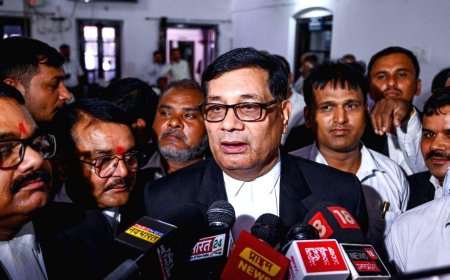
Appearing before the bench, Solicitor General Tushar Mehta said the government was fully conscious of the impact the controversy has had on students and their families. “We are dealing with youths, and the government is seriously concerned about their concerns,” Mehta submitted before the Court.
Hearing petitions relating to alleged irregularities in the NEET-UG examination process, the bench underscored the need for systemic reforms and stronger institutional safeguards to preserve the integrity of competitive examinations.
Justice J.B. Pardiwala observed that examinations such as the UPSC have largely remained insulated from such controversies, and said the present situation must serve as a lesson for reforming the examination framework.
The Court noted that the controversy has caused deep distress among students and parents, considering the years of preparation, emotional investment, and uncertainty attached to high-stakes examinations like NEET.
In a significant procedural development, the notice earlier issued to the Ministry of Health was substituted with the Ministry of Education. The Supreme Court directed the Education Ministry to file an affidavit detailing the process through which examinations are conducted and concluded each year, and the measures proposed to strengthen the system going forward.
The bench also sought an explanation regarding the creation of institutional memory, the deployment of specialised personnel, and the integration of domain experts into the examination mechanism.
Questioning whether the system had truly institutionalised accountability, the Court observed that merely constituting committees would not resolve the recurring problem unless specific responsibility is fixed.
“The real problem will not stop until actual accountability is fixed,” the bench observed, adding that accountability cannot remain confined to the idea of collective responsibility without clearly identifying who is answerable for failures within the system.
The Court further remarked that in situations involving collective responsibility, repeated meetings and committees often take place without any clarity on where actual responsibility lies.
Responding to the Court’s concerns, Dr Radhakrishnan informed the bench that authorities had earlier identified a lack of sufficient domain experts within the examination framework. He stated that experts associated with IIT-JEE and Kendriya Vidyalaya examinations have now been brought in to strengthen the system.
The controversy intensified after reports claimed that 135 questions from a circulated question bank allegedly matched the actual NEET paper. According to an India Today report, all 90 Biology questions and all 45 Chemistry questions were allegedly found in the circulated material, amounting to nearly 600 marks out of NEET’s total 720 marks.
Officials, however, maintained that investigators are still examining whether the material constituted an unusually accurate “guess paper” or evidence of an actual paper leak.