Fast-Track Courts for NEET Paper Leak: Can Speedy Trials Fix India's Exam Scam Crisis?
The Centre has announced fast-track courts for NEET paper leak cases. Verdicto analyses whether speedy trials can restore trust in India's examination system.
 Verdicto News Desk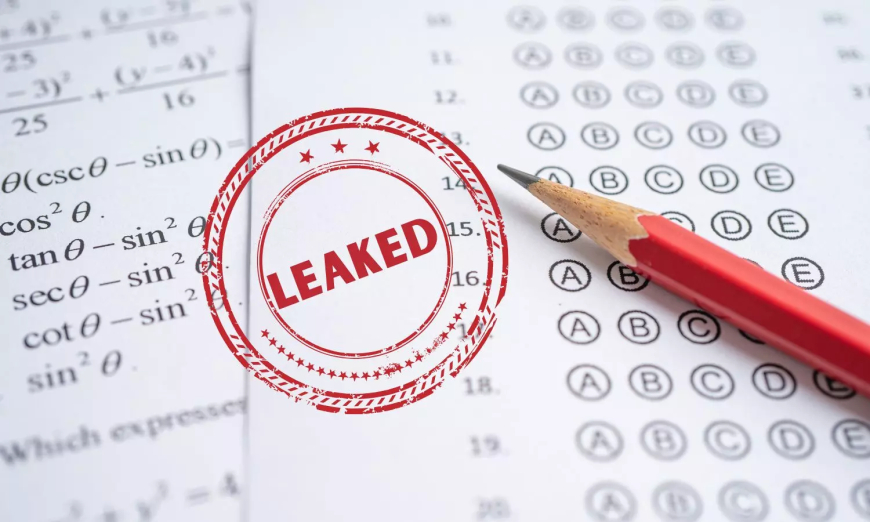
The Centre's decision to establish fast-track courts for paper leak cases has been welcomed as a strong message against those who profit by compromising the future of students. The government's assurance that such cases will now be heard expeditiously reflects an acknowledgment that examination fraud is not an ordinary crime—it strikes at the heart of merit, fairness and public confidence in institutions. Yet, even as the announcement is being projected as a major reform, it raises an uncomfortable but necessary question: Why is the emphasis on speeding up justice after a paper leak instead of ensuring that paper leaks do not happen in the first place?
Justice delivered quickly is undoubtedly better than justice delayed. But for a student whose examination has already been compromised, even the fastest trial comes too late. By the time a case reaches a courtroom, thousands of candidates may have lost months of preparation, opportunities may have slipped away, careers may have been delayed, and faith in the examination process may have been irreparably damaged. A conviction, however swift, cannot restore an academic year or erase the uncertainty created by a tainted examination.
This is where the debate must move beyond the courtroom and return to governance. The judiciary exists to interpret the law and punish those found guilty. It is not meant to compensate for administrative failures. Fast-track courts can accelerate trials, but they cannot answer the questions that matter most to students: How did the paper leak? Which security protocol failed? Who was responsible for safeguarding confidential examination material? Were there warning signs that went unnoticed? And most importantly, what has changed to ensure that the next examination is not similarly compromised?
The government's announcement appears to focus on the consequences of examination fraud rather than its causes. That distinction is significant. Criminal law is inherently reactive—it comes into play after an offence has been committed. Good governance, on the other hand, is measured by its ability to prevent such offences from occurring. If paper leaks continue to recur despite stronger punishments and faster trials, the problem will not lie in the pace of judicial proceedings but in the systems responsible for conducting examinations.
India has already strengthened its legal framework through the Public Examinations (Prevention of Unfair Means) Act, 2024, which prescribes stringent penalties for organised examination fraud. The challenge, therefore, is no longer the absence of law. It is the effectiveness of implementation. Laws can punish organised cheating, but they cannot replace secure technology, institutional accountability, robust cybersecurity, or efficient oversight. Unless examination agencies are equipped to prevent leaks before they occur, every new prosecution will merely become evidence of another systemic failure.
The recurring nature of paper leak scandals suggests that the issue is no longer confined to isolated criminal acts. It reflects deeper structural weaknesses in the administration of public examinations. That is why students are not merely demanding harsher punishment for offenders; they are demanding confidence that the system entrusted with their future is capable of protecting it. Their expectation is not simply that those responsible will be punished, but that they will never have the opportunity to compromise an examination again.
The government's commitment to the welfare of young people cannot be questioned merely because it has chosen to strengthen the justice delivery mechanism. Speedy trials are an important component of accountability, and there is merit in ensuring that organised examination fraud is dealt with decisively. However, the broader objective should not be limited to making convictions faster. It should be to make paper leaks rarer.
Ultimately, the success of this initiative will not be judged by the number of fast-track courts established or the speed with which judgments are delivered. It will be judged by whether students can once again walk into examination halls with confidence that merit alone will determine the outcome.
For every paper leak that reaches a courtroom represents a failure that should never have reached the courtroom at all. In matters concerning the future of millions of students, the first responsibility of the State is not to deliver justice after the damage is done. It is to ensure that such damage does not occur in the first place.