Tribunals Reforms Bill closes one gap in tribunal independence and opens another
Tribunals Reforms Bill 2026 passed without debate. Real gains on paper, but NTC selection committees keep executive control in the fine print.
 Verdicto News Desk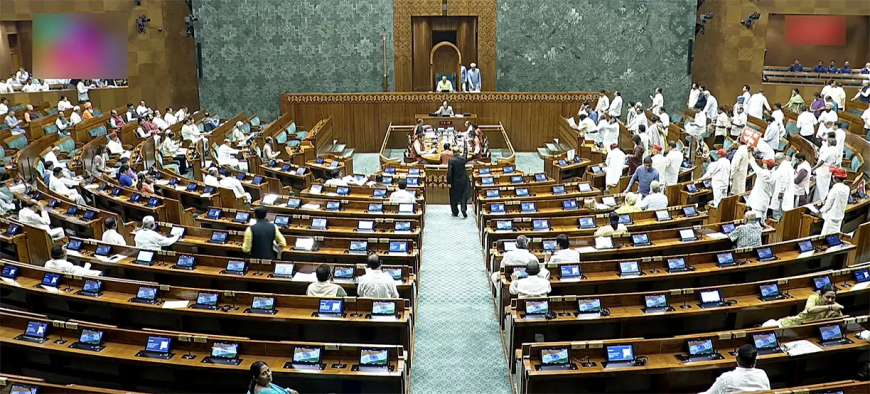
New Delhi, Aug 11: The Tribunals Reforms Bill, 2026 passed the Lok Sabha in under five minutes, by voice vote, amid unrelated Opposition protests over an unconnected matter. It is, on paper, one of the more consequential pieces of legislation to clear this Monsoon Session — restructuring how India's 16 tribunals select and discipline the people who staff them. It received no discussion. That fact deserves scrutiny. So does the Bill.
The legislation traces its lineage to the Supreme Court's L. Chandra Kumar v. Union of India (1997), which first conceptualised the need for a single, independent body to insulate tribunals from executive interference, and to the Madras Bar Association line of cases, which has repeatedly struck down government attempts at tribunal reform for failing that standard — most recently faulting the 2021 Act for short tenures, restrictive age criteria, and heavy executive control over appointments. The 2026 Bill is the government's latest attempt to satisfy that directive, under renewed judicial pressure through the ongoing MBA litigation.
What the Bill gets right
The National Tribunals Commission, as designed, has genuine structural independence at its apex. The Chairperson must be a former Supreme Court judge or a High Court Chief Justice, and the Central Government must consult the Chief Justice of India before appointing the Chairperson or Judicial Members. Removal of Commission members on the more serious grounds — incapacity, conflict of interest, abuse of position — requires a formal inquiry headed by a sitting Supreme Court judge, not a bureaucratic process. This is a real improvement over the 2021 framework, which the Supreme Court found wanting on precisely these points.
The Bill also standardises tenure across all 16 tribunals — five years or age seventy for Chairpersons, five years or sixty-seven for Members — replacing an inconsistent patchwork that the courts have repeatedly linked to executive leverage over tribunal members through uncertain terms of service. A three-month statutory deadline for the government to act on selection recommendations directly targets the chronic vacancy crisis that has left tribunals like the NGT and NCLAT understaffed for years. And the National Tribunals Data Grid, a centralised case-data repository, is a genuine transparency gain with no real precedent in India's tribunal architecture.
Where the independence problem hasn't gone away — it's moved down a level
The difficulty is that the Commission itself barely makes appointments. That work happens in Search-cum-Selection Committees, constituted separately for each tribunal vacancy, and this is where the Bill's independence guarantees thin out considerably.
Every Search-cum-Selection Committee includes a Secretary to the Government of India, nominated directly by the Central Government, not by the Commission, and not through any independent process. The "independent retired judge" seat on each committee is filled by nomination from the Commission's own Chairperson, rather than through a separately insulated selection. And the Commission Chairperson holds the casting vote on every committee, for every tribunal appointment made under this Act. The structure that is meant to keep the executive at arm's length from individual appointments still places a direct government nominee inside every selection process, with a single official's nomination and tie-breaking vote determining the balance of the rest.
Removal follows a similar pattern. For most disciplinary grounds against tribunal members — including the broadly worded "found incompetent or inefficient" the preliminary inquiry is conducted by the Ministry or Department administering that specific tribunal, before the matter is even referred to the Commission. This is the same structural concern the Supreme Court has flagged repeatedly across the Madras Bar Association litigation: the executive department whose own decisions a tribunal may be called upon to review should not be the one initiating disciplinary scrutiny of that tribunal's members.
Core service conditions compound the concern. Qualifications, salaries, resignation procedures, and reappointment terms for tribunal members are not fixed in the Bill itself they are left to rules the Central Government will frame later. This delegation of the underlying terms of service to executive rule-making, rather than fixing them in primary legislation, was itself one of the recurring objections in the earlier rounds of tribunal litigation, including Rojer Mathew v. South Indian Bank.
One structural anomaly is worth flagging on its own: the National Company Law Appellate Tribunal falls within the NTC's ambit, but the National Company Law Tribunal the body actually hearing corporate insolvency and company law disputes at first instance, carrying the bulk of case volume — does not. Appellate oversight is centralised; first-instance adjudication, where most litigants actually encounter the tribunal system, is not.
The part nobody checked
None of this is a case for treating the Bill as bad legislation dressed up as reform. It responds to real, long-standing judicial directives, and several of its provisions are genuine improvements on the 2021 framework the Supreme Court struck down. But the Statement of Objects invokes judicial independence as the Bill's central justification, and the mechanism it actually builds retains executive proximity at precisely the points individual selection committees, removal referrals, service-condition rule-making that past rulings have identified as the problem.
Whether that gap matters was never tested on the floor of the House. A Bill responding to a Supreme Court order about tribunal independence passed without a single member examining whether its own selection architecture delivers that independence. The five minutes it took to pass tell you less about the Bill than about the process that let it through unread.