The NALSAR Order Wasn't an Aberration. It Was BCI's Operating Manual
BCI's chaotic NALSAR reversal exposes deeper structural flaws, unopposed re-election, no term limits, and a Chairman who is also a sitting MP.
 Verdicto News Desk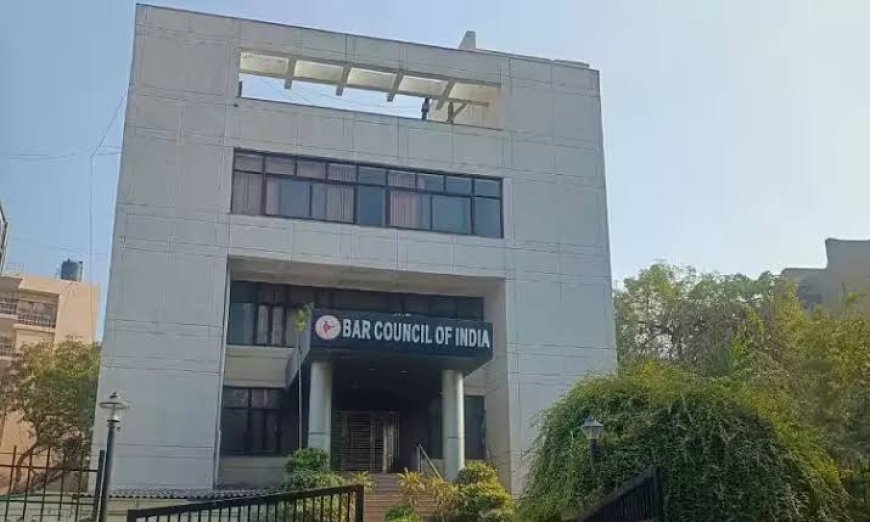
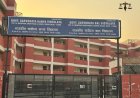
New Delhi, Aug 14: A circular goes out at evening freezing the professional futures of 1,400 students. A softened version follows hours later. A full withdrawal follows after midnight. Three positions in under a day, on a matter concerning the statutory rights of an entire graduating class, issued in the name of a Council that never visibly met to deliberate any of them. What should alarm the profession is not that the Bar Council of India got the NALSAR order wrong. It is how easily it got there, and how familiar the pattern is to anyone who has watched the institution over the past decade.
Manan Kumar Mishra has chaired the BCI since November 2014. He was returned unopposed to a seventh consecutive term in March 2025, a fact that is usually reported as a footnote and deserves to be read as the central structural problem. The Advocates Act sets the Chairman's term at two years, elected from among the Council's own members. Nothing in the Rules caps how many times that election can repeat, and nothing in the Council's practice over eleven years has tested that limit. The result is not a leadership rotating through the Bar's evolving priorities. It is a single office-holder whose institutional preferences have functioned, for over a decade, as the institution's preferences. Repeated unopposed re-election by a closed electorate of Council members is not evidence of a mandate from the wider Bar; India's practising advocates do not vote for the BCI Chairman, State Bar Council members do, and an unopposed contest tests nothing.
That concentration would matter less if Mishra's other role were incidental. It is not. He has sat as a BJP Rajya Sabha MP from Bihar since August 2024, elected unopposed, while continuing to chair the body that regulates the very profession from which Parliament draws its lawyers, and that engages directly with the Union government on legislation touching the Bar, including, at various points, the Advocates (Amendment) Bill that the legal community itself opposed. A petition seeking his disqualification from the Rajya Sabha on these grounds reached the Delhi High Court and then the Supreme Court; both declined to intervene, but on a jurisdictional footing, he question of parliamentary office-of-profit belongs to disqualification mechanisms, not writ review, rather than on a finding that the dual role poses no institutional conflict. A regulator that speaks for the Bar's independence while its Chairman sits within the ruling party's parliamentary bench, bound by whip discipline on legislation that can touch the profession he regulates, carries a structural tension that a jurisdictional dismissal does not resolve. Advocates from Jharkhand to Delhi have raised exactly this point in the past year, asking Mishra to choose one office. The Council has not required him to.
The NALSAR episode fits a longer pattern of how that concentrated authority gets exercised. BCI press releases under Mishra's chairmanship have for years been issued bearing the Council's insignia on matters where there is no public record of the full Council having deliberated before the statement went out — a habit that lets one office-holder's position circulate with institutional authority attached. The Council has previously stayed an internal Supreme Court Bar Association disciplinary decision in circumstances widely read as tracking political alignment rather than regulatory principle, and has taken sharply inconsistent positions on comparable questions of judicial propriety depending on which individual was involved, publicly urging one former Chief Justice not to accept any post-retirement government assignment, then welcoming another's nomination to the Rajya Sabha within months of demitting office, framing it as a bridge between judiciary and legislature. Mishra has also maintained, across roughly a decade of public statements, that 30 to 40 percent of enrolled advocates in India may hold fake credentials, a claim serious enough to warrant either a rigorous, published verification exercise or a retraction, and one that under his own stewardship of the enrolment machinery has done neither.
None of this amounts to a finding of personal financial wrongdoing, and it would be inaccurate to frame it that way — the criminal proceedings that have previously reached courts concluded in Mishra's favour, and the current allegations around Council expenditure and conflicts of interest, circulating since the NALSAR reversal, remain allegations rather than adjudicated findings. Conflating a legitimate institutional critique with an unproven personal one weakens the critique that actually holds up. The institutional critique does not require proving personal corruption. It requires only pointing out what the NALSAR sequence demonstrated in miniature: an order affecting 1,400 people's professional futures went out without the deliberative process such an order should require, changed twice within hours based on outrage rather than fact-finding, and rested at inception on a disqualification framework, 24A of the Advocates Act, that has never applied to the situation it was invoked for, since 24A governs entry to the Bar on grounds of criminal conviction or moral turpitude, not enrolment freezes over a student campaign whose participants had, in the Council's own eventual words, no role in any disturbance.
The reform question that follows is not about one man's continuation in office, however loudly that demand is now being made. It is about whether an institution regulating over two million advocates should permit indefinite re-election to its highest office without a term limit, whether its Chairman should be permitted to simultaneously hold a whipped legislative seat, and whether directions capable of altering thousands of careers should require documented Council deliberation before they are issued rather than after they are reversed. Removing Mishra without closing those three gaps would only return the same structure to its next occupant. Closing them would mean the next NALSAR-style order, whoever signs it, has to survive scrutiny before it goes out — not after.