Himachal Pradesh’s IAS-IFS-IPS Downsizing: Can a State Shrink an All India Service Cadre?
Himachal Pradesh plans to reduce IAS, IFS and IPS cadre strength. But can the State cut All India Service posts, and is the claimed ₹2,000 crore saving legally and financially justified?
 Verdicto News Desk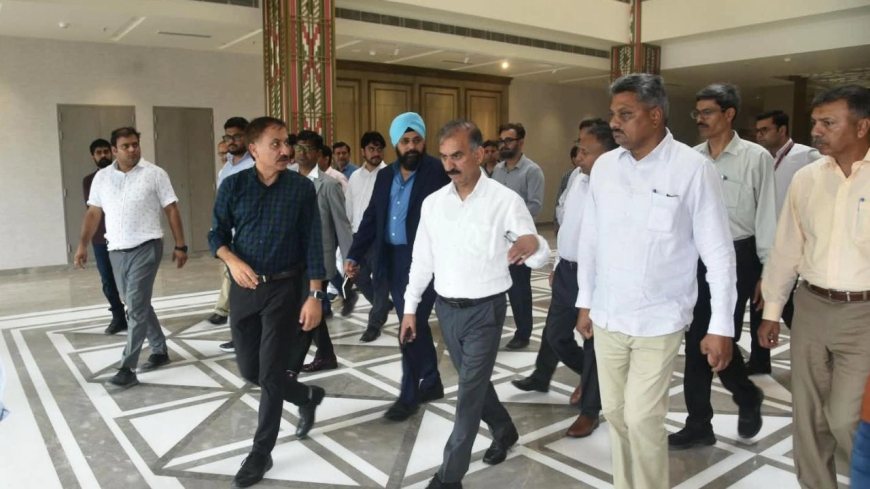
New Delhi, Aug 18: Himachal Pradesh Chief Minister Sukhvinder Singh Sukhu has announced a proposed restructuring of the State’s administrative machinery, including a reduction in the sanctioned strength of officers belonging to the Indian Administrative Service (IAS), Indian Forest Service (IFS) and Indian Police Service (IPS).
According to the Chief Minister, the IAS cadre is proposed to be reduced from 153 to 130 posts, while the IFS strength would fall from 118 to 83. The proposed IPS reduction has not yet been specified.
Sukhu has justified the move on administrative as well as financial grounds, arguing that several officers do not have sufficient work and that keeping sanctioned positions without corresponding responsibilities results in under-utilisation of administrative talent. He has also said that officers seeking assignments in Delhi will now be relieved without unnecessary delay.
The government has estimated that the restructuring could reduce expenditure by around ₹2,000 crore.
At first sight, the proposal appears to be a straightforward exercise in administrative rationalisation. Legally, however, it is more complicated.
This is not simply a State government abolishing government posts
The first distinction that needs to be made is between an ordinary State government post and a cadre post belonging to an All India Service.
IAS, IPS and IFS are All India Services. Their cadre structure operates under a statutory framework created by Parliament through the All-India Services Act, 1951, with detailed cadre rules and fixation-of-cadre-strength regulations governing individual services.
For the IAS, Rule 4 of the Indian Administrative Service (Cadre) Rules, 1954 provides that the strength and composition of a cadre are determined through regulations made by the Central Government in consultation with the concerned State Government. The corresponding framework exists for the IPS and IFS as well.
That means Himachal Pradesh can certainly initiate the proposal and place its administrative requirements before the Union government. But it cannot simply issue a State notification and unilaterally rewrite the sanctioned strength of its All India Service cadre.
For the IAS, the cadre strength is formally reflected in the Indian Administrative Service (Fixation of Cadre Strength) Regulations, 1955, which are made by the Central Government in consultation with the concerned State Government.
The same basic principle applies to the Indian Forest Service. Rule 4 of the IFS Cadre Rules provides that the Central Government determines the strength and composition of each cadre in consultation with the State Government and periodically re-examines that strength.
The IPS framework similarly places the determination of cadre strength with the Centre, in consultation with the State concerned. The IPS rules ordinarily contemplate periodic review, while also allowing the Centre to alter cadre strength at other times.
So the legal position is relatively clear: Himachal can propose rationalisation, but the final alteration of the All India Service cadre strength requires action under the Central cadre framework.
What exactly is being reduced?
This is perhaps the most important question that needs clarification.
A reduction in sanctioned cadre strength does not automatically mean that existing IAS, IPS or IFS officers will lose their jobs.
The sanctioned strength is essentially the number and composition of posts that constitute the cadre. The legal framework distinguishes cadre posts from officers who happen to be members of the service.
The IAS rules, for instance, define a cadre post by reference to the posts specified in the relevant cadre-strength schedule.
Therefore, if the sanctioned strength is reduced from 153 to 130, the immediate legal consequence is not that 23 serving IAS officers are terminated.
Rather, the State and Centre would have to manage the transition through vacancies, retirement, transfers, deputation, future recruitment and cadre allocation.
This distinction is crucial.
“23 fewer sanctioned posts” is not the same thing as “23 fewer IAS officers tomorrow.”
The Delhi-deputation route is legally significant
Sukhu's statement that files of officers wanting to move to Delhi will now be cleared quickly is also relevant to the restructuring.
All India Service officers can serve outside their State cadre under the applicable deputation framework. The cadre system itself contemplates different categories of posts, including central deputation and state deputation reserves.
The IAS cadre-strength regulations, for example, provide for a Central Deputation Reserve as part of the cadre structure.
This means that if Himachal genuinely has more officers than the State has meaningful assignments for, one possible solution is not merely to cut the cadre but to make better use of the existing officer pool through deputation and inter-governmental assignments.
That could potentially address two problems at once:
-
reduce under-utilisation within Himachal;
-
make experienced officers available to the Union government and other permitted institutions.
But deputation cannot become a substitute for proper cadre planning.
The government still needs to establish why the existing cadre strength has become excessive and whether the problem is temporary, structural or simply a consequence of how posts are being allocated.
The ₹2,000-crore question
This is where the government's announcement deserves the closest scrutiny.
The proposed IAS reduction is 23 posts.
The proposed IFS reduction is 35 posts.
Together, that is 58 sanctioned posts.
Earlier reporting on the proposed rationalisation had put the annual expenditure associated with an IAS or IFS officer at approximately ₹45–50 lakh.
Even using ₹50 lakh per officer as a rough upper-end calculation:
58 × ₹50 lakh = approximately ₹29 crore per year.
That is nowhere close to ₹2,000 crore.
This does not necessarily mean the government's ₹2,000-crore figure is wrong. It may be referring to a much wider administrative restructuring, including savings from other departments, vacant posts, establishments, pensions, support staff, offices, vehicles, housing, administrative overheads or a multi-year fiscal impact.
But that methodology needs to be made public.
Otherwise, the headline figure risks creating the impression that reducing 58 IAS/IFS positions itself will save ₹2,000 crore.
It will not, on the face of the available numbers.
The government should therefore publish the calculation behind the ₹2,000-crore estimate.
There is also a constitutional dimension
All India Services occupy an unusual position in India's federal structure.
Article 312 of the Constitution provides the constitutional foundation for All India Services, while Parliament has enacted the All-India Services Act, 1951 to provide the statutory framework.
The arrangement deliberately prevents individual States from treating IAS, IPS and IFS cadres exactly like ordinary State civil-service establishments.
The reason is structural.
An All India Service is simultaneously connected to:
the Union + the State cadre + the individual officer.
The State requires officers for administration and implementation. The Union requires officers for central assignments. And the officer remains a member of an All India Service governed by a common statutory framework.
Consequently, cadre restructuring is not merely an accounting exercise. It affects recruitment, promotion, career progression, central deputation and the long-term administrative capacity of the State.
Is a smaller cadre necessarily a better bureaucracy?
Not automatically.
The Chief Minister's argument that officers should not remain under-utilised is administratively persuasive.
There is little justification for maintaining expensive senior posts merely because they have historically existed.
But the reverse problem is equally real.
A State such as Himachal Pradesh has distinctive administrative requirements: difficult terrain, disaster management, forests, tourism, infrastructure, climate-related risks and geographically dispersed communities.
A cadre that appears large on paper may still be inadequate in particular sectors.
The correct question therefore should not be:
“How many officers can we remove?”
It should be:
“How many officers does the State actually need, in which departments, at which levels and for what functions?”
That requires a workload-based assessment rather than a purely fiscal one.
What the government should do before cutting the cadre
A credible restructuring exercise should ideally proceed in five stages.
1. Publish a workload audit
The government should identify how many sanctioned posts are occupied, how many are vacant, how many officers are on leave or training, how many are on deputation and how many officers are actually under-utilised.
Without this data, the claim of “insufficient work” remains difficult to independently assess.
2. Conduct a department-wise manpower review
Instead of treating IAS, IPS and IFS posts as one homogeneous category, the State should identify its actual administrative requirements.
For example, reducing an officer in an office with genuinely redundant work is very different from reducing a field-level administrative position in a disaster-prone district.
3. Use deputation before permanent reduction
Where officers are under-utilised in Himachal but their skills are required elsewhere, deputation may be a more flexible solution than permanently reducing cadre strength.
This would also make the Chief Minister's stated policy of quickly approving Delhi assignments administratively meaningful.
4. Put the fiscal calculation in the public domain
If the government says restructuring will save ₹2,000 crore, it should specify:
-
annual salary savings;
-
pension-related impact;
-
establishment savings;
-
savings from vacant posts;
-
savings from support staff;
-
savings from offices, vehicles and housing;
-
whether the figure is annual or cumulative;
-
and the time period over which the ₹2,000 crore is calculated.
That would allow the legislature and the public to test the claim.
5. Seek the Centre's formal cadre decision
For the All India Services, the State's proposal has to move through the statutory cadre mechanism.
The legal framework specifically contemplates consultation between the Centre and the State in determining cadre strength.
The bigger issue: bureaucratic reform versus bureaucratic downsizing
Himachal Pradesh's proposal is potentially significant because it raises a question confronting governments across India:
Should governments measure administrative capacity by the number of posts they sanction, or by the outcomes those posts produce?
A bureaucracy with too many posts can become expensive and under-utilised.
But a bureaucracy that is cut without a workload assessment can become overstretched, particularly in states facing complex geographical and developmental challenges.
The best reform would therefore not be a simple “less bureaucracy” model.
It would be a “right-sized bureaucracy” model — fewer redundant positions, better deployment of officers, greater use of deputation, stronger field administration and measurable links between sanctioned posts and public-service outcomes.
And there is one immediate test for the Himachal proposal.
If 58 IAS and IFS posts account for only a fraction of the claimed ₹2,000-crore saving, where exactly will the remaining savings come from?
Until that question is answered with a transparent calculation, the proposal is better understood as the beginning of an administrative restructuring exercise — not yet proof of a ₹2,000-crore fiscal saving.
Himachal Pradesh has every reason to review whether its administrative machinery is overstaffed, under-utilised or poorly distributed.
But an All India Service cadre is not an ordinary State establishment. Its strength is governed by a statutory framework involving both the State and the Union.
The government's strongest case, therefore, will not be made by announcing a lower number.
It will be made by showing the data behind that number, the legal process used to arrive at it, the transition plan for serving officers and the actual arithmetic behind the claimed savings.
Administrative reform is not simply about having fewer officers.
It is about having the right officers, in the right posts, doing the right work and being able to prove that the public is getting better administration for less money.