Anti-Strike Rule Gone. Fees Up. New Rules for Foreign Lawyers. What's Really Changed in the New Advocates Bill?
The 2026 Advocates (Amendment) Bill removes several controversial provisions from the withdrawn 2025 draft while introducing reforms on foreign lawyers, enrolment fees, law firms and Bar Councils.
 Verdicto News Desk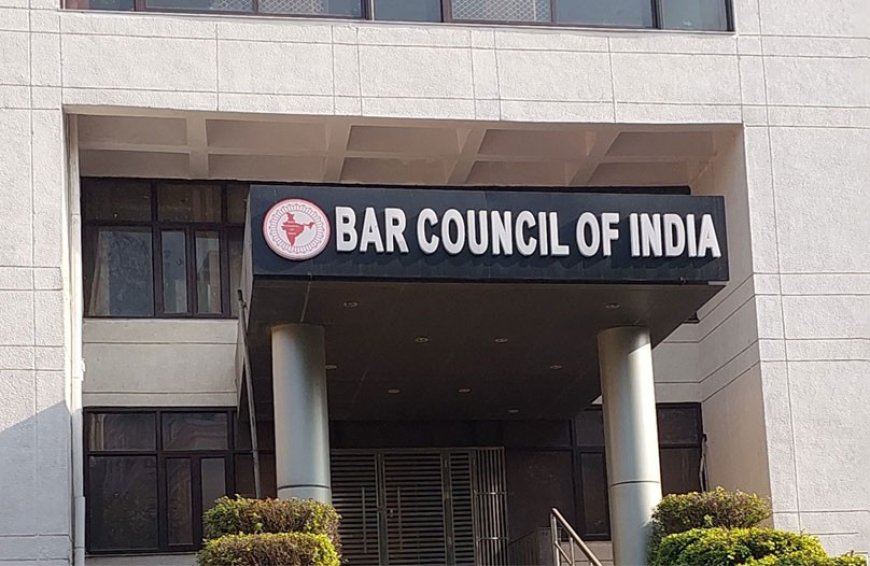
New Delhi, July 21: When the Advocates (Amendment) Bill, 2025 was released, it sparked one of the strongest nationwide protests the Indian legal fraternity had witnessed in years. Bar associations across the country suspended work, lawyers accused the government of undermining the independence of the legal profession, and within days the draft was withdrawn.
Eighteen months later, the Bar Council of India (BCI) has returned with a fresh draft, the Advocates (Amendment) Bill, 2026. But this isn't simply a revised version. It is, in many ways, a response to the criticism that buried its predecessor.
In its covering note, the BCI says the new draft has been prepared after extensive consultations with State Bar Councils, senior advocates, academics, vice-chancellors, and other stakeholders. It describes the exercise as a "profession-first reform."
The real question, however, is whether the new draft genuinely addresses the concerns that triggered last year's backlash—or merely repackages them.
The Biggest Flashpoint Is Gone
The most controversial provision of the 2025 draft was the proposal to treat participation in strikes and court boycotts as professional misconduct.
The proposed Section 35A would have empowered disciplinary authorities to take action against advocates and bar associations participating in strikes that disrupted court functioning. Although it allowed limited symbolic protests, lawyers argued that the proposal struck at the heart of their collective bargaining power and interfered with constitutional freedoms under Article 19.
The opposition was immediate and overwhelming.
That provision has disappeared entirely from the 2026 draft.
Instead of introducing a new offence relating to strikes, the amended Section 35 merely prescribes a 15-day timeline for State Bar Councils to refer complaints to disciplinary committees. There is no attempt to criminalise or penalise strikes in the manner proposed last year.
The BCI itself acknowledges that this change followed discussions with representatives of bar associations and consultations with the Union Law Ministry.
No Government Nominees in the Bar Council
Another major concern in 2025 was the proposal to introduce Central Government nominees into the Bar Council of India and State Bar Councils.
For many lawyers, this crossed a constitutional red line.
The legal profession has traditionally been governed through elected bodies rather than direct executive participation. Critics argued that government nominees could dilute the Bar's independence.
The new draft abandons the proposal altogether.
Instead, it focuses on restructuring State Bar Councils based on the size of their electorate while also increasing women's representation through reserved elected seats and additional co-opted members.
In other words, the composition of the Bar Councils changes—but government nominees are no longer part of the plan.
The Heavy Penalties Have Also Been Dropped
The withdrawn 2025 Bill proposed stringent penalties against advocates, including substantial monetary fines and disciplinary action extending to office-bearers of bar associations.
Those provisions have vanished.
Instead, the new draft concentrates on strengthening existing disciplinary mechanisms.
It also increases punishment for unauthorised practice of law, raising the maximum imprisonment from six months to three years, signalling that the focus has shifted from regulating advocates' collective actions to tackling illegal legal practice.
Foreign Lawyers: Neither a Complete Opening Nor a Complete Ban
The regulation of foreign lawyers was another contentious issue in the earlier draft.
The 2025 proposal would have shifted substantial regulatory powers from the Bar Council of India to the Central Government.
The BCI had opposed that move.
The 2026 draft adopts a middle path.
The Bar Council of India will continue to frame rules governing foreign lawyers and foreign law firms, but those rules will require prior approval from the Central Government.
This creates a model of shared oversight instead of transferring authority entirely to the executive.
The draft also clearly defines what foreign lawyers cannot do.
They cannot:
-
Appear before Indian courts;
-
Conduct Indian litigation;
-
Claim the rights of an Indian advocate solely on the basis of foreign qualifications.
The principal exception remains international commercial arbitration involving foreign law, where foreign legal practitioners may appear before arbitral tribunals.
A Quiet but Significant Change on Foreign Enrolment
One of the least discussed—but potentially most significant—changes concerns the enrolment of foreign nationals.
The current Advocates Act allows citizens of certain countries to enrol in India if Indian lawyers enjoy reciprocal rights there.
The BCI now proposes deleting this reciprocity provision entirely.
According to the Council, the proposal follows litigation that enabled a South Korean citizen to seek enrolment under the existing law and subsequent applications from other foreign nationals studying in India.
If enacted, Indian citizenship would effectively become the general requirement for enrolment as an advocate, making the law considerably more restrictive than before.
New Rules for Every Law Firm
Perhaps the most transformative reform is one that received relatively little public attention.
For the first time, every law firm operating in India—regardless of its organisational structure—would have to register with the Bar Council of India.
The BCI would maintain a national register of law firms, and annual reporting obligations would follow.
If implemented, this would significantly expand the institutional oversight of India's rapidly growing legal services sector.
Law Colleges Could See Major Changes Too
The reforms extend beyond practising lawyers.
The Legal Education Committee would expand dramatically from 10 members to 25, bringing together former Supreme Court judges, retired High Court Chief Justices, senior law officers, legal academics and university leaders.
The objective appears to be stronger coordination between legal education and professional regulation.
Becoming a Lawyer Will Cost Much More
One proposal likely to affect every future advocate concerns enrolment fees.
The statutory fee—unchanged since 1993—would rise sharply.
General category candidates would pay:
-
₹18,000 to the State Bar Council.
-
₹4,500 to the Bar Council of India.
The BCI says the increase follows Supreme Court directions recognising that the existing fee had become unrealistic after three decades of inflation.
Concessions continue for Scheduled Castes, Scheduled Tribes and persons with benchmark disabilities.
New Election Tribunal
The draft also introduces a specialised Election Tribunal for resolving disputes relating to State Bar Council elections.
Importantly, the tribunal would be headed by a former Supreme Court judge or former Chief Justice of a High Court, reflecting an attempt to strengthen institutional credibility in electoral disputes within the legal profession.
Has the BCI Learnt From the 2025 Protests?
A comparison of the two drafts suggests that the Bar Council has done far more than make cosmetic edits.
The provisions that triggered the strongest resistance—government nominees, anti-strike measures and sweeping disciplinary penalties—have largely disappeared.
At the same time, the 2026 draft introduces an ambitious new framework covering foreign lawyers, law firm regulation, legal education, electoral reforms, enrolment fees and women's representation in Bar Councils.
That does not necessarily mean the debate is over.
Several proposals—including tighter rules for foreign enrolment, increased government oversight of foreign lawyer regulation and the steep rise in enrolment fees—are likely to invite fresh scrutiny during the consultation process.
With public comments open until 31 July 2026, India's legal community now faces a different question from the one it confronted last year.
The issue is no longer whether the government has listened.
It is whether the changes go far enough to preserve the independence of the legal profession while modernising a law that has remained largely unchanged for decades.
This version is structured for a broader audience with shorter sections, stronger narrative flow, reader-friendly subheadings, and clear explanations while preserving the legal analysis. It is also more SEO-friendly and easier to read on mobile devices.