Fact-Check: Does India's FCRA Amendment Bill Allow the Government to Seize Churches?
FCRA Amendment Bill 2026 explained: Does it enable "church takeover" as a US congressman claims, or does it add judicial safeguards to a 2010 law?
 Verdicto News Desk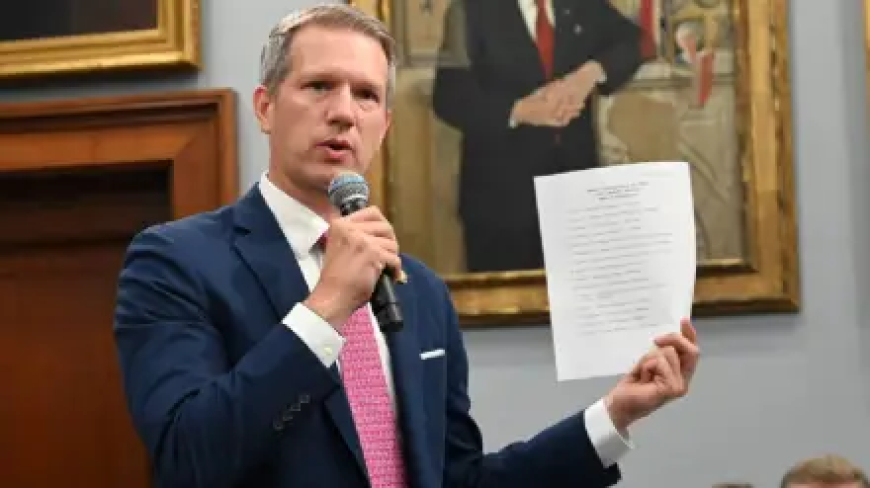
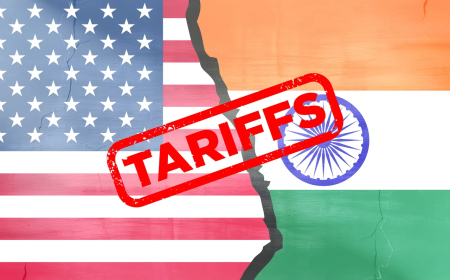
New Delhi, Aug 5: A social media post from a first-term American congressman has generated more diplomatic controversy over India's Foreign Contribution (Regulation) Amendment Bill, 2026 than the bill's text supports. Congressman Riley Moore of West Virginia has characterised the proposed amendments as enabling government takeover of churches and religious charities, calling it an attack against Christians and warning it could become a point of major concern in the India-US relationship. The text does not bear this out.
The vesting power at the centre of Moore's objection is not new. Section 15 of the FCRA, in force since 2010, already provides that foreign contributions and assets vest in a prescribed government authority when an organisation's registration is cancelled, surrendered, or lapses. The 2026 Bill adds procedure to a power that existed for sixteen years without any. That absence had produced real administrative difficulty: close to 20,000 cancelled registrations and roughly 15,000 lapsed ones have left assets in a limbo that state governments say they lack the framework to manage. The designated authority mechanism responds to that gap. It does not create a new seizure power.
On religious property specifically, the bill moves the other way. It requires the designated authority to preserve the religious character of any vested place of worship, barring conversion or repurposing even while assets remain under custody. It gives an aggrieved organisation a right of revision within ninety days and a further appeal to the district judiciary.
That said, a custodial regime over religious assets is not obviously unobjectionable simply because it is judicially reviewable. Civil liberties advocates who have raised concerns about earlier FCRA amendments have argued that provisional vesting still transfers effective control of an institution's assets to the state during the appeal window, before any court has adjudicated the underlying cancellation — a period that can extend for years given how slowly FCRA cancellation disputes typically move through Indian courts. That objection targets the custodial architecture itself, not the takeover claim Moore has made, and it deserves to be weighed on its own terms rather than folded into or dismissed by the point being made here.
The comparative regulatory context is nonetheless relevant to Moore's specific framing. The United States' own Foreign Agents Registration Act dates to 1938. Australia enacted its Foreign Influence Transparency Scheme Act in 2018. The UK's Foreign Influence Registration Scheme came into force in 2025. Canada legislated a comparable framework in 2024. None of these regimes singles out religious organisations, and neither does the FCRA, which restricts a defined set of activities across all foreign-funded sectors — education, healthcare, disaster relief — not religious work specifically.
Whether this actually becomes a bilateral flashpoint is a separate, harder question. Moore is a first-term House member without a foreign affairs committee chairmanship, and his statement carries no institutional weight on its own. Genuine diplomatic friction over India's domestic legislation has historically required something more: State Department commentary, a cross-party congressional resolution, committee hearings, or inclusion in USCIRF's annual report. None of that has happened here. But it would be too tidy to treat that threshold as reliably high — individual legislators' statements have, in past cycles, been picked up and amplified into resolutions once a wider political coalition finds them useful. The absence of institutional follow-through so far is evidence of where this stands today, not a guarantee of where it stays.
Opposition parliamentarian NK Premachandran of the Revolutionary Socialist Party has drawn a distinction worth preserving here. His party opposes the FCRA amendments on their merits — that opposition is why the bill has faced delay — while he has separately called Moore's characterisation unwarranted. Substantive opposition to a bill and endorsement of a foreign legislator's mischaracterisation of it are not the same position, and Indian parliamentary opposition has, in this instance, kept the two apart.
The bill remains open to scrutiny independent of the diplomatic controversy. The reduction of maximum imprisonment for FCRA violations from five years to one, the requirement that state investigations obtain central approval, and the shift to activity- and state-specific registration under the 2026 Rules are all substantive changes. Read against its statutory precedent, the bill does not establish the takeover mechanism Moore describes — it builds a more precise, judicially reviewable custodial framework around a vesting power Parliament created in 2010. Where legitimate objection remains, it lies in whether that framework moves quickly enough, and with enough restraint during the appeal window, to answer the concerns of those who find any state custody over religious property troubling in principle — not in the claim that the bill authorises seizure outright.