Trump's Birthright Citizenship Narrowing Is A Legal Strategy, Not A Concession
Trump's new birthright citizenship orders narrow the target to birth tourism and alien enemies, dropping the H-1B exclusion the Supreme Court rejected in June.
 Verdicto News Desk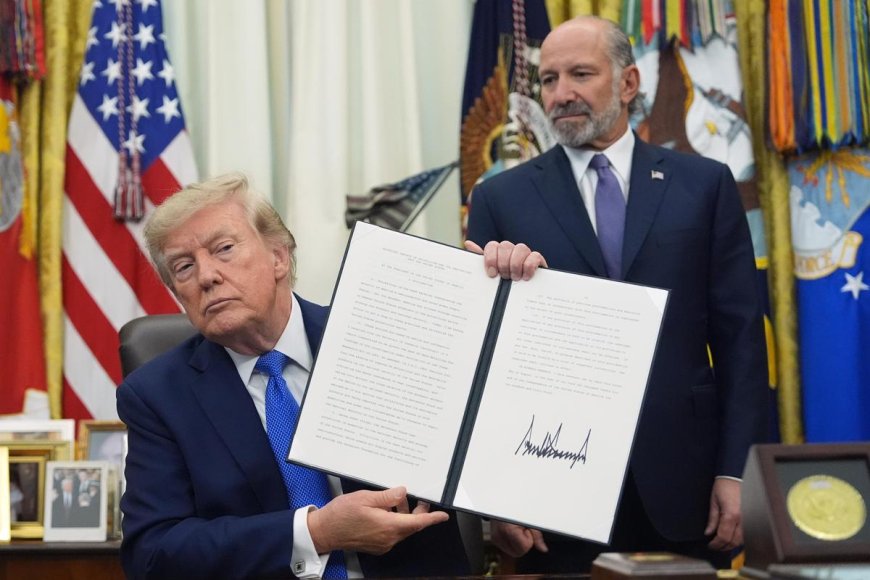
New Delhi, Aug 7: President Donald Trump's two executive orders signed Thursday arrive five weeks after the US Supreme Court struck down his January 2025 directive ending birthright citizenship, reaffirming the settled reading of the Fourteenth Amendment that nearly all persons born on US soil are citizens. The distinguishing feature of this second attempt is not its intent but its scope. The new orders drop the broadest and most contested provision of the original directive: an explicit exclusion for children born to parents on temporary visas, a category that had included H-1B work visas and F-1 student visas.
That drop is not a softening. It reads as a narrower legal bet, taken after the first one failed. The January 2025 order's visa-status exclusion had no textual anchor in the Fourteenth Amendment, which conditions citizenship on birth and jurisdiction, not on a parent's immigration classification. That absence of textual grounding was central to why the provision was among the most exposed parts of the order the Supreme Court struck down on June 30.
Thursday's orders instead confine ineligibility to narrower, transaction-specific categories: children born through a "commercial transaction" arranged to bring a mother to US soil to give birth, children of parents affiliated with designated terrorist organisations, children of foreign government employees, children of paid foreign lobbyists, and births in US territories where citizenship is not conferred by federal statute. Each category attempts to locate a fact pattern, deliberate, monetised evasion of ordinary immigration processes, or a recognised exception under existing jurisdictional doctrine, that a reviewing court might treat differently from a blanket denial to lawfully present visa holders.
The narrowing carries direct consequence for India. The January 2025 order's visa-status exclusion would have reached nearly 300,000 Indians on H-1B visas, a population for whom a US-born child's automatic citizenship has functioned as a practical safeguard against employment-based green card backlogs long enough that, per Cato Institute data reviewed by US outlets, Indian nationals account for over 80 percent of the pending employment-based green card queue. Thursday's orders do not repeat that exclusion. A child born in the US to Indian H-1B or F-1 visa holders remains a citizen at birth under the current text, unless future guidance stretches "commercial transaction" to cover lawful employment-based presence, which nothing in either order currently supports.
The retreat does not resolve the orders' own exposure. Immigration attorney Cyrus Mehta has already called "commercial transaction" unconstitutionally vague, arguing the term lacks definition and cannot be squared with the Amendment's text. The ACLU's statement following the signing repeats its position that any order attacking birthright citizenship will meet the same fate as the first, and litigation is likely to begin before the orders see meaningful implementation, consistent with how the January 2025 order was enjoined within days.
What Thursday confirms is that the administration intends to keep testing the Fourteenth Amendment's boundaries through incremental executive action rather than treat the Supreme Court's ruling as having settled the question. Migration Policy Institute estimates put birth tourism, narrowly defined as a commercial arrangement, at 9,600 to 26,000 births annually depending on methodology, a fraction of total US births and analytically distinct from the far larger population of children born to parents lawfully present on work and student visas. Whether the next order preserves that distinction, or attempts