Yashwant Varma Case: Charges Proven, Judge Resigned — What Happens to the Cash Row Now?
A judicial inquiry panel has found all charges against Justice Yashwant Varma proved. With his resignation already submitted, what happens next and what does the case mean for judicial accountability?
 Verdicto News Desk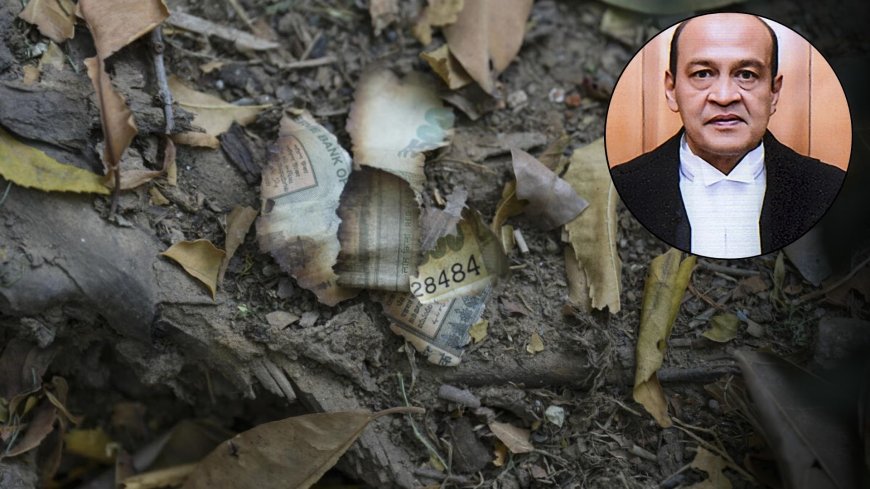
New Delhi, Aug 12: The controversy surrounding Justice Yashwant Varma has entered a new phase after a three-member judicial inquiry panel concluded that the charges against him concerning unexplained cash, disturbance of evidence and his response to the allegations were “proved.”
The findings come months after burnt currency was allegedly discovered at a storeroom of Justice Varma’s official residence following a fire in March 2025. However, the constitutional question has now changed: with Justice Varma having already resigned, what consequences can follow from the inquiry findings?
Panel finds all three charges proved
The three-member committee constituted under the Judges (Inquiry) Act examined allegations arising from the discovery of cash at Justice Varma’s official premises.
In its report submitted to both Houses of Parliament, the committee concluded that Justice Varma had failed to provide a satisfactory explanation regarding the presence, source or ownership of the cash found in the storeroom.
The panel also examined the circumstances surrounding the condition of the storeroom and the preservation of evidence.
According to the findings, material evidence was not adequately secured or preserved and the evidentiary condition of the storeroom was disturbed before its lawful sealing and inspection.
The committee further rejected Justice Varma’s explanation, finding that it lacked the level of candour, transparency and institutional responsibility expected in the circumstances.
It concluded that his explanation remained evasive and unsatisfactory when examined against the testimony of independent official witnesses and other corroborative material.
The committee ultimately recorded that Articles of Charge I, II and III were proved.
What triggered the inquiry?
The controversy began after a fire broke out at Justice Varma’s official residence on the night of March 14, 2025.
Firefighters responding to the incident allegedly discovered a large quantity of burnt currency in a storeroom.
The discovery triggered questions concerning the origin and ownership of the cash and whether the circumstances surrounding its discovery warranted a formal inquiry.
The matter subsequently moved into the judicial accountability mechanism, with a three-member committee constituted to examine the allegations and evidence.
The inquiry report, running into two volumes and accompanied by oral and documentary evidence, was submitted to Lok Sabha Speaker Om Birla in May.
The resignation changes the constitutional question
The most significant development since the inquiry began is that Justice Varma has resigned.
Nearly 200 Members of Parliament had pressed for action seeking his removal. But his resignation has fundamentally altered the constitutional route through which the matter would otherwise have proceeded.
The removal of a Supreme Court or High Court judge is governed by Article 124(4) and the Judges (Inquiry) Act, 1968, requiring a parliamentary process followed by an address to the President.
Once a judge resigns, however, removal proceedings against that individual become effectively infructuous because there is no longer a sitting judge to remove from office.
This creates an important distinction between removal from office and accountability for conduct.
Justice Varma’s resignation may end the immediate question of whether Parliament can remove him as a sitting judge. It does not, however, erase the inquiry findings or the institutional questions raised by the case.
The larger accountability question
The Yashwant Varma episode therefore raises a question extending beyond the individual case:
What should happen when a judge resigns after an inquiry has found serious allegations proved?
The constitutional removal mechanism is designed primarily to determine whether a sitting judge should continue in office. A resignation changes that equation.
But the findings of a judicial inquiry can still have significance for the institutional record, public accountability and any other legally permissible consequences that may arise from the underlying conduct.
The case consequently exposes a difficult area in the architecture of judicial accountability: the difference between ending a judge’s tenure and resolving allegations concerning the judge’s conduct.
Evidence and institutional responsibility
Another significant aspect of the report concerns the handling of evidence.
The committee’s finding that the evidentiary condition of the storeroom was disturbed before lawful sealing and inspection adds a separate institutional dimension to the controversy.
The issue is not merely whether cash was discovered. It also concerns how the scene was handled, whether evidence was preserved and whether the subsequent inquiry had access to an undisturbed evidentiary record.
For a constitutional office-holder, these questions carry particular weight because judicial credibility depends not only on decisions delivered in court but also on the standards of conduct expected outside the courtroom.
What happens next?
The immediate removal route appears to have lost practical relevance following Justice Varma’s resignation.
The focus now shifts to the legal and institutional consequences of the committee's findings.
Several questions remain significant:
-
What formal effect will Parliament give to the inquiry report after the judge’s resignation?
-
Can any further proceedings arise from the underlying allegations independently of the now-infructuous removal process?
-
What institutional safeguards should govern the preservation of evidence in allegations involving constitutional office-holders?
-
Does the existing framework adequately address cases where a judge resigns before parliamentary proceedings are completed?
These questions matter because the case is no longer simply about whether Justice Varma should remain a judge.
The inquiry has now produced a formal finding that the charges were proved. The larger issue is what an accountability system should do with such findings once resignation has removed the possibility of parliamentary removal.
Beyond one judge
The Yashwant Varma case could therefore become an important reference point in the continuing debate over judicial accountability and institutional integrity.
Judicial independence requires protection from arbitrary interference. At the same time, independence cannot operate as a substitute for accountability when credible allegations concerning judicial conduct arise.
The challenge for the institutional framework is to maintain both principles simultaneously.
Justice Varma’s resignation may have closed the question of his continuation in judicial office. But with the inquiry committee now recording that all three charges were proved, the more consequential question remains:
Does resignation end the matter—or does the finding of proven charges require an accountability response beyond removal from office?
That question may ultimately prove more significant than the resignation itself.