Supreme Court Stresses Need for Structure in Religious Institutions During Sabarimala Hearing
The Supreme Court of India observed that religious institutions must function within a structured framework and cannot allow anarchy, while hearing petitions on gender discrimination and religious freedom in the Sabarimala and dargah entry cases.
 Verdicto News Desk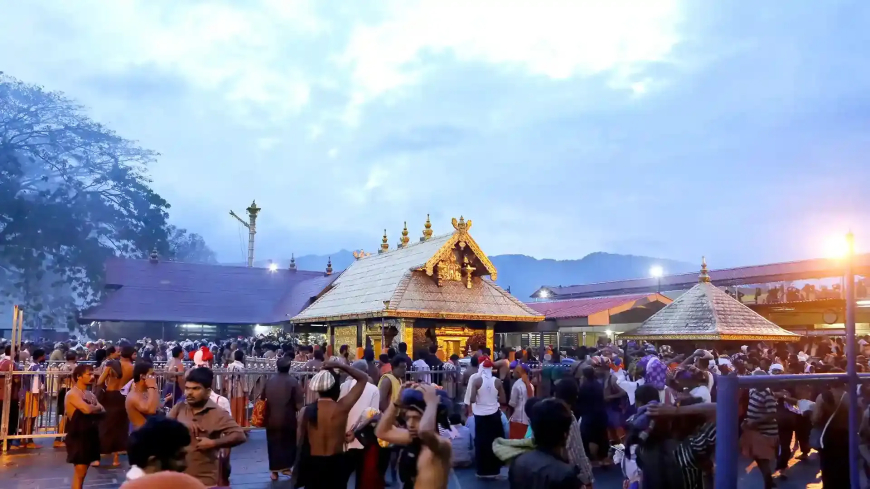
The Supreme Court of India on Tuesday underscored that religious institutions must operate within a structured framework, asserting that the right to manage such bodies cannot translate into a lack of order or regulation.
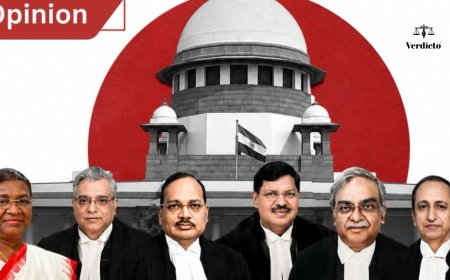
The observation came during ongoing hearings related to issues of gender discrimination at places of worship, including the Sabarimala Temple in Kerala. A nine-judge Constitution bench, led by Chief Justice Surya Kant, is examining a batch of petitions that raise critical questions about the scope of religious freedom and whether certain practices fall within constitutionally protected rights.
The case revisits broader concerns regarding equality and the extent to which religious denominations can regulate their internal affairs. During the proceedings, the bench emphasized that every religious institution must have clearly defined norms and procedures governing its functioning.
Justice Ahsanuddin Amanullah remarked that the concept of management inherently requires structure and cannot imply complete freedom without oversight. “There cannot be anarchy,” he observed, adding that both temples and dargahs must maintain order in aspects such as worship practices, entry protocols, and overall administration.
The court noted that without a regulatory framework, institutions could face disorder, with individuals acting solely on personal discretion. However, the bench also cautioned that any regulatory mechanism must remain within constitutional boundaries and should not lead to discrimination, particularly on broad principles such as gender equality.
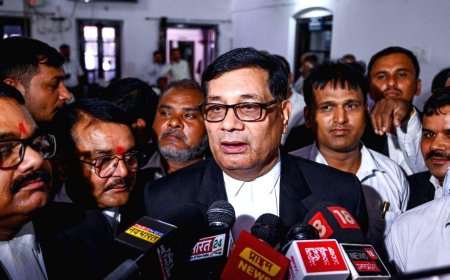
Advocate Nizam Pasha, representing a petitioner linked to the Chishti-Nizami Sufi lineage associated with the dargah of Hazrat Khwaja Nizamuddin Aulia, argued that managing entry into religious spaces is an integral part of institutional administration.
He highlighted that within Islam, especially in Sufi traditions, dargahs hold deep spiritual significance as resting places of revered saints, and are governed by established practices and beliefs. Pasha further contended that the Chishtiya order constitutes a distinct religious denomination, with its own doctrines emphasizing Islamic practices such as prayer, fasting, pilgrimage, and charity.
He maintained that regulating entry is essential to preserving the sanctity and traditions of such institutions. The bench, however, reiterated that while management rights are protected, they cannot override constitutional safeguards. Justice Amanullah pointed out that every institution must function according to established norms, rather than allowing individuals to determine practices independently.
The ongoing hearing is part of a larger judicial review following the landmark 2018 verdict, in which a five-judge Constitution bench of the Supreme Court struck down a centuries-old restriction on women’s entry into the Sabarimala temple.
In that ruling, the court held that prohibiting women between the ages of 10 and 50 from entering the temple was unconstitutional and violated principles of equality. The current proceedings aim to address unresolved questions about how to balance religious autonomy with fundamental rights. The court has previously acknowledged the difficulty in determining which religious practices are “essential” and therefore deserving of protection under the Constitution.
As the hearing continues, the Supreme Court’s observations highlight the ongoing challenge of reconciling tradition with constitutional values in a diverse and pluralistic society.
📌 Follow us on YouTube, Instagram, and Twitter for more updates