Why Supreme Court Dismissed the Plea Against ‘Vande Mataram’ Circular ?
The Supreme Court dismissed a plea challenging the Centre’s ‘Vande Mataram’ circular, clarifying that the directive is advisory and not mandatory, with no penal consequences for non-compliance.
 Verdicto News Desk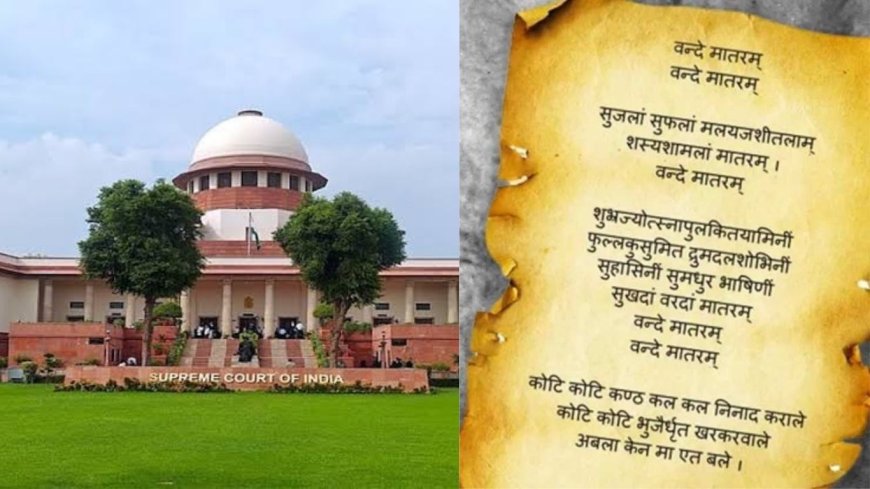
The Supreme Court on Wednesday refused to entertain a plea challenging a recent central government circular regarding the singing of ‘Vande Mataram’ at official events and in schools, stating that the directive is not mandatory but merely advisory in nature.
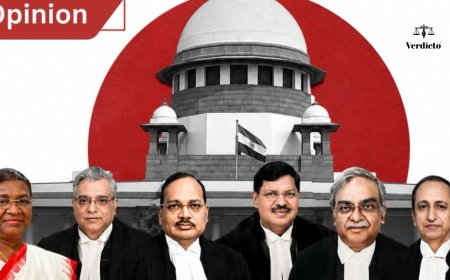
A bench comprising Chief Justice Surya Kant, Justice Joymalya Bagchi, and Justice Vipul M Pancholi observed that the circular does not prescribe any penalty or adverse consequence for non-compliance. The Court termed the petition as “premature,” noting that the concerns raised by the petitioner were vague and lacked a direct connection to the circular.
During the hearing, Justice Bagchi remarked that the apprehension of discrimination expressed by the petitioner was largely speculative. The bench emphasized that the use of the word “may” in the circular clearly indicates that it is not binding. Chief Justice Kant concurred, stating that the directive does not impose any obligation and is only a matter of protocol.
The Court further clarified that if, in the future, any coercive or punitive action is taken based on the circular, the petitioner would be free to approach the Court again for relief.
Appearing for the petitioner, Sanjay Hegde argued that even an advisory could create indirect pressure on individuals to sing ‘Vande Mataram.’ The petitioner, Muhammed Sayeed Noori, contended that people from different religions, beliefs, and even atheists might feel compelled to comply due to social expectations, leading to possible discrimination.
On the other hand, Solicitor General Tushar Mehta questioned whether citizens need to be advised to respect the national song. He referred to Article 51A of the Constitution, which outlines the fundamental duty of citizens to respect national symbols.
In response, the petitioner’s counsel argued that Article 51A specifically mentions respect for the national flag and the national anthem, but does not explicitly include ‘Vande Mataram.’ The Court acknowledged the argument but reiterated that patriotism cannot be enforced by compulsion. However, it underlined that in the present case, there is no mandatory direction requiring individuals to sing the song.
Concluding the matter, the Supreme Court granted liberty to the petitioner to seek legal recourse in the future if any instance of discrimination or penal action arises from the implementation of the circular.
📌 Follow us on YouTube, Instagram, and Twitter for more updates.