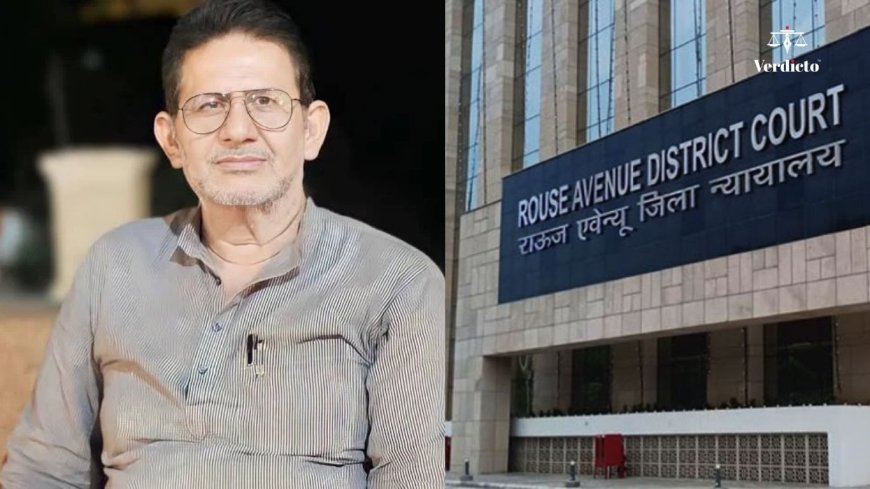
A Delhi court on Wednesday convicted Rajendra Bharti, a Congress MLA from Madhya Pradesh, in a cheating and forgery case involving a cooperative bank.
The verdict was delivered by Special Judge Dig Vinay Singh, who held Bharti guilty along with co-accused Raghuvir Sharan Prajapati.
Details of the Conspiracy
According to the court: The aim was to cheat the complainant bank, Zila Sahkari Krishi Aur Grahmin Vikas Bank. The accused continued to draw interest at a higher rate even after 2011, beyond the fixed deposit (FD) maturity period of three years. The judge noted that this act caused financial loss to the bank and was part of a deliberate fraudulent plan.
Forgery and Fraudulent Practices
The court further observed that: Important bank documents, treated as valuable securities, were forged. The forgery was done to facilitate cheating. Fake documents were used as genuine to continue wrongful financial gains. Based on these findings, the court convicted the accused for:
- Criminal conspiracy
- Cheating
- Forgery of valuable security and will
- Forgery for cheating
- Using forged documents as genuine
- Court Rejects Political Targeting Claim
During the trial, Congress MLA Bharti argued that: He was being politically targeted and the case was politically motivated. However, the court dismissed these claims, stating: The allegations were mere speculation and no evidence was presented to prove political vendetta. The offences dated back to 1998–2011, much before the alleged political rivalry. Judge Singh emphasized that the case clearly involved forgery and financial fraud, unrelated to political issues.
Supreme Court’s Earlier Intervention
Earlier, in October last year, the Supreme Court of India transferred the trial from Madhya Pradesh to Delhi. The decision came after concerns were raised about:
- Attempts to intimidate defence witnesses
- The need to ensure a fair and impartial trial
The apex court had also stayed proceedings in a Gwalior court and stressed that it was the responsibility of the state to guarantee justice without interference.
Key Takeaways
Congress MLA convicted for cheating and forgery
Court finds clear evidence of conspiracy and fraud
Political motive claims rejected due to lack of proof
Case dates back over a decade, from 1998 to 2011
Supreme Court ensured a fair trial by transferring the case
📌 Follow us on YouTube, Instagram, and Twitter for more updates.

 Verdicto News Desk