After 16 Days of Hearing Supreme Court Reserves Verdict in Sabarimala Reference Case
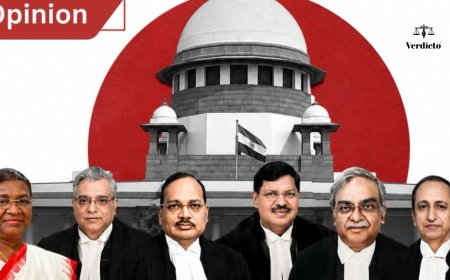
The Supreme Court’s nine-judge Constitution Bench reserved its verdict in the Sabarimala reference case after extensive hearings on the interplay between Articles 25 and 26, religious freedom, denominational rights, and constitutional equality principles.
 Verdicto News Desk
New Delhi: A nine-judge Constitution Bench of the Supreme Court on Wednesday reserved its verdict in the Sabarimala reference case after 16 days of extensive hearings. The proceedings primarily focused on the relationship between Articles 25 and 26 of the Constitution, the scope of religious freedom, and whether Article 26 operates as an independent provision or remains subject to other provisions of Part III like Article 25.
During the hearing, Justice B.V. Nagarathna expressed concern that the court had not received sufficient assistance on the interpretation of the phrase “subject to other provisions of this Part.” She observed that it had not been clearly explained how other provisions under Part III would affect Article 25, especially when similar wording is absent in Article 26. According to her, if Articles 14 to 24 are to be given overriding effect over Article 25, it must also be recognized that Articles 25 and 26 themselves form part of Part III.
Justice Nagarathna further indicated that Article 25 should be read together with Articles 26 to 28, as all of them deal with matters relating to religion. She noted that the principle of equality is already embedded in Article 25(2)(b), which empowers the State to introduce social reform measures and open Hindu religious institutions of a public character to all sections of society.
Senior Advocate Gopal Subramanium supported this interpretation, arguing that the doctrine of “implied limitation” should not be invoked when the language of the Constitution is explicit. He contended that individual religious freedom and denominational rights are distinct in nature. According to him, Article 26 grants religious denominations a special right to manage their own religious affairs.
Solicitor General Tushar Mehta also submitted that the tests of arbitrariness and reasonableness under Article 14 cannot be directly applied to matters of religious faith. He argued that a person’s faith should be assessed from the perspective of a follower of that religion rather than through ordinary constitutional standards of equality.
At the conclusion of the hearing, the Bench reserved its judgment after all parties completed their arguments.
📌 Follow us on YouTube, Instagram, and Twitter for more updates.