Supreme Court Emphasises Harmony Between Bench And Bar While Closing Contempt Case Against Senior Advocate Yatin Oza
Supreme Court closes contempt case against senior advocate Yatin Oza, stressing harmony between Bench and Bar and highlighting their role as equal pillars of the justice system.
 Verdicto News Desk
NEW DELHI: The Supreme Court has underscored the importance of maintaining a respectful and cooperative relationship between the judiciary and lawyers while closing contempt proceedings against senior advocate Yatin Oza. The Court observed that the Bench and the Bar function as the “two wheels of the chariot of justice” and any conflict between them can weaken public confidence in the justice delivery system.
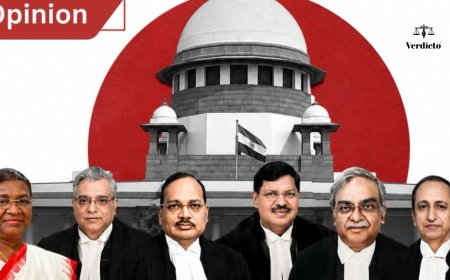
A Bench comprising Justices JK Maheshwari and Atul S Chandurkar stated that both the judiciary and the legal profession are fundamental pillars of the legal system and must work together with mutual respect, patience and restraint.
The observations came in connection with remarks made by Yatin Oza during the COVID-19 pandemic, when he publicly criticised the Gujarat High Court and its registry over issues related to virtual court functioning and listing of cases. The Gujarat High Court had subsequently initiated suo motu criminal contempt proceedings against him after he allegedly described the High Court as a “gambling den” during a live press conference held on June 5, 2020.
While noting that Oza’s statements were inappropriate and unjustified, the Supreme Court also took into account the extraordinary circumstances prevailing during the first wave of the pandemic. At that time, Oza was serving as President of the Gujarat High Court Advocates Association and was representing concerns raised by lawyers, particularly junior advocates facing severe financial hardship due to the suspension of physical court proceedings.
The Court referred to documents and representations submitted by lawyers highlighting problems related to e-filing, non-circulation of cases and objections raised by the court registry during virtual hearings. It also cited portions of Oza’s resignation letter in which he described the “pathetic and disastrous” financial condition of junior lawyers, claiming that some advocates had even taken up food delivery jobs to support themselves during the pandemic.
Highlighting the broader institutional concern, the Supreme Court remarked that strained relations between the Bar and the Bench could damage the credibility of the justice system in the eyes of the public.
“The relationship between the Bar and the Bench is like two sides of the same coin, forever complementing each other,” the Court observed, adding that honesty and candour from one side should be met with dignity and patience from the other.
The Bench further stated that judges should adopt a “parental” approach while dealing with members of the legal profession, recognising the high-pressure nature of legal practice. At the same time, the Court cautioned that criticism of the judiciary must not cross the line into scandalous allegations.
The Supreme Court also noted that while judicial institutions are open to reform and constructive criticism, grievances should be expressed through appropriate language and within institutional boundaries.
Reaffirming the constitutional role of both institutions, the Court said that while lawyers act as fearless representatives of litigants, judges remain the ultimate guardians of the Constitution, responsible for protecting fundamental rights and ensuring fair and impartial justice.