NEET-UG Cancellation Sparks Nationwide Outrage, Raises Questions on India’s Examination System
NEET-UG cancellation over alleged paper leak sparks nationwide protests, political backlash, and legal concerns. Verdicto examines the impact on students, the CBI probe, and India’s examination system crisis.
 Verdicto News Desk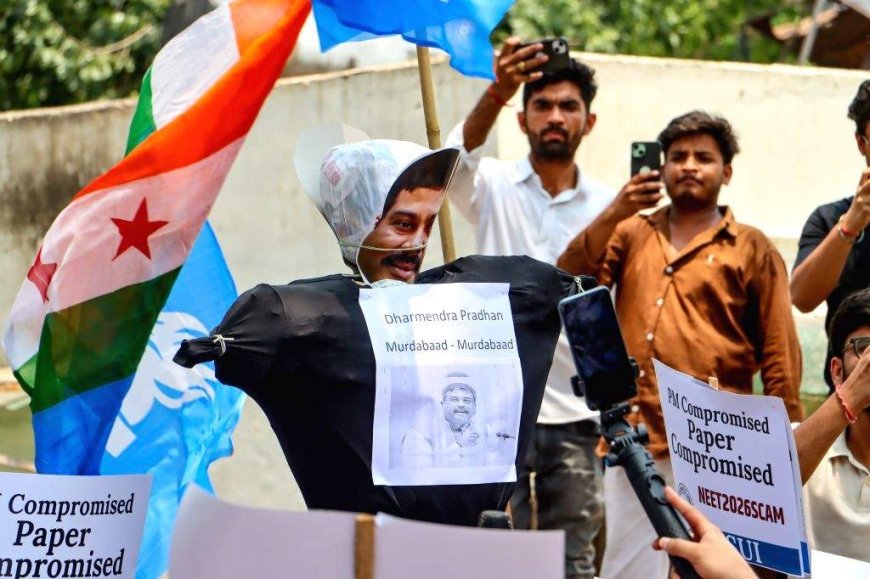
NEW DELHI: The cancellation of the National Eligibility cum Entrance Test (Undergraduate) — popularly known as NEET-UG — has triggered widespread protests, political confrontation, and deep anxiety among millions of medical aspirants across India. The exam, which serves as the gateway to undergraduate medical education, was conducted on 3 May at over 5,000 centres nationwide, with nearly 2.28 million students appearing for it.
However, within days of the examination, allegations of a paper leak surfaced, forcing the National Testing Agency (NTA) to cancel the examination process altogether. The agency stated that “the present examination process could not be allowed to stand” in light of ongoing investigations and concerns regarding the integrity of the exam.
The decision has not only shaken the confidence of students and parents but has once again exposed the vulnerabilities of India’s competitive examination system.
The Alleged Leak: What Investigators Have Found
According to media reports, investigators suspect the leak may have originated in Rajasthan before the examination took place. A senior police official reportedly stated that authorities are investigating a “guess paper” circulated among certain groups ahead of the exam.
The controversial “guess paper” allegedly contained around 410 questions, out of which nearly 120 questions are believed to have appeared in the chemistry section of the actual examination. NEET papers are conducted in four different sets, each comprising 180 compulsory questions from Physics, Chemistry, and Biology.
The matter has now been handed over to the Central Bureau of Investigation for a detailed probe.
Students Left Devastated. For lakhs of students, the cancellation has meant emotional collapse after years of rigorous preparation.
A 17-year-old NEET aspirant from Delhi described how her entire life over the past two years revolved around coaching classes, mock tests, and strict study schedules. She recalled missing family events and social gatherings, and even attending a mock test during the week her grandfather passed away.
“I don’t know what to do now. We study day and night towards one goal, and suddenly the exam is cancelled,” she said to media.
The pressure surrounding NEET preparation is immense. In cities across India, aspirants often spend several lakhs on private coaching institutions, attending classes for up to four hours on weekdays and nearly nine hours during weekends.
The uncertainty surrounding the retest date has further intensified stress among students who fear delays in admissions and academic calendars.
Political Reactions Intensify
The cancellation has sparked sharp political reactions, with opposition leaders accusing the BJP-led central government of failing to protect the integrity of the examination system. Rahul Gandhi criticised the government, stating that “the hard work, sacrifices and dreams of the students have been crushed by this corrupt BJP regime.”
Meanwhile, Arvind Kejriwal alleged “complete collusion” behind the leak and accused “paper leak gangs operating under political patronage” of destroying students’ morale and trust. The controversy has reignited debates around examination transparency, accountability of testing agencies, and the growing nexus between coaching institutions, organised leak networks, and corruption in competitive exams.
The Legal and Constitutional Angle
The NEET controversy raises critical constitutional and legal questions regarding the right to fair opportunity and equality under Article 14 of the Indian Constitution. When the integrity of a national-level examination is compromised, it directly impacts merit-based selection and undermines public trust in state institutions. Legal experts argue that repeated paper leaks may also amount to a violation of students’ legitimate expectations from public authorities conducting such examinations.
Over the past few years, India has witnessed multiple paper leak controversies involving recruitment and entrance examinations. The recurrence of such incidents points towards systemic administrative failures and possible criminal conspiracies involving organised networks.
The cancellation also places a heavy burden on students’ mental health, bringing attention to the absence of institutional safeguards for aspirants dealing with extreme academic pressure.
A Crisis of Trust
The NTA has defended its decision, saying the cancellation was necessary “in the interest of students and in recognition of the trust on which the national examination system rests.”
Yet for many aspirants, that trust already stands severely damaged.
As the country awaits fresh examination dates and the outcome of the CBI investigation, one question remains central: can India’s examination system guarantee fairness to the millions whose futures depend on it?
For students who sacrificed years of their lives preparing for NEET, the issue is no longer just about one cancelled examination — it is about faith in a system that promised merit, but delivered uncertainty.
📌 Follow us on YouTube, Instagram, and Twitter for more updates.