Explained: Why Delhi High Court Pulls Back Relief to The Wire Editor

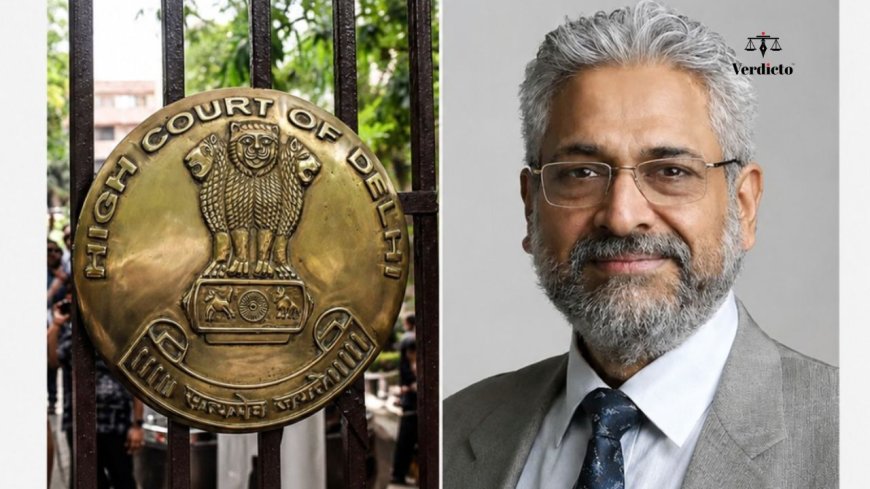
The Delhi High Court recalled its earlier order granting relief to The Wire founder Siddharth Varadarajan in his OCI card case after the Centre alleged suppression of material facts regarding an Allahabad High Court travel restriction order.

Explained: Why Delhi High Court Pulls Back Relief to The Wire Editor

The Delhi High Court on Thursday recalled its earlier order that had granted relief to Siddharth Varadarajan in his Overseas Citizen of India (OCI) card dispute after the Central government informed the Court that a crucial fact had been concealed during the earlier hearing.

Justice Purushaindra Kumar Kaurav said the Court had not been informed that the Allahabad High Court, in a 2020 order, had restrained Varadarajan from travelling abroad without prior permission from the Court.

Earlier Relief Granted

On May 12, the Delhi High Court had quashed a communication issued by the Central government on April 2, 2026, rejecting Varadarajan’s application for an OCI card.

The Court had observed that the government order rejecting the application was “bereft of reasons” and therefore unsustainable in law.

Varadarajan, a US citizen and founding editor of The Wire, had approached the Court seeking conversion of his Person of Indian Origin (PIO) status into OCI status after the government merged the PIO and OCI schemes.

According to his plea, while his PIO card remained valid till 2032, the PIO scheme itself ceased to exist after December 31, 2025, making the document unusable for entry and stay purposes in India.

What Led to the Recall of the Order

During Thursday’s hearing, Additional Solicitor General Chetan Sharma, appearing for the Central government, informed the Court that Varadarajan had failed to disclose the Allahabad High Court’s bail condition requiring him to seek prior permission before travelling abroad.

The government argued that this amounted to suppression of material facts.

Taking serious exception to the omission, Justice Kaurav orally remarked that the suppression could attract serious consequences. The Court indicated that such non-disclosure directly affected the maintainability and merits of the relief sought.

The judge observed:

“It is the petitioner’s bail application [before Allahabad High Court]. The conditions [imposed in the bail order] have not been pointed out to this court. We have to dismiss your writ petition.”

The Court further said:

“Some action is required to be taken... I will consider the apology... He does not deserve any relief from the court because of suppression.”

Counsel Apologises, Court Seeks Affidavit

Senior Advocate Nitya Ramakrishnan, appearing for Varadarajan, apologised before the Court for the lapse.

However, the Court stated that while it may consider the apology for the purpose of not initiating immediate action, the suppression of facts was too serious to ignore while deciding the petition.

The Court subsequently recalled its earlier order and directed Varadarajan to file an affidavit within seven days explaining the circumstances surrounding the non-disclosure.

OCI-PIO Background

The case arises from the Central government’s decision to merge the PIO and OCI schemes. Following the merger, all PIO cards expired on December 31, 2025.

Varadarajan contended that despite holding a PIO card valid till 2032, the abolition of the scheme rendered the document ineffective, forcing him to seek an OCI card for continued stay and travel in India.

The Central government was represented by ASG Chetan Sharma along with Central Government Standing Counsels Ashish Dixit and Nishant Gautam.

📌 Follow us on YouTube, Instagram, and Twitter for more updates.