Can an MLA Be Treated as a Public Servant for Prosecution Under the POCSO Act?
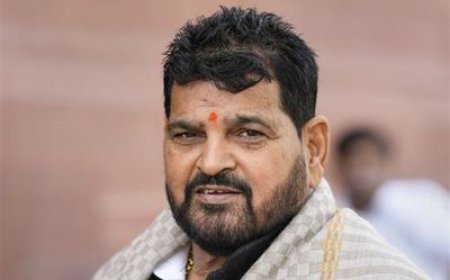
The Supreme Court has asked the Delhi High Court to reconsider whether an MLA can be treated as a public servant under the POCSO Act while hearing former BJP MLA Kuldeep Singh Sengar’s appeal in the Unnao rape case.
 Verdicto News Desk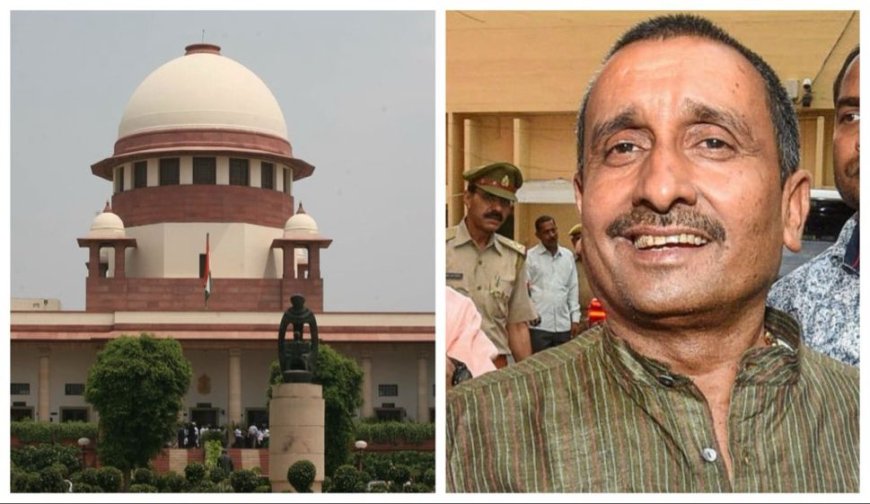
The Supreme Court on Friday set aside a Delhi High Court order that had suspended the life sentence of former BJP MLA Kuldeep Singh Sengar in the 2017 Unnao rape case and directed the high court to reconsider the matter afresh.
A bench comprising Chief Justice of India Surya Kant and Justice Joymalya Bagchi asked the Delhi High Court to make an endeavour to decide Sengar’s appeal against his conviction and sentence within two months. The apex court further observed that if the appeal could not be disposed of expeditiously, the high court should decide Sengar’s plea seeking suspension of sentence before the commencement of the summer vacation.
The Supreme Court clarified that it had not expressed any opinion on the merits of the case and that the high court was free to reconsider all issues independently.
Significantly, the bench also directed the high court to freshly examine an important legal issue arising in the matter — whether a Member of Legislative Assembly (MLA) can be treated as a “public servant” for the purposes of prosecution under the Protection of Children from Sexual Offences (POCSO) Act.
The issue gained prominence after the Delhi High Court, in its December 23, 2025 order, held that Sengar’s conviction under Section 5(c) of the POCSO Act may require reconsideration. Section 5(c) deals with “aggravated penetrative sexual assault” committed by a public servant.
The high court had observed that an elected representative such as an MLA does not fall within the definition of “public servant” under Section 21 of the Indian Penal Code (IPC). On that basis, it suspended Sengar’s life sentence during the pendency of his appeal, noting that he had already spent over seven years and five months in prison.
The order triggered widespread criticism and protests from the survivor, her family members, and activists, who questioned the interpretation adopted by the high court. Subsequently, the Central Bureau of Investigation (CBI) challenged the suspension of sentence before the Supreme Court.
On December 29 last year, the apex court stayed the high court’s order and directed that Sengar should remain in custody. Earlier this year, the matter was deferred to the first week of May.
The latest order of the Supreme Court now places the spotlight on the broader constitutional and statutory question of whether elected legislators can be considered public servants under criminal law provisions dealing with aggravated sexual offences against children.
The interpretation could have wider implications not only for prosecutions under the POCSO Act but also for accountability standards applicable to elected representatives holding public office.
📌 Follow us on YouTube, Instagram, and Twitter for more updates.