Supreme Court Questions ‘Freebies’ Culture Ahead of Elections, Hearing Likely Soon
The Supreme Court of India questions the growing trend of election-time freebies by political parties, raising concerns over fiscal responsibility and electoral fairness. Hearing on the pending petition is likely soon.
 Verdicto News Desk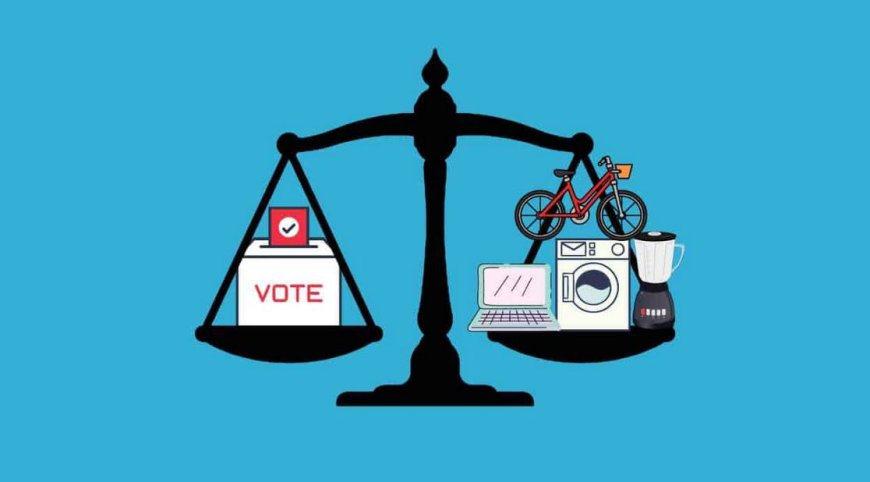
The Supreme Court has once again raised serious concerns over the growing trend of political parties and state governments announcing “freebies” just before elections, questioning the timing and long-term impact of such measures on governance and public finances.
While the matter is yet to be finally adjudicated, the Court, during oral observations made on Thursday, signalled that it would soon take up the long-pending petition challenging the practice.
Court Questions Timing of Free Schemes
During a recent mention of the matter, the Court observed that governments often announce welfare schemes only when elections are around the corner. It questioned the rationale behind such timing, asking how long this trend of pre-election announcements would continue.
The petition seeking regulation, or even a ban, on such freebies was originally filed in 2022 and remains pending for final hearing.
Repeated Judicial Concerns
The Supreme Court has, over time, expressed consistent unease about the issue:
- February 19, 2025: A Bench led by the Chief Justice noted that the practice is widespread across states. It questioned whether surplus funds should instead be directed towards infrastructure such as roads, hospitals, and schools rather than short-term giveaways.
- August 3, 2022: The Court proposed the formation of an expert committee to examine the issue, noting that no political party openly opposes freebies since all benefit from the practice
- August 11, 2022: The Bench emphasized that taxpayers have a right to question how public funds are used and called for a structured debate on the issue.
- February 12, 2025: Justice B. R. Gavai remarked that excessive reliance on free ration and monetary benefits could discourage people from working, stressing the need to integrate citizens into the mainstream economy rather than fostering dependency.
Welfare vs Freebies: A Blurred Line
The Court has also acknowledged the complexity of defining what constitutes a “freebie.” Key questions raised include:
- Is free education a welfare measure or a freebie?
- Should basic amenities like water and electricity be treated differently?
- Where should the line be drawn between social welfare and electoral inducement?
These questions highlight the broader policy dilemma at the intersection of governance, economics, and electoral ethics.
Related Pleas and Judicial Restraint
In a separate but related development, the Supreme Court recently refused to entertain a plea linked to the Bihar Assembly elections filed by Prashant Kishor’s Jan Suraj Party.
The plea had challenged a proposed ₹10,000 cash transfer scheme for women voters, arguing that such financial promises during the Model Code of Conduct distort the electoral playing field, particularly in economically strained states.
The Court, however, declined to intervene, remarking that judicial forums should not be used for political visibility following electoral setbacks. The petition was withdrawn with liberty to approach the High Court.
Pending Constitutional Challenge
The main petition, filed by advocate Ashwini Upadhyay, seeks directions to regulate or prohibit the announcement of freebies funded by public money.
On January 25, 2022, the Supreme Court issued notice to the Centre and the Election Commission of India, seeking their responses. Since then, the petitioner has repeatedly sought urgent listing of the matter.
The case also calls for a reconsideration of the landmark 2013 judgment in Subramaniam Balaji v. State of Tamil Nadu, where the Court held that promises made in election manifestos do not amount to “corrupt practices” under Section 123 of the Representation of the People Act.
Implications for Free and Fair Elections
At the heart of the controversy lies the question of electoral fairness. The petitioner argues that promising or distributing freebies, especially using public funds, can unduly influence voters and undermine the integrity of elections.
With multiple petitions now raising similar concerns, the Supreme Court’s eventual ruling is expected to have far-reaching implications for electoral politics, fiscal policy, and the balance between welfare and populism in India.