Criminal Prosecution Of CEC Over SIR Decisions: What The Plea Actually Alleges
A Supreme Court plea seeks criminal prosecution of CEC Gyanesh Kumar and two EC officials over SIR decisions allegedly taken without the concurrence of fellow commissioners, amid a disputed record of internal objections and the removal of over 13 crore names from electoral rolls.
 Verdicto News Desk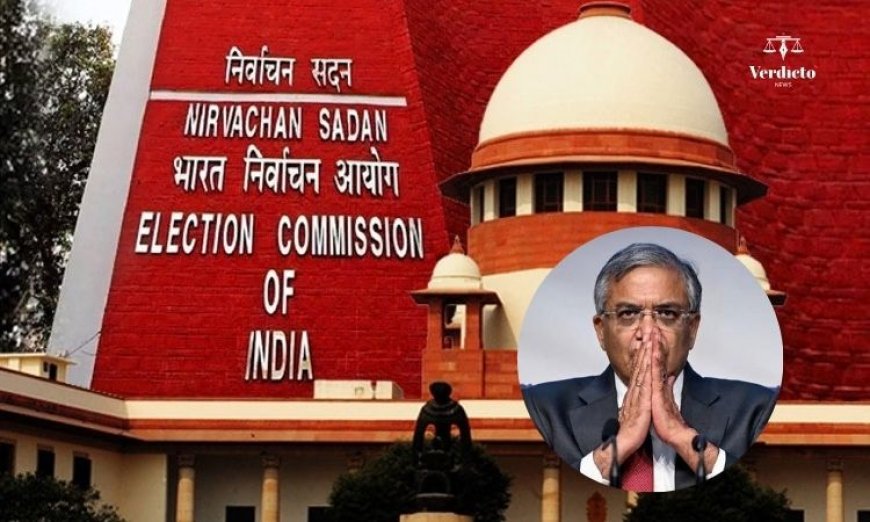
A petition filed in the Supreme Court has sought criminal prosecution of Chief Election Commissioner Gyanesh Kumar, Deputy Election Commissioner Maneesh Garg, and Election Commission IT head Seema Khanna, alleging violation of statutory duties under the Representation of the People Act in connection with the Special Intensive Revision (SIR) of electoral rolls.
The plea, filed by advocate Shailendra Mani Tripathi through advocate Chand Qureshi, asks the Court to declare unconstitutional and void a set of decisions, guidelines, and software modifications that it says Kumar undertook without the concurrence of the two other Election Commissioners. It seeks a declaration that all SIR-related decisions taken on this basis are illegal, restoration of the original Form 6, and a Special Investigation Team probe into the deletion of an estimated 13 crore voters from electoral rolls during the exercise.
The petition draws directly on a report by The Indian Express, which stated that Election Commissioners Sukhbir Singh Sandhu and Vivek Joshi recorded objections on at least fourteen occasions, on one day, four times over, to decisions and orders concerning the SIR. Those objections, per the report, concerned changes to Form 6, the deletion and restoration of names from electoral rolls, and the centralisation of electoral-roll data, with the commissioners maintaining they were not consulted or that their recommendations were overridden.
The Election Commission has disputed this account. In a subsequent statement carried by the same publication, the Commission said the decisions taken over the past year were unanimous, a direct rebuttal of the claim that Sandhu and Joshi were bypassed, and the central factual dispute the petition now asks the Court to resolve.
What the plea puts before the Court is, structurally, a question about the internal functioning of a multi-member constitutional body. The Election Commission is a three-member body by design, and the Representation of the People Act contemplates decisions being taken collectively rather than by the Chief Election Commissioner acting alone. If the allegation that Kumar proceeded on Form 6 changes and data-centralisation decisions without the concurrence of Sandhu and Joshi is borne out, the petitioner's argument is that this is not merely an internal procedural lapse but a statutory violation with consequences for the legality of everything downstream of it, including the removal of roughly 13 crore names from the draft rolls across 30 states and Union Territories.
The case will likely turn less on the political controversy around the SIR itself and more on a narrower, verifiable question: whether the documented objections amount to an absence of concurrence within the meaning of the Act, and whether that absence, if established, is sufficient to void decisions already acted upon at scale. The Commission's claim of unanimity and the reported record of objections cannot both be accurate, and the Supreme Court's engagement with the plea will be worth tracking for how it treats that conflict, as a matter for judicial fact-finding, or as one it leaves to the Commission's own internal processes.