Delimitation Bill Failed Once. Why Is Govt Planning a Separate Session for It?
The Delimitation Bill fell 54 votes short of a two-thirds majority in April. Verdicto examines why a special session, separate from the Monsoon Session, is now being planned.
 Verdicto News Desk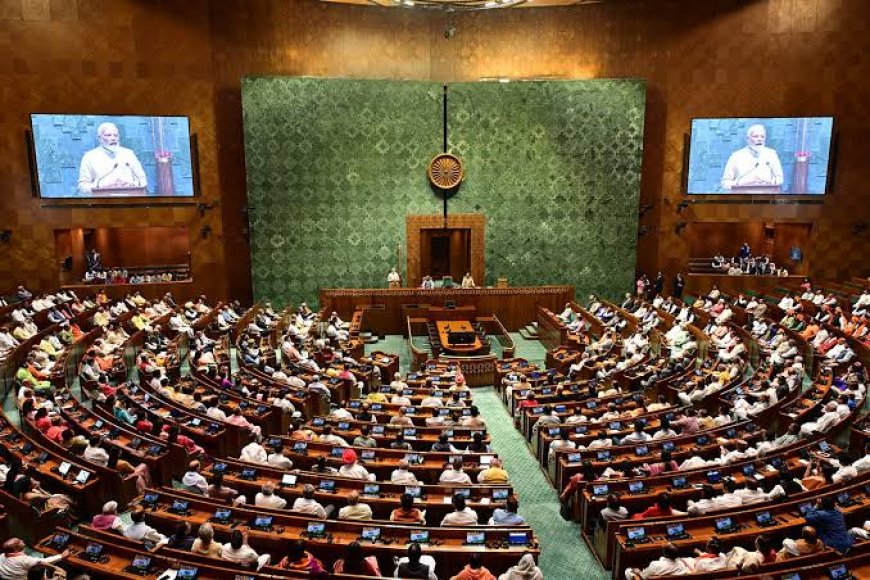
New Delhi: In April, the arithmetic did not work in the government's favour. The Constitution (131st Amendment) Bill needed a two-thirds majority of members present and voting to pass, the threshold Article 368 sets for any constitutional amendment and it did not get there. Of 528 votes cast, 298 favoured the bill and 230 opposed it, leaving it 54 votes short of the 352 required. Two connected bills were withdrawn soon after. That defeat is the starting point for understanding why a special session, rather than a straightforward reintroduction within the ongoing Monsoon Session, is now being discussed.
The distinction matters because Article 368 does not ask for a simple majority. It imposes two conditions at once: an absolute majority of the House's total membership, and a two-thirds majority calculated against those actually present and voting. The second condition is the harder one, and it behaves differently from ordinary legislative arithmetic because the number a party needs to clear moves depending on how many members show up to vote at all, not just how they vote.
That distinction is doing real work in the current numbers. In the Lok Sabha, against an effective strength of 540, the two-thirds mark sits at 360. The NDA's own strength reported at 294 leaves a gap of roughly 66 votes, a deficit that does not close even if every unaligned MP in the House falls in line. What could close it, at least partially, is abstention. Reports suggest the government is courting individual MPs from the Trinamool Congress, the DMK and the NCP (Sharad Pawar) faction — not for their votes necessarily, but for their absence from the floor. If a bloc of Opposition-aligned MPs abstains rather than votes against the bill, the effective size of the House shrinks for the purposes of the two-thirds calculation, and the number the government needs to clear falls with it. This is arithmetic the government cannot control through alliance-building alone, and it is arithmetic that takes time — individual conversations, individual commitments to secure.
The Rajya Sabha tells a similar story at smaller scale. Against a House strength of around 245, the two-thirds mark is 164, and the NDA's own numbers leave it short by more than 20 votes even after accounting for BJP-backed candidates expected from West Bengal bypolls. Here, the DMK's Rajya Sabha presence carries outsized weight, complicated by the party's substantive objection that population-based delimitation could shrink the political representation of southern states that have controlled population growth a position distinct from simple alliance politics, and one that will not be resolved by outreach alone.
This is the context in which the special session decision should be read. The Monsoon Session is scheduled to run to August 13, with roughly nineteen sittings on the calendar; a special session convened separately, reportedly from August 17, would sit outside that existing structure entirely. If the government already had the votes secured, folding the bill into the sitting session would be the simpler path no separate presidential notification, no additional procedural apparatus, no public signal that something outside the ordinary is being arranged. Choosing to build a standalone session instead suggests the count is not yet where the government needs it to be, and that the extra days are meant to be spent closing it MP by MP, abstention by abstention rather than debating a bill whose fate is already decided.
Having failed once on this exact threshold, the government now faces the same test twice over: not just whether the bill can pass, but whether the arithmetic behind a second attempt has genuinely changed, or whether a special session is simply more time to find out.