Legal Power Is Settled, Fairness Is Not: The Real Fight Over the SIR
Opposition leaders have petitioned the Supreme Court over SIR voter deletions, months after it upheld the exercise. What the petition can still argue.
 Verdicto News Desk
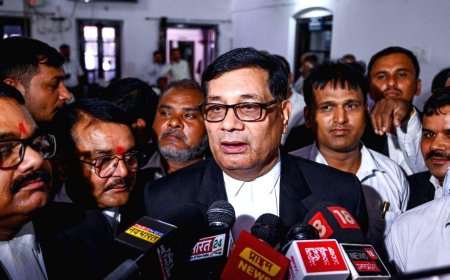
When Rahul Gandhi, Mallikarjun Kharge and a bloc of opposition leaders filed their petition in the Supreme Court on Monday evening, they entered a courtroom that has already ruled on the central legal question. Their case has to be built on what the May ruling left open, and the politics of the march, the demand for the Chief Election Commissioner's resignation and the call for paper ballots do not supply that.
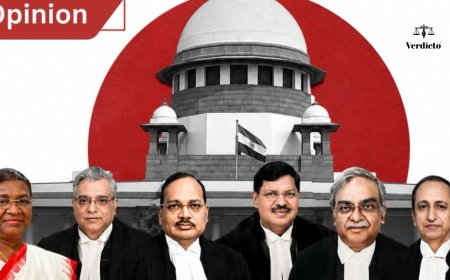
The court's position is on record. On 27 May 2026 it upheld the legality of the Special Intensive Revision in Bihar and other States, holding that the Election Commission is within its powers to conduct it. The ruling reasoned that the exercise carries safeguards of notice, hearing, objections and appeal, and that the Commission's power to delete a name is an electoral decision, not a declaration of non-citizenship. The court also said that if the competent authority finds a deleted person to be a citizen, the name must be restored to the roll. A petition asking the court to halt the SIR as such is therefore asking it to revisit a conclusion it reached barely five months ago.
The Election Commission has made this the centre of its defence. In a rebuttal issued on 5 October, it said that the full Commission approved the SIR unanimously and that the Supreme Court had upheld the framework, including the declaration attached to Form 6. The numbers behind the dispute are not small. The May judgment recorded that Bihar's final roll of 7.42 crore electors compared with 7.89 crore when the exercise was ordered in June 2025. A fall of that size can be read as the removal of duplicate, dead and migrated entries, or as large-scale exclusion. The May judgment answers the question of power. It does not, on its face, settle whether the exercise was carried out fairly in a particular State, and one critical reading of the ruling argues that the court gave too little attention to whether poor, migrant and document-deficient voters were disproportionately shut out. That is the ground on which a petition alleging irregularities has the best chance of being heard.
Procedure points the same way. The public reporting on the petition describes it as concerning alleged large-scale deletions and irregularities, but it does not set out the prayers. The demands for Gyanesh Kumar's resignation, a halt to the SIR and a return to paper ballots come from the letter Gandhi and Kharge sent to the Chief Justice, and nothing indicates they are the reliefs sought in court. The distinction matters, because the Constitution gives the court little room on at least two of them. Under Article 324(5), the Chief Election Commissioner can be removed only in the manner and on the grounds applicable to a Supreme Court judge, which means a parliamentary process and not a judicial order. The court has also shown it will not act on this by interim order: on 5 October it issued notice on a petition challenging decisions connected with the SIR but declined to suspend Kumar in the meantime. The paper ballot demand runs into the court's earlier refusal, in the 2024 EVM and VVPAT litigation, to order a return to ballot papers.
The Chief Justice's refusal to meet the Leader of the Opposition fits this separation of tracks. Reports on Sunday, attributed to sources, said Surya Kant declined the meeting because similar matters are sub judice. Whatever one thinks of the optics of a "March for Democracy" that ended at a courthouse gate, a judge taking a memorandum from one side of a pending dispute outside the record would invite its own objection. The court speaks through its orders, and the petition now filed is the only channel through which the opposition's grievance can become one.
The state of the ground-level machinery gives that grievance some substance. In West Bengal, counsel told the court on 28 September that more than 18,000 appeals against exclusion from the rolls were still pending before the appellate tribunals the court itself had set up. The court had earlier, on 25 August, directed the Election Commission to provide information on the filing, disposal and pendency of appeals and the resulting changes to the rolls. That data, more than any rally, is the evidence on which the question of remedy will turn: whether the safeguards the court relied on in May are working in practice.
The most likely path is not a dramatic ruling on the SIR's legality. It is tagging with the pending matters, a request for data and a narrower inquiry into whether the appeal mechanism restores wrongly deleted voters in time to vote. Whether the petition ends as a political statement or a judicial inquiry will depend on whether its prayers address that gap, and on whether the court is willing to look past the framework it endorsed to see how it has been applied.