
Ken-Betwa Project Explained: What Indian Law Says About Rehabilitation and Tribal Rights
Ken-Betwa Project explained: Learn what Indian law says about rehabilitation, tribal rights, land acquisition, the Forest Rights Act, and environmental clearances.
 Verdicto News Desk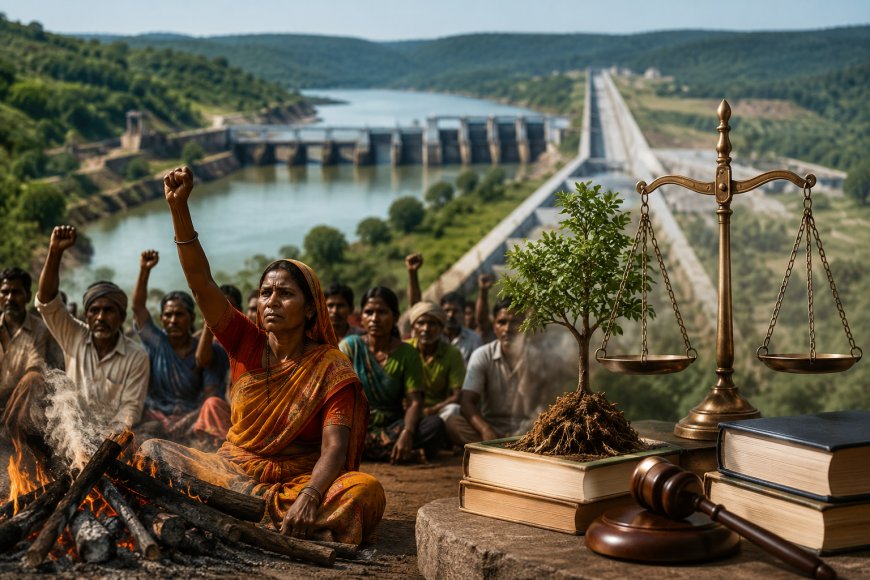
New Delhi, July 11: As protests continue over the Ken-Betwa River Linking Project in Madhya Pradesh, with tribal communities arguing that rehabilitation packages fail to address their concerns, the debate has shifted beyond compensation to a more fundamental question: What does Indian law require when large infrastructure projects displace indigenous communities?
India's legal framework recognises the State's power to acquire land for projects that serve a public purpose. At the same time, it imposes constitutional and statutory safeguards to ensure that development does not come at the expense of fundamental rights, environmental protection or the interests of vulnerable communities. The ongoing controversy surrounding the Ken-Betwa Project offers an opportunity to examine these legal obligations.
Why the Ken-Betwa Project Has Sparked a Legal Debate
The Ken-Betwa River Linking Project is one of India's flagship river interlinking initiatives, aimed at transferring water from the Ken River to the Betwa River to improve irrigation, drinking water supply and hydropower generation across the drought-prone Bundelkhand region of Madhya Pradesh and Uttar Pradesh.
While the project is expected to bring long-term developmental benefits, it has also raised concerns over displacement, the diversion of forest land and the impact on tribal communities whose livelihoods are closely tied to forests, agriculture and local ecosystems.
The legal debate centres not on whether infrastructure projects should proceed, but on whether the process of acquiring land, rehabilitating affected families and protecting community rights complies with India's constitutional and statutory framework.
Article 21: The Right to Life Includes a Life With Dignity
Article 21 of the Constitution guarantees that no person shall be deprived of life or personal liberty except according to a procedure established by law.
Over the years, the Supreme Court has interpreted this provision broadly to include the right to live with dignity, which extends to livelihood, shelter and access to essential resources.
When people are displaced by infrastructure projects, the constitutional question is therefore not limited to financial compensation. If rehabilitation fails to restore access to livelihood, housing and basic means of survival, affected families may argue that the State has not adequately protected the broader guarantees recognised under Article 21.
Why Tribal Communities Receive Additional Legal Protection
India's Constitution and several special laws recognise that Scheduled Tribes often maintain a unique social, cultural and economic relationship with forests and ancestral lands.
For many tribal communities, displacement is not merely the loss of privately owned land. It can also affect customary rights, traditional occupations, community institutions and cultural identity.
This is why projects affecting tribal populations are subject to additional legal safeguards intended to ensure that development is carried out in a manner that is fair, transparent and respectful of their rights.
Forest Rights Act, 2006
The Scheduled Tribes and Other Traditional Forest Dwellers (Recognition of Forest Rights) Act, 2006—commonly known as the Forest Rights Act (FRA)—was enacted to recognise and protect the rights of forest-dwelling communities over land and forest resources.
The Act seeks to correct historical injustices by recognising both individual and community forest rights.
Where infrastructure projects involve the diversion of forest land, authorities are expected to ensure that recognised rights under the FRA are addressed in accordance with the law. The role of the Gram Sabha has also been recognised as an important part of the decision-making process in matters affecting forest-dependent communities.
The Land Acquisition Law Makes Rehabilitation a Legal Duty
The Right to Fair Compensation and Transparency in Land Acquisition, Rehabilitation and Resettlement Act, 2013 (LARR Act) significantly expanded the legal protections available to people affected by land acquisition.
Unlike earlier laws that focused primarily on compensation, the 2013 legislation makes rehabilitation and resettlement integral components of the acquisition process.
The Act provides for compensation, rehabilitation benefits, livelihood support and resettlement measures for affected families. It also requires Social Impact Assessments in many cases to evaluate the likely consequences of land acquisition before projects move forward.
The objective is to ensure that affected persons are not left worse off after displacement and that development takes place through a transparent and accountable process.
Environmental Clearance and Public Participation
Large infrastructure projects involving forests, rivers and ecologically sensitive areas must also comply with environmental regulations.
Environmental clearance procedures generally require authorities to assess the ecological impact of proposed projects and provide opportunities for public consultation.
Public hearings are intended to enable affected communities to express concerns, seek clarifications and participate in the environmental decision-making process. These consultations form part of the broader legal framework aimed at balancing developmental goals with environmental protection and community interests.
Is Compensation Alone Enough?
One of the central legal questions arising from projects such as Ken-Betwa is whether financial assistance alone satisfies the State's obligations.
Indian law increasingly recognises that displacement affects far more than property ownership. It may disrupt livelihoods, education, access to natural resources, social networks and cultural practices.
As a result, rehabilitation is generally understood to include not only monetary compensation but also measures that enable displaced families to rebuild their lives with dignity.
Whether a particular rehabilitation package fulfils these legal requirements ultimately depends on the facts of each case and, where disputes arise, may be examined by courts or other competent authorities.
The Larger Constitutional Question
The Ken-Betwa Project illustrates a broader challenge confronting India's development model.
Infrastructure projects are essential for economic growth, water security and regional development. At the same time, constitutional governance requires that these objectives be pursued through procedures that respect fundamental rights, statutory safeguards and environmental protections.
The continuing protests demonstrate that the debate is no longer simply about the amount of compensation offered. It is about whether affected communities believe that the legal promise of fair rehabilitation, meaningful participation and protection of tribal rights has been fulfilled.
As India expands investment in major infrastructure projects, the success of development will increasingly be measured not only by the assets created but also by the extent to which the rights of displaced communities are protected under the law.