Akal Takht Declares Punjab CM Bhagwant Mann ‘Guru Dokhi’ and ‘Khalsa Panth Virodhi’, Summons Cabinet and Sikh MLAs
The Akal Takht has declared Punjab Chief Minister Bhagwant Mann 'Guru Dokhi' and 'Khalsa Panth Virodhi' over an alleged sacrilege video controversy. The Sikh clergy has also summoned all Sikh MLAs and the Punjab Cabinet on June 29.
 Verdicto News Desk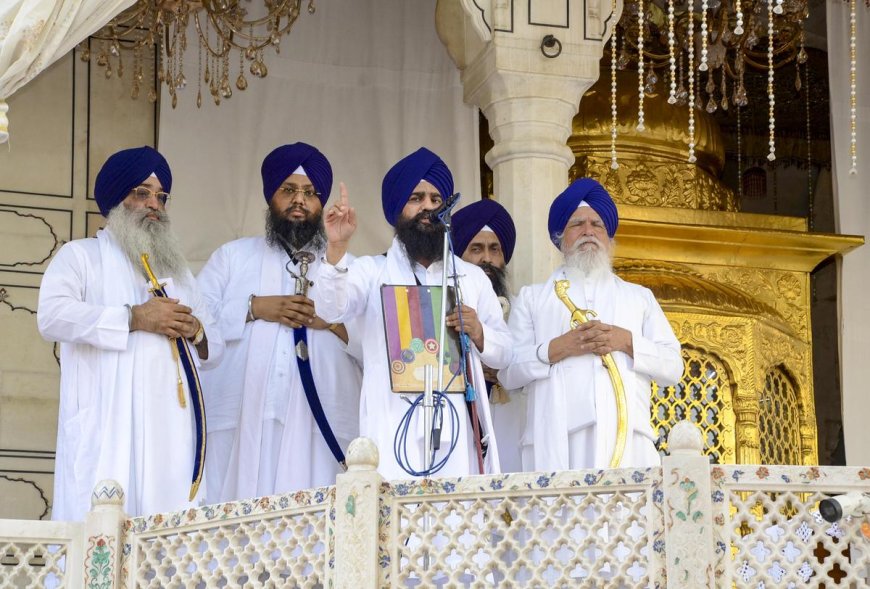
Amritsar, June 15: The Sikh clergy at Sri Akal Takht Sahib, the highest temporal authority of Sikhs, on Monday declared Punjab Chief Minister Bhagwant Mann as “Guru Dokhi” (one who has acted against the Guru) and “Khalsa Panth Virodhi” (opposed to the Sikh community), citing his alleged conduct in connection with a controversial video linked to a sacrilege dispute.
The decision was announced following deliberations by the five Sikh high priests after forensic examinations of the disputed video were completed.
In addition to the declaration against Mann, the Akal Takht has summoned all Sikh Members of the Legislative Assembly (MLAs), irrespective of political affiliation, along with the Punjab Cabinet to appear before it on June 29, 2026, in connection with discussions surrounding Punjab’s proposed anti-sacrilege legislation.
Controversy Over Alleged Sacrilege Video
The controversy centres around a video that allegedly showed liquor being sprinkled on a photograph of Jarnail Singh Bhindranwale, the former head of Damdami Taksal, a figure revered by many Sikhs but also viewed as a controversial leader due to his role in Punjab's turbulent political history.
According to Akal Takht officials, when Bhagwant Mann appeared before the Sikh authority on January 15, 2026, he maintained that the video had not been manipulated and was not generated using artificial intelligence (AI).
Following the hearing, the Akal Takht directed Mann to suggest two forensic laboratories for an independent verification of the video's authenticity.
Forensic Reports Submitted
The Akal Takht Secretariat subsequently wrote to the Chief Minister and the Punjab government on January 27 seeking their response regarding the matter. However, according to Sikh clergy, no reply was received.
In the absence of a response, the Akal Takht Secretariat identified two government-approved forensic laboratories to examine the video.
The reports received from these laboratories reportedly concluded that the video was original and showed no signs of digital manipulation, editing, or AI-generated alterations.
Based on these findings, the issue was first discussed during a Panthic gathering before being placed before the five Sikh high priests for final consideration.
Summons Issued Over Anti-Sacrilege Law
Apart from the findings relating to the video, the Akal Takht has also sought the presence of Sikh legislators and members of the Punjab Cabinet regarding matters connected to the state's anti-sacrilege law.
The June 29 appearance is expected to focus on the government's approach towards protecting religious sentiments and addressing concerns relating to incidents of sacrilege in Punjab.
Political and Religious Significance
The declaration by the Akal Takht carries considerable symbolic and religious weight within the Sikh community. While it does not have legal consequences under Indian law, pronouncements by the institution often influence public discourse and political developments in Punjab.
The latest move is likely to intensify the ongoing debate surrounding religious sensitivities, political accountability, and the relationship between elected governments and Sikh religious institutions in the state.
The Punjab government has not yet issued a detailed public response to the Akal Takht's latest declaration.