Supreme Courts of India and Russia Sign MoU on Judicial Cooperation; CJI Surya Kant and Chief Justice Krasnov Meet in Moscow
The Supreme Courts of India and Russia sign an MoU on judicial cooperation in Moscow. CJI Surya Kant and Chief Justice Igor Krasnov agreed on exchange visits, training programmes, joint seminars and a joint working group on AI and technology in courts.
 Verdicto News Desk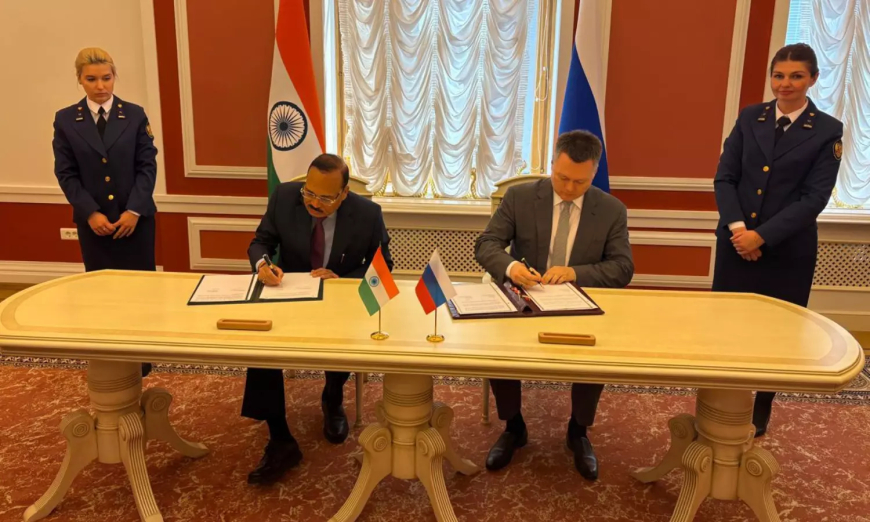
The Supreme Court of India and the Supreme Court of the Russian Federation have signed a Memorandum of Understanding on judicial cooperation, marking a formal institutional commitment between the two countries' highest courts.
Chief Justice of India Surya Kant and Chief Justice of the Supreme Court of the Russian Federation Igor Krasnov signed the MoU in Moscow on Tuesday, with CJI Kant leading a delegation from the Indian apex court for the occasion.
The Meeting
The deliberations took place in the Marble Hall of the Supreme Court of the Russian Federation, opening with an acknowledgment of the historical and contemporary ties between India and Russia. The discussions that followed covered a wide range of institutional priorities — from the challenges facing modern judiciaries to the ongoing digital transformation underway in both countries.
A particular focus of the talks was the integration of technology and artificial intelligence into court procedures, with both sides discussing how these tools can enhance justice delivery and improve access to justice for litigants. The meeting also included discussion on the importance of high-quality judicial education.
What the MoU Provides
Following the deliberations, the two Chief Justices and their delegations signed the MoU, which commits both sides to strengthening cooperation through exchange visits, short- and long-term training programmes, and the organisation of joint seminars and conferences.
The agreement is grounded in the principles of sovereign equality and other recognised international instruments to which both countries are parties.
It was also agreed that a joint working group would be constituted to develop strategies and mechanisms for sustained technological collaboration and deeper institutional engagement between the two judiciaries.
Agreement covers exchange visits, training programmes, joint seminars and a joint working group on technology and AI in courts