The Union's caste-census monopoly gets its first real test, in Ladakh
Why Census 2027 is India's first caste census, not 2011. Verdicto breaks down the Census Act, 1948, Entry 69, and the SECC's unreleased data.
 Verdicto News Desk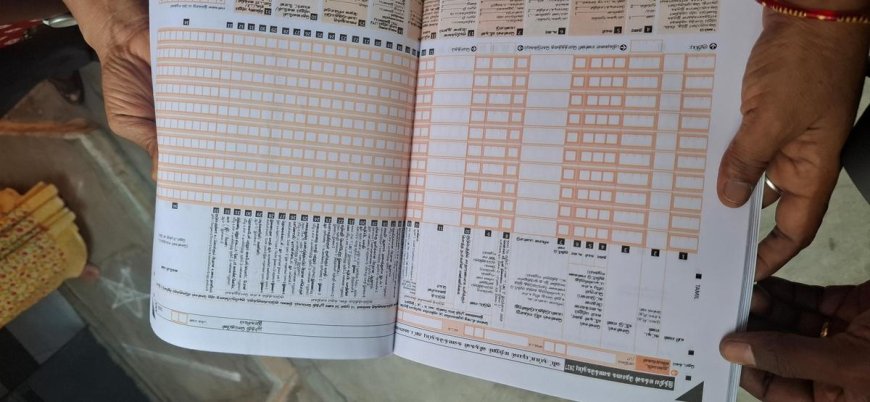
New Delhi, Aug 10: Enumerators will begin work in Ladakh on August 17, inaugurating the first caste enumeration in independent India's history. Ladakh and the snow-bound regions of Jammu and Kashmir, Himachal Pradesh, and Uttarakhand go first for reasons of climate: officials have confirmed the reference date for these areas is fixed at 1 October 2026 specifically because of weather access, with enumeration in Leh and Kargil running through September, ahead of the 1 March 2027 reference date for the rest of the country. The gazette notification itself, issued under Section 3 of the Census Act, sets the dates without stating the rationale in its own text, the climate reasoning comes from census officials, not the notification's operative language, worth flagging for anyone citing this precisely.
Census 2027 is being described everywhere as India's first caste enumeration since 1931. That claim needs a caveat, because India did technically collect caste data in 2011, just not through the Census. The distinction is the sharpest legal and administrative point in this entire story, and it is worth building out properly.
In 2011, the government ran the Socio-Economic and Caste Census, or SECC, alongside the regular decennial Census, but as an entirely separate exercise. The regular Census has always been conducted by the Registrar General and Census Commissioner of India under the Census Act. SECC 2011 was not. It was run by the Ministry of Rural Development for rural areas and the then Ministry of Housing and Urban Poverty Alleviation for urban areas, outside the Census Act framework altogether. That institutional separation is exactly why Entry 69's exclusivity, the provision this publication has already traced through the Bihar litigation, was never actually tested by SECC 2011. SECC was never claiming to be a census in the constitutional sense, so no one needed to litigate whether it violated the Union's monopoly. The government has been explicit about this distinction: in a 2022 parliamentary response, the Ministry of Home Affairs stated that caste-wise population data beyond SCs and STs had not been enumerated in the Census since Independence, and that the caste data collected under SECC 2011 had never been released.
That non-release is its own story. SECC used the same open-column method Census 2027 is now adopting, respondents wrote in their caste rather than selecting from a list, and the result was a dataset spilling over with spelling variations, sub-caste entries, and multiple names for what were functionally the same communities. The government's own position was that this raw data needed classification before it could be used for anything. An expert group under then-NITI Aayog vice-chairman Arvind Panagariya was constituted in 2015 specifically to sort through it. By 2022, the non-caste portions of SECC had been finalised and published, but the caste component still had not been released. India has, in effect, been sitting on unusable raw caste data from 2011 for over a decade, a fact that should worry anyone assuming Census 2027's open-column method will produce cleaner results without a much stronger standardisation process behind it.
The 1931 benchmark exists because that is the last comprehensive caste count whose data was actually processed and published before Independence. The 1941 Census also asked about caste, but World War II disrupted full processing and publication, so 1931 remains the reference point every OBC-size and reservation-quantum debate in India still cites. After Independence, the regular Census kept counting SCs and STs but dropped other caste categories entirely, which is the gap Census 2027 is now closing, not by running a parallel SECC-style survey again, but by folding caste directly into the Census Act machinery itself.
That structural shift, caste enumeration inside the Census rather than beside it, is what makes Ladakh's rollout legally significant in a way SECC 2011 never was. Because this exercise runs under the Census Act, it carries Section 8's compulsion to answer, Section 15's confidentiality obligation, and the penalty structure this publication has already detailed, none of which applied to SECC. It also means this data collection sits squarely within Entry 69's exclusive Union competence, the same provision the Centre defended in the Bihar litigation and the same one that makes a state-run alternative to this constitutionally impossible.
Whether Census 2027 avoids SECC's fate, a decade of uncoded, unusable, unreleased responses, will depend entirely on standardisation choices being made now, at the coding stage, choices the Census Act does not itself govern. That is the real stake behind Ladakh going first, not just testing geo-tagging exceptions and paper schedules in a border-sensitive Union Territory, but testing whether an open-column method that failed to produce usable data once can be made to work this time, under a law that, for the first time, actually compels it to be counted rather than merely collected.