Travelling Abroad a Fundamental Right, Even for Accused: Delhi Court Lets Money Laundering Suspect Take Thailand Holiday
A Delhi court allows a money laundering accused to travel to Thailand, ruling that foreign travel is an integral facet of the fundamental right under Article 21. Court finds no flight risk, grants permission with strict conditions including Rs 10 lakh FDR.
 Verdicto News Desk
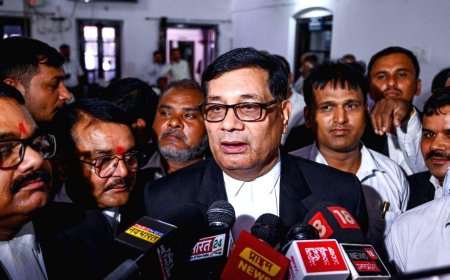
A Delhi court has held that the right to travel abroad is an integral facet of the fundamental right to life and personal liberty under Article 21 of the Constitution — and on that basis, permitted a woman accused in a money laundering case to travel to Thailand with her children during summer vacations.
Vacation Judge Rajesh Malik passed the order while hearing an application by Reena Goel, an accused in a case linked to an alleged multi-crore bank loan fraud involving Shree Raj Mahal Jewellers. Properties belonging to Ginni Gold Private Limited — including shops in Delhi's Karol Bagh market — had been attached by the Enforcement Directorate under the Prevention of Money Laundering Act. Goel, a director-cum-promoter of the company, is named as an accused alongside Ginni Devi.
The Bail Condition and the Application
Goel was granted bail in December 2025, subject to a standard condition prohibiting her from leaving the country without prior court permission. She approached the court seeking leave to travel to Thailand from June 25 to July 2, citing her children's ongoing summer vacations.
The ED opposed the application.
The Court's Reasoning
The court framed the issue as one requiring a careful balance between the accused's right to travel and the legitimate grounds for refusing such permission.
"The primary and most compelling ground for denial would be a credible apprehension that she will flee from justice," it noted. "Such apprehension can either be shown from the evidence or it can be gathered by drawing inferences from other facts."
Finding neither, the court observed that the ED had produced no evidence — direct or inferential — to suggest Goel was a flight risk. It also noted that she was not making investments abroad or taking steps to settle in a foreign country. "Mere being an accused does not suffice to stop her from travelling abroad," it said.
The court further relied on a body of constitutional court judgments recognising foreign travel as falling within the protective ambit of Article 21.
Permission Granted — With Conditions
The court allowed the application, subject to stringent safeguards:
- Furnishing a Fixed Deposit Receipt of Rs 10 lakh
- Submitting a detailed travel itinerary
- Not tampering with evidence
- Not seeking any extension of stay abroad
- Accepting that no adjournment would be granted to her counsel on account of her absence