NCERT’s Altered ‘Dancing Girl’ Image in Class 9 Textbook Sparks Debate on Art, History and Educational Representation
NCERT's new Class 9 arts textbook features an altered image of the Indus Valley Civilisation's iconic Dancing Girl figurine, triggering debate over historical accuracy, art education and cultural representation.
 Verdicto News Desk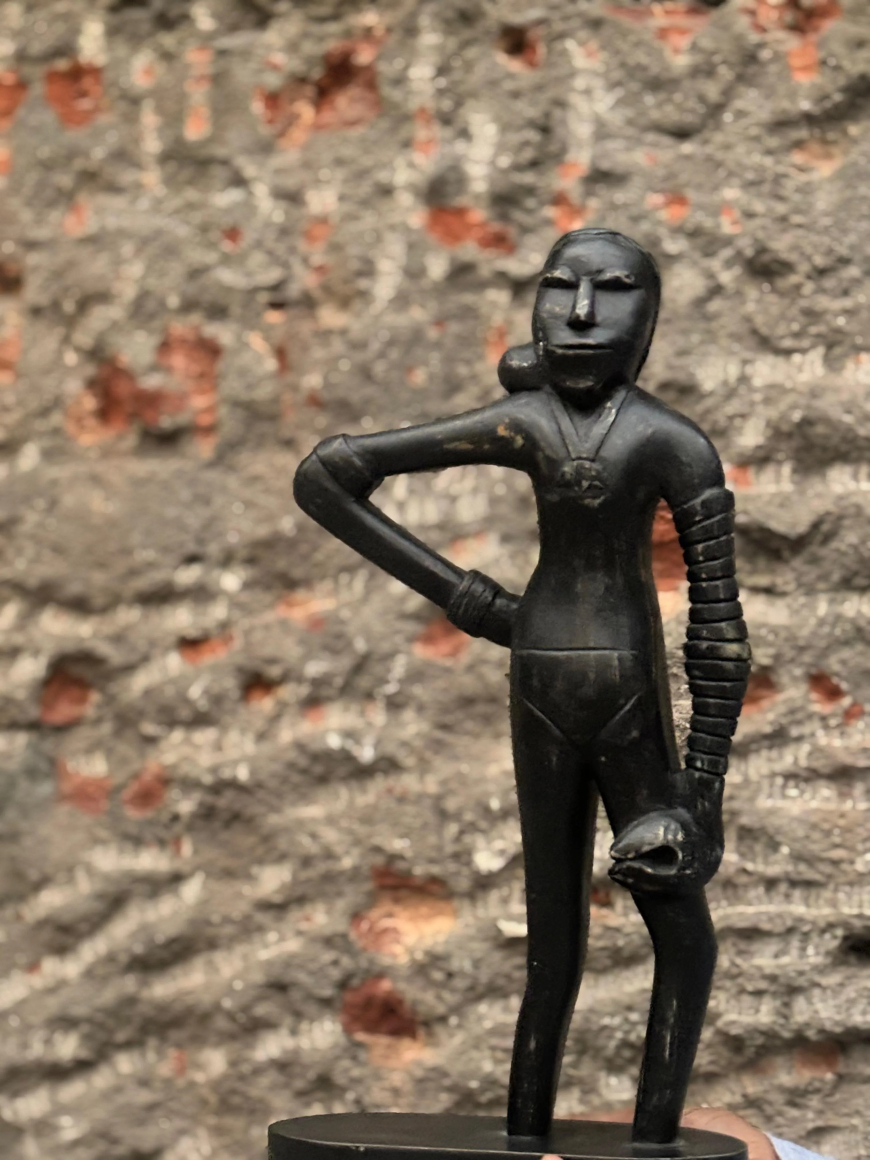
New Delhi, June 15: The National Council of Educational Research and Training (NCERT) has come under scrutiny after its newly introduced Class 9 arts education textbook Madhurima featured an altered image of the iconic "Dancing Girl" bronze figurine from Mohenjo-daro, with the sculpture's bare torso visually covered.
The change has reignited debates over the representation of historical artefacts in educational material, artistic integrity, and the interpretation of what is considered "age-appropriate" for school students.
The image appears in the opening chapter, History of Arts, where the figurine is introduced as a significant example of artistic achievement from the Indus Valley Civilisation. However, observers have noted that the version reproduced in the textbook differs from the original artefact, with shading added across the upper torso that obscures anatomical details visible in the bronze sculpture.
Interestingly, NCERT's Class 6 Social Science textbook carries an image of the same artefact in a form that more closely resembles the original sculpture.
'Not Age-Appropriate': The Explanation
Responding to the development, educationist and historian Michel Danino, who headed the committee that prepared NCERT's new Class 6 Social Science textbooks, said he had previously been informed that the image of the Dancing Girl was considered "not age-appropriate."
According to Danino, his team opposed the reasoning and consulted school teachers, who reportedly did not view the artefact as problematic for students.
"The notion that nudity is inappropriate is, in my opinion, an obsolete Victorian view. Yet we speak of decolonising Indian education," Danino said.
He further questioned the decision to alter the image in a chapter specifically devoted to Indian art and cultural heritage.
Concerns Over Historical Accuracy
Danino also criticised the modification on grounds of historical authenticity, arguing that altering an archaeological artefact's image risks misrepresenting the original object.
Drawing a comparison with historical attempts to cover nude sculptures in Europe, he said modifications of this nature can distort the artistic and cultural significance of heritage objects.
"Unless this is clearly done to indicate the possible reconstruction of a partial artefact, altering such an image amounts to creating a fake artefact," he said.
The remarks raise broader questions about how historical artefacts should be reproduced in educational content and whether visual alterations compromise academic accuracy.
The Artefact and Its Significance
The Dancing Girl, discovered at Mohenjo-daro in present-day Pakistan, is one of the most recognisable artefacts associated with the Indus Valley Civilisation. Dating to approximately 2600 BCE, the bronze figurine was created using the lost-wax casting technique, a method that continues to be practised in parts of India.
The Class 9 textbook describes the sculpture as depicting a figure standing with one hand on the waist, a slightly raised chin and a bent knee. The chapter also encourages students to analyse the posture and recreate it through classroom activities and sketches.
Archaeologists have long debated the exact significance of the figurine. Some scholars view it as evidence of artistic sophistication in Harappan society, while others have explored possible cultural or ritual meanings associated with the posture.
Larger Questions for Education Policy
The controversy highlights an emerging tension between educational sensitivity and historical fidelity. Experts argue that textbooks serve not only as learning tools but also as repositories of cultural memory. Any modification of historical artefacts, they contend, should be carefully justified and transparently explained.
As of now, NCERT has not publicly commented on the difference between the representation of the Dancing Girl in its Class 6 and Class 9 textbooks.
The debate is likely to fuel broader discussions on curriculum design, heritage education, artistic representation and the standards governing the portrayal of historical artefacts in school textbooks.