Congress Alleges Amit Shah Behind TMC Split, Claims Move Aimed at Securing NDA's Two-Thirds Majority
Congress has accused Union Home Minister Amit Shah of engineering the merger of 20 rebel TMC MPs with the NCPI to boost the NDA's strength in the Lok Sabha. The development raises anti-defection law questions.
 Verdicto News Desk
New Delhi, June 15: A fresh political controversy erupted on Monday after the Congress accused Union Home Minister Amit Shah of orchestrating the breakaway of 20 Trinamool Congress (TMC) MPs and their merger with the Nationalist Citizens Party of India (NCPI), alleging that the development was aimed at strengthening the NDA's numbers in the Lok Sabha.
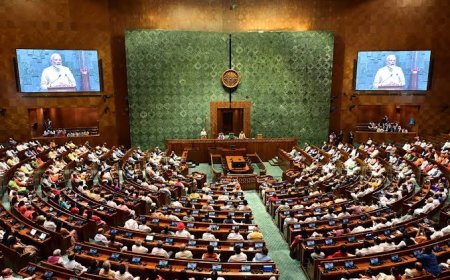
The allegations come a day after 20 rebel TMC MPs met Lok Sabha Speaker Om Birla and announced their decision to merge with the NCPI, a registered but unrecognised political party based in Tripura.
Congress Targets Shah
Congress General Secretary (Communications) Jairam Ramesh alleged that the split was an "illegal breakaway" engineered by the Home Minister as part of a larger political strategy.
In a post on X, Ramesh claimed that the merger was designed to help the National Democratic Alliance (NDA) move closer to a two-thirds majority in the Lok Sabha.
"A desperate Union Home Minister has masterminded the illegal breakaway of 20 TMC MPs and their wholly questionable fusion with an unheard-of political outfit," Ramesh alleged.
He further argued that the move could elevate the NCPI's position within the NDA despite the party having little electoral presence or political history compared to established NDA allies such as the Telugu Desam Party (TDP) and Janata Dal (United).
The Congress leader also described the development as a threat to constitutional values and parliamentary norms.
TMC Calls Move Illegal
The Mamata Banerjee-led Trinamool Congress has challenged the legitimacy of the merger and has reportedly termed the move a violation of the anti-defection law.
The legal and constitutional questions surrounding the merger are expected to centre on provisions of the Tenth Schedule of the Constitution, which governs defections by elected legislators.
Under the anti-defection framework, disputes relating to splits, mergers and disqualification are generally decided by the Speaker of the House.
Rebel MPs Defend Decision
Meanwhile, rebel TMC MP Arup Chakraborty defended the move, stating that the breakaway faction was attempting to "rectify" the party's functioning.
He also indicated that the group intends to seek control over the TMC's election symbol, signalling that the dispute may extend beyond Parliament into the domain of election law and party recognition.
Spotlight on NCPI
The Nationalist Citizens Party of India (NCPI) is a Tripura-based registered but unrecognised political party with limited electoral presence.
According to available election records, the party contested three seats in the 2023 Tripura Assembly elections but failed to make a significant impact, with its candidates either polling fewer votes than NOTA or only marginally outperforming it.
Legal Questions Ahead
The developments are likely to trigger legal scrutiny over whether the merger satisfies constitutional requirements under the anti-defection law and whether the rebel MPs can avoid disqualification.
The matter may also have implications for parliamentary arithmetic and opposition politics, particularly if the TMC formally challenges the merger before the Speaker or other legal forums.