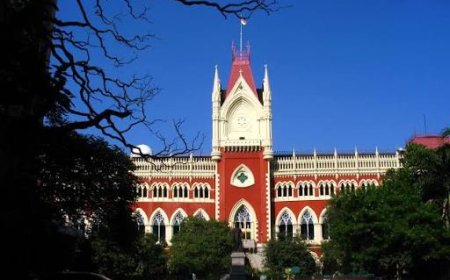
Gujarat HC Dismisses PIL on Alleged Buddhist Finds at Somnath, Slaps ₹2 Lakh Fine on Petitioner
Gujarat High Court dismisses PIL seeking disclosure of alleged Buddhist archaeological findings at Somnath temple, imposing ₹2 lakh fine on petitioner for filing misleading and factually incorrect claims.
 Verdicto News Desk
The Gujarat High Court on Thursday threw out a public interest litigation seeking disclosure of alleged archaeological findings related to Buddhism beneath the Somnath temple, imposing a ₹2 lakh cost on the petitioner for filing what it called a factually incorrect and misleading petition.
A division bench of Chief Justice Sunita Agarwal and Justice D N Ray dismissed the PIL filed by Vilas Tukaram Kharat, a Maharashtra-based petitioner who described himself as a Marathi language scholar, a Buddhist, and the founder-member of an NGO called Sanatan Dhamm.
What the PIL Sought
Kharat had approached the High Court seeking that a scientific survey — allegedly conducted by IIT Gandhinagar and the Archaeological Survey of India (ASI) and reported in print and social media — be placed in the public domain. He had arrayed the Shree Somnath Trust and ASI as respondents.
What the Court Found
The bench was unsparing in its assessment. It found that none of the claims in the petition could be verified through the petitioner's personal knowledge or any authentic document, and accepted the state government's argument that the PIL was aimed at dragging the temple trust into unnecessary controversy.
"This petition is filled with incorrect, misleading and distorted facts," the court noted, adding that such filings "cause damage to the sanctity of the benevolent cause of law of PIL developed by the apex court."
The court also flagged the petitioner's apparent attempt to characterise the Shree Somnath Trust — which has the Prime Minister as its chairman — as performing public functions under Article 12 of the Constitution, calling this indicative of an "ulterior motive."
Factual Errors Cited
Government Pleader G H Virk pointed out a telling lapse: the petitioner had cited a "Shree Somnath Trust Act, 1955" in support of his claims — a law that does not exist.
The bench also questioned why the petitioner had bypassed the standard route of approaching concerned authorities for information before directly filing a PIL in the High Court.
The Verdict
Calling Kharat an "unscrupulous litigant," the court dismissed the petition and imposed an exemplary cost of ₹2 lakh, underscoring that frivolous PILs undermine the credibility of genuine public interest litigation.