Ordinance Route to Increase Supreme Court Judges Draws Criticism
Former Law Minister Kapil Sibal criticises the Centre’s move to increase Supreme Court judges through an ordinance, raising concerns over transparency, parliamentary debate, judicial reforms, and democratic consultation.
 Verdicto News Desk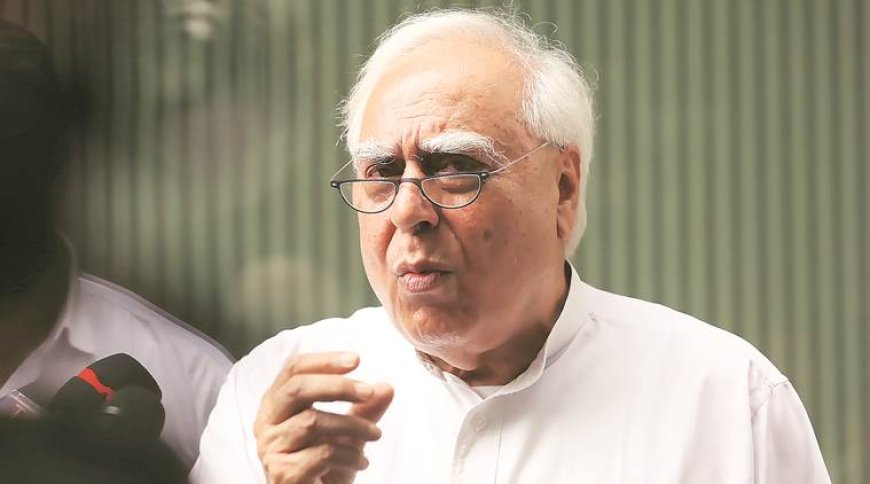
Senior advocate and Independent Rajya Sabha MP Kapil Sibal on Saturday criticised the Centre’s decision to increase the strength of judges through an ordinance rather than introducing legislation for debate in Parliament, calling the move lacking in transparency and democratic consultation.
Addressing a press conference, Sibal argued that decisions concerning the structure and future of constitutional institutions such as the Supreme Court should not be taken without wider parliamentary discussion and stakeholder engagement.
Referring to the historical expansion of the apex court, Sibal noted that the Supreme Court began in 1950 with seven judges and has gradually expanded over decades to address growing judicial demands. He questioned the reasoning offered for the latest increase in judicial strength.
“The question is where do we go as an institution,” Sibal said, expressing concern over the justification behind increasing the number of judges.
Government as the “largest litigant”
Sibal argued that rising litigation cannot be viewed in isolation from the role of the State itself.
According to him, governments remain among the country’s biggest litigants, contributing substantially to case burdens through administrative decisions, appeals, and enforcement actions.
He further alleged that stringent legislations and their enforcement through agencies including the Enforcement Directorate and Central Bureau of Investigation have expanded litigation across courts.
“The government itself is responsible for the increase in litigation through the weaponisation of legislations,” Sibal said.
He also pointed to the growing number of Public Interest Litigation (PIL) matters as a contributing factor to judicial workload.
Debate on Judicial Expansion and Institutional Design
Sibal’s remarks raise a broader constitutional question: Should increasing the strength of the Supreme Court be treated merely as an administrative necessity or as a larger institutional reform requiring parliamentary scrutiny?
He argued that expanding the court’s bench strength affects not only case disposal but also the nature and functioning of the institution itself.
According to Sibal, such decisions should involve:
- Parliamentary debate,
- Consultation with opposition parties,
- Engagement with retired judges and legal experts,
- Wider public and institutional deliberation.
“You cannot have an ordinance. That shows the lack of transparency and lack of interest in consultation, which is anti-democratic in nature,” he said.
The Larger Constitutional Conversation
The comments also revive an ongoing discussion in India’s legal ecosystem: whether judicial delays should be addressed primarily by increasing judicial capacity or through broader structural reforms including litigation management, procedural efficiency, and reducing government-led disputes.
Sibal concluded by cautioning against decision-making that bypasses dialogue and consensus-building, stating that constitutional institutions derive credibility not only from outcomes but from the process through which reforms are introduced.
Reporting Desk | Verdicto — Where law meets journalism
📌 Follow us on YouTube, Instagram, and Twitter for more updates.