ICJ Holds Myanmar Responsible For Genocide Against The Rohingya In Landmark 9-6 Ruling
The ICJ ruled 9-6 that Myanmar committed genocide against the Rohingya in northern Rakhine in 2017, the first time it has held a state responsible for committing genocide under the 1948 Convention. It rejected a finding of direct and public incitement and left compensation for a later phase.
 Verdicto News Desk
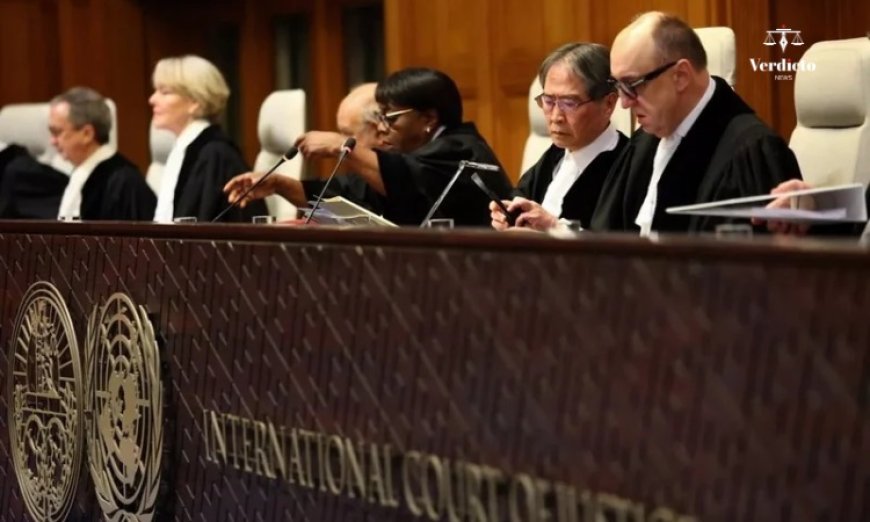
New Delhi: The International Court of Justice on Thursday held Myanmar responsible for genocide against the Rohingya in northern Rakhine state during the 2017 military “clearance operations”. It is the first time the court has found a state itself responsible for committing genocide under the 1948 Genocide Convention. The ruling comes nearly seven years after The Gambia brought the case in November 2019.
Delivering the decision by a 9-6 margin, ICJ President Yuji Iwasawa said Myanmar “has committed genocide against the Rohingya group in northern Rakhine state, in violation of its obligations under the Genocide Convention”. The court also found that Myanmar breached its duty to prevent genocide by individuals acting alongside its security forces.
The judgment does not go as far as The Gambia’s case could have. According to the ICJ’s press release, the court found that Myanmar did not directly and publicly incite private persons to commit genocide against the Rohingya in northern Rakhine. The court did find that Myanmar violated its order of January 23, 2020, which required it to take effective measures to prevent the destruction of evidence related to the alleged acts of genocide and to preserve that evidence.
The court’s directions to Myanmar are extensive. It must end any continuing violations by enacting legislation that gives full effect to its obligations under the Convention, and it must take immediate and effective steps to investigate all persons reasonably suspected of acts contrary to the Convention and, where warranted, prosecute and punish them. Myanmar must also provide assurances and guarantees of non-repetition. On restitution, the court asked Myanmar to allow the Rohingya a safe, voluntary and dignified return, and to compensate the group and its members for the damage caused.
The court did not fix the amount of compensation. It decided that the amount and modalities of compensation or other reparation will be determined in a subsequent phase of the proceedings. Myanmar must report to the court within two years on the restitution measures it has adopted and on the amount and modalities of compensation.
Bangladesh, which hosts over one million Rohingya refugees, welcomed the ruling. State Minister for Foreign Affairs Shama Obaed Islam called it “a historic day” at a media briefing in Dhaka. She said the judgment strengthens Dhaka’s push for the Rohingya’s safe and dignified return, and urged the international community to use it to pressure the Myanmar government and the rebel Arakan Army to begin repatriation as soon as possible. She said it would also reinforce Bangladesh’s diplomatic efforts to keep the crisis on the international agenda, including at the UN General Assembly. Asked whether the ruling could trigger fresh violence in Rakhine, she said Bangladesh remained alert and that the agencies concerned were maintaining a tighter vigil on the border.
Rashed Al Mahmud Titumir, adviser for finance and planning to Bangladesh Prime Minister Tarique Rahman, struck a more cautious note. He said the judgment alone would not suffice unless the international community helped create conditions in Myanmar for the Rohingya to rebuild their lives with dignity and security. “The solution lies in Myanmar,” he said, repeating Dhaka’s position that the crisis began there and must ultimately be resolved there.
Rohingya leader Syed Ullah, president of the United Council of Rohingyas, spoke to PTI from the Teknaf camps in southeastern Bangladesh. He said survivors had waited nearly a decade for the verdict and expected it to enable the international community to press Myanmar on repatriation.
The judgment arrives while Myanmar’s government troops are fighting the Arakan Army in Rakhine, the Rohingya’s homeland, which leaves the practical enforcement of the court’s directions uncertain.