Supreme Court Directs Rajasthan To Frame Financial Aid Policy For Industrial ZLD Plants
The Supreme Court has directed Rajasthan to frame a policy for financial assistance to industries setting up ZLD plants in the Jojari-Luni-Bandi river system, with Justice Sandeep Mehta saying the polluter pays principle applies equally to the state. The matter is listed for November 27.
 Verdicto News Desk
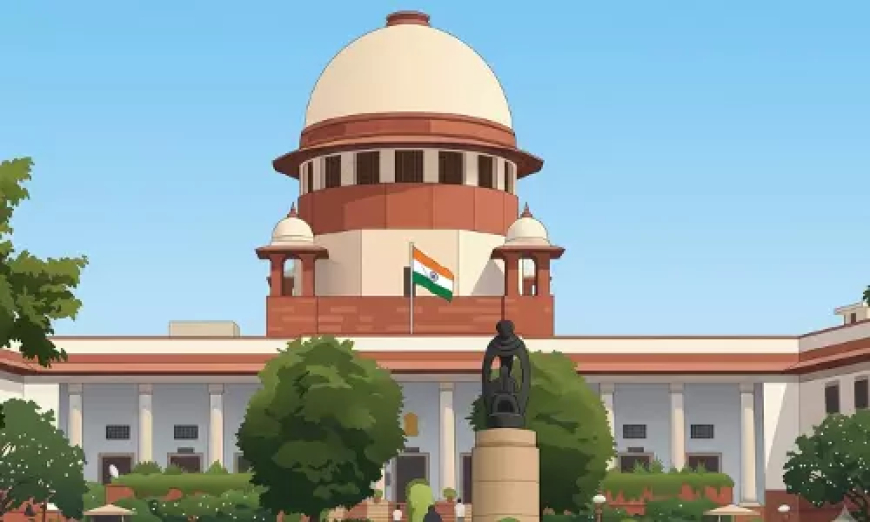
The Supreme Court has directed the Rajasthan government to formulate a comprehensive policy for extending financial assistance to industrial units that wish to set up Zero Liquid Discharge plants. A bench of Justices Vikram Nath and Sandeep Mehta held that the state must share responsibility for addressing industrial pollution in the Jojari-Luni-Bandi river system. The directions were issued in suo motu proceedings on pollution in the river system, which the bench noted has severely affected the environment and the lives of approximately 20 lakh people.
Until the policy is framed, the state must consider applications from industrial units for financial assistance, both for ZLD plants and for associated pipeline networks, on a case-to-case basis. The bench said such applications must go through proper technical appraisal and verification, and that decisions must be taken expeditiously. The Court also directed the state to take steps to establish a redistribution pipeline network for conveying and reusing treated waste water and reverse osmosis permeate. The stated purpose is to enable optimum use of treated water by industrial units and to minimise the discharge of untreated or inadequately treated effluent into the river system. The state has been asked to assess the technical and financial requirements of the network and prepare a time-bound implementation plan.
The directions follow concerns raised by the High-Level Ecosystem Oversight Committee about inadequate progress in establishing and augmenting Common Effluent Treatment Plants and ZLD facilities in the industrial clusters of Jodhpur, Pali and Balotra. The committee observed that administrative assurances and projected completion timelines cannot substitute for treatment capacity commensurate with the volume of effluent being generated. It acknowledged the proposed 4 MLD ZLD facility at Jodhpur as an immediate remedial measure but said the facility alone would not achieve complete Zero Liquid Discharge. It recommended that the CETP Trust, the Rajasthan State Pollution Control Board and the state government ensure 100 per cent ZLD compliance at CETP Sangaria, Jodhpur, within a stipulated timeframe, and called for effective monitoring of all CETP and ZLD projects, periodic reporting of physical progress and clear accountability for delays. These are the committee’s recommendations, and the PTI report does not say which of them the bench has adopted as directions.
The sharpest articulation of the state’s responsibility came from Justice Mehta during the hearing, and it should be read as an oral observation, not as part of the written order. He said the state could not place the entire burden of restoring the rivers on industries and municipal bodies when government authorities had allegedly failed in their own regulatory obligations. “For reviving the industries and for establishing these ZLD plants, the state has to cough up something,” he observed, calling this part of the polluter pays principle. He added that the principle applies equally to the state and to industries, and that the Court would therefore cast the first burden on the state.
That framing matters for how the order is read. The polluter pays principle is ordinarily invoked against the industries that discharge effluent. Here, as reported, the bench extends it to a regulator that is alleged to have failed in its duties, and uses it to justify a direction that public funds support private compliance infrastructure. Whether the order itself records that reasoning, or whether it rests on the hearing observations alone, can be confirmed only from the text of the order.
The matter is listed for further hearing on November 27.