Criticise Decisions, Not Institutions: CJI Surya Kant Draws a Line Between Dissent and Distrust
CJI Surya Kant, speaking at the Central University of Himachal Pradesh convocation in Dharamshala, said citizens may criticise decisions of constitutional bodies but should not target the institutions themselves. Here is what he said, and what it does and does not mean.
 Verdicto News Desk
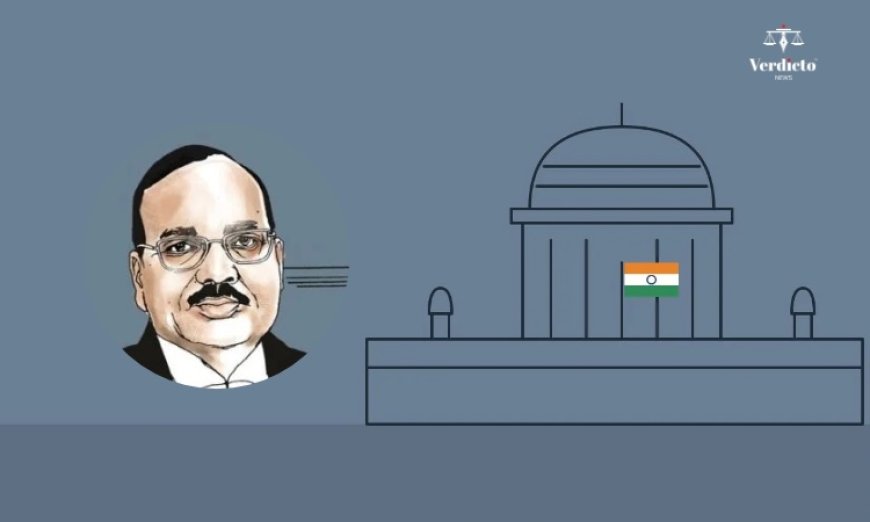
Chief Justice of India Surya Kant on Sunday told students in Dharamshala that citizens in a democracy are entitled to criticise the decisions of constitutional bodies, but should not direct that criticism at the institutions themselves. The distinction, he said, is one that people often fail to make, and its erosion risks weakening public confidence in the bodies on which democratic functioning depends.
The CJI was interacting with students on the sidelines of the 10th convocation of the Central University of Himachal Pradesh, where he was chief guest. The remarks were reported through a statement issued by the university. They were made in a conversation with students and were not part of a judgment, an order or any formal proceeding, so they carry no legal force. They are better read as a statement of how the head of the judiciary frames the boundary of legitimate public criticism.
That boundary is not new to Indian constitutional discourse, though it is seldom stated so plainly by the office-holder at its centre. A decision of a court, a commission or a legislature is an act that can be tested against reasoning, precedent and the text of the Constitution. An institution is the standing structure that produces many such decisions over time, some of them wrong and some corrected on review. The CJI's argument is that collapsing the two turns disagreement with an outcome into a verdict on the body's legitimacy, which the outcome alone cannot support. Nothing in his reported remarks, however, indicates where he would place the line when criticism of a series of decisions begins to shade into criticism of the institution, and the university statement does not elaborate on that.
His convocation address struck a different note. Drawing on the Himalayan setting, Justice Surya Kant urged graduating students to be patient in pursuing their goals, observing that the road to any destination in the mountains is seldom straight and that no one climbs a mountain alone. Degrees were conferred on 702 students, among them 584 postgraduates, 29 undergraduates and 48 PhD scholars, besides diploma holders. Of the 32 gold medals presented, 23 went to women. The ceremony was held at the auditorium of Government Degree College, Dharamshala.
Chief Minister Sukhvinder Singh Sukhu told graduates that a degree represents responsibility towards society as much as recognition of effort, and said that education should build critical thinking, research and innovation, preparing young people to generate employment rather than only seek it. Governor Kavinder Gupta asked the university to work towards becoming a centre of research on Himalayan challenges, including climate change, disaster management, water conservation, biodiversity and rural development. Himachal Pradesh High Court Chief Justice Gurmeet Singh Sandhawalia and Deputy Chief Minister Mukesh Agnihotri were also present.
Vice Chancellor Sat Prakash Bansal described the university's vision as "local to global". He pointed to its debut in the 701-800 band of the Times Higher Education World University Rankings and its 239th place in Southern Asia in the QS Asia University Rankings, adding that its h-index had risen from 22 to 86 and its patents from one to 70.