Supreme Court Releases Draft AI Regulations for Courts
The Supreme Court's draft AI Regulations 2026 propose a framework for artificial intelligence in courts, banning AI-driven judicial decisions, risk scoring, and witness profiling while ensuring human oversight.
 Verdicto News Desk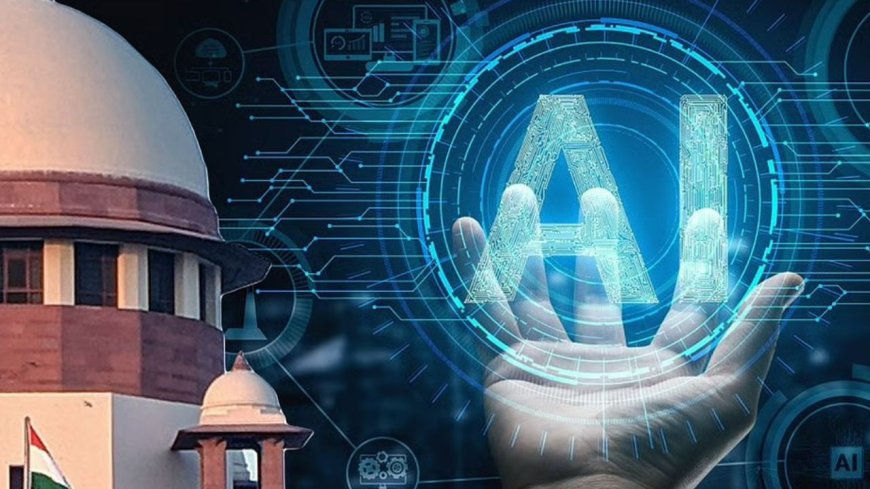
By Verdicto News Desk
New Delhi, June 4: The Supreme Court of India has released a preliminary draft of the Regulations for Use of Artificial Intelligence (AI) in Courts, 2026, proposing a comprehensive framework to govern the deployment of AI across the judicial system while firmly safeguarding judicial independence.
The draft regulations make it clear that Artificial Intelligence will remain an assistive tool and cannot replace human judges in deciding cases. The proposed framework prohibits the use of AI for determining judicial outcomes, assessing witness credibility, predicting future criminal behaviour, or making sentencing decisions without human oversight.
The recommendations have been prepared by the Supreme Court's AI Committee headed by Justice P.S. Narasimha, with Justices Sanjeev Sachdeva, Raja Vijayraghavan V, Anoop Chitkara, and Suraj Govindaraj as members. The Committee has invited comments from stakeholders and the public until June 20 before finalising the regulations.
Human Judgment Will Remain Supreme
One of the central principles of the draft is that AI must always remain subordinate to judicial authority.
According to the proposal, every AI system deployed in courts shall function solely in an assistive capacity and must not compromise the independent exercise of judicial functions by judges. The draft expressly states that the ultimate authority to determine questions of law, fact, and justice will continue to vest exclusively with judicial officers.
This provision seeks to ensure that technological efficiency does not come at the cost of judicial discretion, constitutional values, or due process.
Focus on Fairness and Constitutional Rights
The draft mandates that AI systems used in courts be designed and trained in a manner that promotes fairness and prevents discrimination.
It prohibits the deployment of AI systems that perpetuate or introduce bias based on caste, religion, gender, disability, language, economic status, or any other constitutionally prohibited ground. The regulations also call for special safeguards to protect vulnerable groups, including women, children, persons with disabilities, minority communities, and economically disadvantaged individuals.
Further, all AI systems handling personal data must comply with the provisions of the Digital Personal Data Protection Act, 2023.
To maintain reliability, the draft requires AI tools to be trained on data that is accurate, representative, lawfully obtained, and, as far as possible, free from discriminatory bias.
Permitted Uses of AI in Courts
The Supreme Court has identified several areas where AI can be responsibly deployed to improve judicial efficiency.
These include:
-
Case management and workflow optimisation
-
Preparation of cause lists
-
Scheduling of hearings
-
Transcription of court proceedings
-
Translation of judgments and legal documents
-
Legal research assistance
-
Record management and administrative functions
-
Filing assistance and defect scrutiny
-
Judicial resource allocation
-
AI-powered chatbots and virtual assistants for litigants
-
Accessibility services for persons with disabilities and language barriers
-
Anonymisation of court records
The draft indicates that AI can be used to reduce administrative burdens and improve access to justice, provided adequate safeguards remain in place.
Activities Explicitly Prohibited
The proposed regulations draw clear red lines around the use of AI in judicial processes.
The draft prohibits:
-
Use of AI to independently adjudicate disputes or determine sentences
-
Use of personal data for AI training, testing, or refinement without prior approval from competent authorities
-
AI-based risk scoring systems
-
Prediction of recidivism or future criminal behaviour
-
Assessment of bail eligibility through automated systems
-
Evaluation of witness or party credibility
-
Use of opaque or unexplainable AI systems affecting legal rights or personal liberty
-
AI-driven surveillance or continuous monitoring of judges, advocates, litigants, or court users unless specifically authorised by law
Importantly, any AI-generated recommendation relating to adjudication or sentencing would be advisory in nature and subject to independent judicial scrutiny.
Proposal for a National Judicial AI Regulator
To oversee the adoption and governance of AI in courts, the draft proposes the creation of a permanent apex body at the Supreme Court level.
The proposed institution would be responsible for:
-
Regulating AI deployment across the judiciary
-
Framing standards and guidelines
-
Promoting innovation and responsible AI adoption
-
Monitoring compliance and accountability
-
Developing long-term policy frameworks
The body would comprise Supreme Court judges, High Court Chief Justices, High Court judges, technology experts, cybersecurity specialists, finance professionals, legal practitioners, representatives from the Ministry of Electronics and Information Technology, and academic experts in artificial intelligence.
In addition, every High Court and the Supreme Court would establish dedicated AI Committees to supervise implementation within their respective jurisdictions.
A Significant Step Towards Responsible Judicial AI
The draft regulations reflect the judiciary's attempt to strike a balance between technological innovation and constitutional safeguards. While recognising the potential of AI to improve efficiency and accessibility within the justice delivery system, the framework places human judgment, transparency, accountability, and fundamental rights at its core.
If adopted, the regulations could become one of India's most comprehensive judicial governance frameworks for artificial intelligence, setting clear boundaries on how technology may assist—but never replace—the administration of justice.
Public comments and suggestions on the draft regulations can be submitted to the Supreme Court AI Committee until June 20, 2026.