Need to Protect Forests Across the Country, Supreme Court Says While Declining to Interfere in Jharkhand Mining Case
Supreme Court stresses the need to protect forests across India while refusing to interfere with Jharkhand High Court's restrictions on stone mining and crusher units near forest areas.
 Verdicto News Desk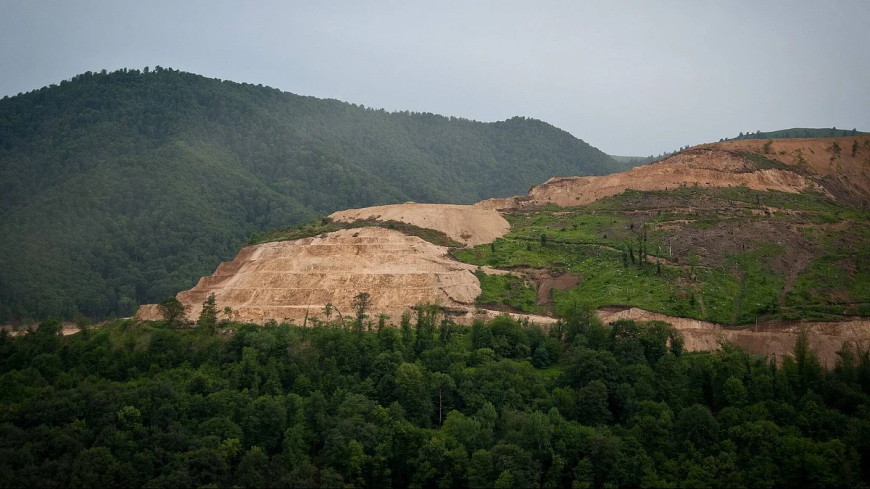
New Delhi, June 18: Emphasising the importance of preserving India's natural ecosystems, the Supreme Court on Thursday observed that forests across the country require stronger protection, particularly in states such as Jharkhand that continue to retain significant natural forest cover.
A Bench comprising Chief Justice of India Surya Kant and Justice V. Mohana made the observations while hearing a petition filed by the Jharkhand State Pollution Control Board (JSPCB) challenging interim directions issued by the Jharkhand High Court concerning stone mining and stone-crushing activities near forest areas.
"There are few states where we can really protect our natural ecosystem and you (Jharkhand) are one of them," the Chief Justice remarked during the hearing.
The Court noted that certain states possess valuable natural landscapes and forest ecosystems that deserve special protection against environmental degradation.
Background of the Dispute
The matter arises from proceedings before the Jharkhand High Court, which has been examining the environmental impact of stone mining and stone-crushing units operating near forests and forest land in the state.
In January 2026, the High Court directed that no consent should be granted for stone mining or stone crushers within one kilometre of the demarcated boundaries of protected forests. The order came while hearing a challenge to a notification issued by the JSPCB that reduced the minimum permissible distance for such activities from 400–500 metres to 250 metres.
Subsequently, in April, the High Court modified its directions, holding that the restriction would apply within 500 metres from forest boundaries for stone mining operations and within 400 metres for stone-crushing units.
During Thursday's hearing, the Supreme Court questioned the rationale behind the Pollution Control Board's decision to reduce the buffer distance around forests, observing that the reduction appeared to have been made abruptly.
Supreme Court Refuses to Intervene
Appearing for the JSPCB, counsel argued that the High Court's observations had resulted in the stalling of several activities. However, the Supreme Court declined to interfere, noting that the matter is already pending before the High Court for final adjudication.
"Let the High Court pass a final order," the Bench said.
When the petitioner referred to certain observations made by the High Court, the Supreme Court underscored the constitutional status of High Courts and cautioned against unnecessary interference.
"We cannot demoralise our High Courts. We are not headmasters to advise the High Courts what to do and what not to do. The High Courts are constitutional courts," the Bench observed.
Following the Court's indication that it was not inclined to intervene, the JSPCB sought permission to withdraw its petition. The Supreme Court allowed the withdrawal and clarified that all issues may be raised before the High Court during the final hearing.
Legal Significance
The case highlights the continuing judicial scrutiny of environmental clearances and mining activities near ecologically sensitive areas. It also reflects the Supreme Court's emphasis on federal judicial discipline and its reluctance to interfere in matters actively under consideration before constitutional courts unless exceptional circumstances warrant intervention.