Explained: Why RTI Cannot Be Applied To BCCI
CIC rules that BCCI cannot be brought under the RTI Act as it is not a public authority under Section 2(h). Know why the cricket board remains outside RTI purview.
 Verdicto News Desk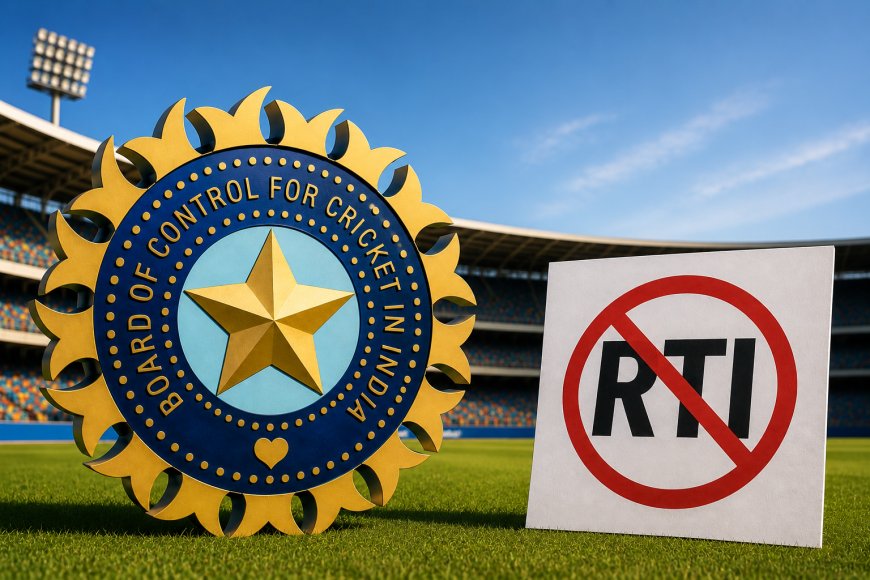
NEW DELHI: The Central Information Commission (CIC) has ruled that the Board of Control for Cricket in India (BCCI) does not fall under the ambit of the Right to Information (RTI) Act because it is not a “public authority” as defined under Section 2(h) of the Act.
The decision came while dismissing an appeal that sought information regarding the legal provisions under which the BCCI represents India and selects players for national and international cricket tournaments.
CIC Says BCCI Is A Private Body
Information Commissioner P R Ramesh observed that the BCCI is a private autonomous body registered under the Tamil Nadu Societies Registration Act.
- According to the Commission, the cricket board was not:
Established by the Constitution,
Created through a law passed by Parliament or a State Legislature,
Nor formed through a government notification.
Because of this, the CIC held that BCCI does not satisfy the legal requirements needed to be classified as a “public authority” under the RTI Act.
What Section 2(h) Of RTI Act Says
- Section 2(h) of the RTI Act defines a “public authority” as any authority or body established or constituted:
By the Constitution
By any law made by Parliament,
By any law made by State Legislature,
Or by notification/order of the government.
It also includes bodies that are substantially financed or controlled by the government.
The CIC noted that BCCI is neither owned, controlled, nor substantially financed by the government, making the RTI Act inapplicable to it.
Why The Appeal Was Filed
- The appellant had sought details regarding:
The authority under which BCCI represents India in cricket,
The legal provisions empowering it to select players,
And the basis on which it participates in international cricket tournaments on behalf of the country.
However, the CIC held that since BCCI is not covered under the RTI Act, such information cannot be compelled through RTI proceedings.
Supreme Court’s Earlier Observations On BCCI
The question of whether BCCI should come under RTI has been debated for years.
In the past, the Supreme Court-appointed Lodha Committee had recommended bringing BCCI under the RTI framework due to the public functions it performs and its influence over Indian cricket.
Despite these observations, no law has yet formally declared BCCI a public authority under the RTI Act.
CIC’s Final Observation
In its order, the CIC stated: “The BCCI cannot be classified as a ‘Public Authority’ within the meaning of Section 2(h) of the RTI Act and the provisions of the Act are therefore inapplicable to it in the facts and circumstances of the present case.”
The ruling once again reinforces the legal position that, despite managing India’s most popular sport and representing the country internationally, the BCCI continues to function as an independent private body outside the scope of RTI law.