Calcutta High Court Questions Speaker’s Powers in Bengal LoP Dispute
Calcutta High Court, Leader of Opposition dispute, West Bengal Assembly, Speaker powers, TMC MLA, Sobhandeb Chattopadhyay, Ritabrata Banerjee, legislative assembly law, natural justice, West Bengal politics
 Verdicto News Desk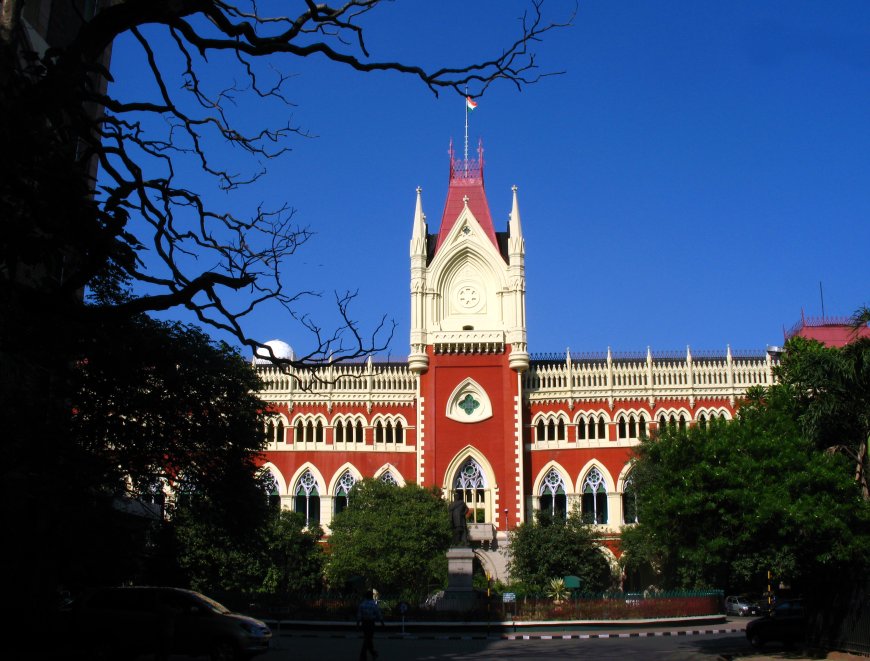
Kolkata, June 16: In a first-of-its-kind dispute in the West Bengal Legislative Assembly, the Calcutta High Court on Tuesday examined the powers and responsibilities of the Assembly Speaker when faced with competing claims from the same political party over the appointment of the Leader of Opposition (LoP).
Justice Krishna Rao, while hearing a petition filed by Trinamool Congress (TMC) MLA Sobhandeb Chattopadhyay, questioned whether the Speaker can decide on such a dispute without granting rival factions an opportunity to be heard.
Chattopadhyay challenged the Speaker’s decision to reject his candidature for the post of LoP and instead appoint another TMC MLA, Ritabrata Banerjee, to the position.
During the hearing, the court raised a key constitutional question: What procedure should the Speaker follow when two conflicting resolutions from the same political party are placed before him regarding the appointment of the Leader of Opposition?
Justice Rao observed that the Speaker is ordinarily expected to act upon a resolution submitted by the largest opposition party. However, he questioned whether the Speaker can act suo motu when rival claims emerge or whether principles of natural justice require that all concerned parties be heard before a decision is made.
Appearing for the Speaker, Additional Advocate General Billwadal Bhattacharya argued that under the West Bengal Legislative Assembly (Officers' Salaries and Allowances) Act, 1937, the Leader of Opposition is recognised as the leader of the opposition party with the greatest numerical strength in the Assembly.
Bhattacharya further submitted that the law provides that any dispute concerning the strength of a political party or the identity of its leader is to be decided by the Speaker, whose decision is “final and conclusive.”
He told the court that the present controversy is unprecedented in the history of the West Bengal Assembly.
The dispute centres around rival claims within the TMC legislative party. According to submissions before the court, the TMC had initially forwarded a resolution proposing Chattopadhyay, the Ballygunge MLA, as the Leader of Opposition. The Speaker’s office subsequently sought supporting documents, including minutes of the meeting where the resolution was allegedly adopted.
On May 20, the Speaker’s office received another communication purportedly containing the resolution, meeting minutes, and a signature register of TMC legislators.
However, on May 27, MLAs Ritabrata Banerjee and Sandipan Saha allegedly informed the Speaker that signatures attributed to them on the resolution were forged. Following the complaint, the matter was referred to the Criminal Investigation Department (CID) for inquiry.
Bhattacharya further informed the court that the Speaker later received another document carrying the signatures of 58 TMC MLAs supporting Banerjee’s appointment as Leader of Opposition and Saha’s appointment as Chief Whip.
Justice Rao questioned whether the Speaker could disregard the proposal submitted by the opposition party with the largest numerical strength and appoint another individual without first hearing all sides involved in the dispute.
The court also sought clarification on who had formally proposed Banerjee’s name, observing that any recommendation for the post of LoP must originate from a recognised political party.
Raising concerns about the process followed, Justice Rao asked how the Speaker could determine majority support between rival factions without convening the House or otherwise providing an opportunity for competing groups to establish their numerical strength.
The hearing will continue on Wednesday.
Why This Matters
The case raises important questions regarding the scope of the Speaker’s discretionary powers, the application of natural justice in legislative proceedings, and the procedure for recognising the Leader of Opposition when competing claims arise within a political party. The outcome could set a significant precedent for future disputes concerning legislative leadership positions in West Bengal and beyond.