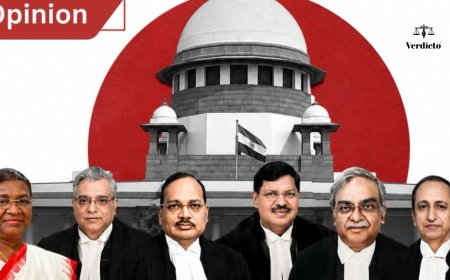
No Restriction on Women Entering Mosques for Namaz, AIMPLB Tells Supreme Court
Can women be stopped from entering mosques? The AIMPLB told the Supreme Court that Islam places no ban on women offering namaz in mosques, adding a significant dimension to the ongoing Sabarimala-linked Constitution Bench hearing on religious freedom and gender rights.
 Verdicto News Desk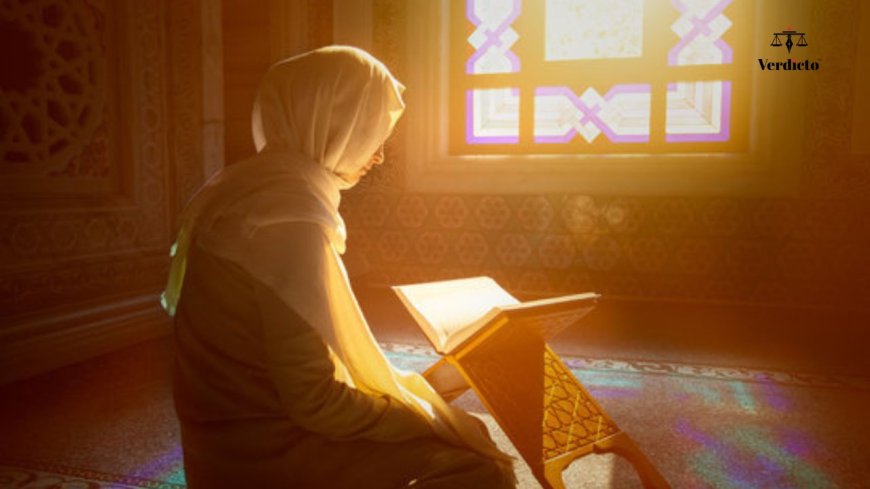
The All India Muslim Personal Law Board informed the Supreme Court of India on Thursday that there is no restriction on women entering mosques to offer namaz. The submission was made by Senior Advocate MR Shamshad before a nine-judge Constitution bench hearing matters linked to the Sabarimala case.
The court is currently examining broader constitutional questions related to religious freedoms under Articles 25 and 26, with petitions concerning women’s entry into mosques tagged along with the Sabarimala reference.
During the hearing, Shamshad clarified that mosques do not have the concept of a “sanctum sanctorum,” unlike dargahs. He stated that in the absence of such a concept, no individual can claim a fixed or superior position within the mosque for offering prayers.
Responding to a query from Chief Justice Surya Kant regarding women’s entry, the counsel asserted that there is a consensus across Islamic denominations that women are allowed to enter mosques. However, he added that it is not mandatory for women to participate in congregational prayers, unlike men.
Justice Amanullah noted that the practice dates back to the time of Prophet Muhammad, emphasizing that there has historically been no dispute over women entering mosques. Supporting this, Shamshad cited Hadiths where the Prophet instructed that women should not be prevented from visiting mosques.
The counsel further explained that while women may receive equal spiritual rewards for praying at home, they are permitted to attend mosque congregations if they choose. He clarified that women can participate in congregational prayers, though attending is considered optional and, in some interpretations, less preferable.
The bench also discussed issues raised in the petitions, including demands for women to enter through main doors, access prayer areas equally, and pray without physical barriers alongside men. Shamshad objected to these demands, arguing that they attempt to impose the concept of a sanctum sanctorum within mosques and overlook established internal practices.
Additionally, the AIMPLB argued that courts have incorrectly applied the doctrine of Essential Religious Practices (ERP) to Islam. According to the Board, Islamic teachings are extensively documented, clearly distinguishing between mandatory, recommended, and prohibited acts. It contended that many Islamic practices are misunderstood in legal scrutiny because they may not appear “mandatory” under judicial interpretation.
The matter remains under consideration as the Supreme Court continues its examination of the constitutional scope of religious freedoms.
📌 Follow us on YouTube, Instagram, and Twitter for more updates.