Fraudulent Insurance Claims Through Staged Incidents Are Common: Supreme Court Orders SIT Probe into Fake Fire Claim
The Supreme Court orders an SIT probe into a fraudulent fire insurance claim, highlighting the growing concern over staged incidents and their impact on public trust in the insurance system.
 Verdicto News Desk
The Supreme Court has ordered the constitution of a Special Investigation Team (SIT) to probe a fire incident at a chemical company after finding that the company’s insurance claim was fraudulent. The Court observed that fraudulent insurance claims arising out of such staged incidents are not uncommon. It also indicated that such cases have serious consequences, and therefore a detailed investigation is necessary.
In its judgment, the Supreme Court directed an SIT probe into a 2011 fire incident at a chemical company in Gujarat, noting that the insurance claim made by the company was fake. The Court stated that fraudulent insurance claims based on deliberately staged incidents are not unusual and adversely affect the credibility of the insurance system and public trust. It emphasized that an insurance contract cannot be used to gain undue benefits.
The Court directed the Police Commissioner of Ahmedabad to constitute an SIT headed by an officer not below the rank of Deputy Commissioner of Police (DCP) and to complete the investigation within three months. The next hearing in the matter has been scheduled for July 21, 2026.
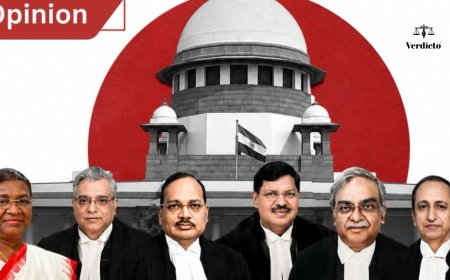
A bench comprising Justice Ahsanuddin Amanullah and Justice R. Mahadevan set aside the order of the National Consumer Disputes Redressal Commission (NCDRC), which had partially allowed the company’s claim. The Supreme Court clarified that there is no principle of granting partial or sympathetic relief in cases involving fraud. If the claim itself is fraudulent, compensation cannot be awarded merely on the basis of loss. An insurance contract cannot be used for unjust enrichment.
Earlier, the NCDRC had directed United India Insurance Company Limited to pay ₹3.33 crore along with 6% annual interest (from July 8, 2012) and ₹50,000 towards litigation costs.
The case relates to a fire that broke out in the company’s warehouse on March 25, 2011. The company claimed that the fire was caused by a short circuit and sought compensation of ₹28.20 crore. The insurance company opposed the claim, alleging that the incident was a deliberate act of sabotage.
It was noted that the company had initially taken insurance cover of ₹15 crore, which was increased to ₹19 crore on March 7, 2011. Additionally, another policy of ₹17 crore was taken just before the fire incident. The insurer relied on the surveyor’s report and findings from Truth Labs to argue that the fire was not accidental.
The insurer also pointed out that the goods allegedly stored in the warehouse and the suppliers were suspicious—some suppliers either did not exist or were not engaged in the relevant trade. In its defense, the company maintained that the fire was accidental due to a short circuit and that it had informed the police and the insurance company on the same day. However, it admitted that it had not independently verified the credibility of the suppliers.
Ultimately, the Supreme Court concluded that the insurance claim was fraudulent and observed that the sudden increase in insurance coverage and purchase of a new policy just before the incident raised serious suspicion.
📌 Follow us on YouTube, Instagram, and Twitter for more updates.